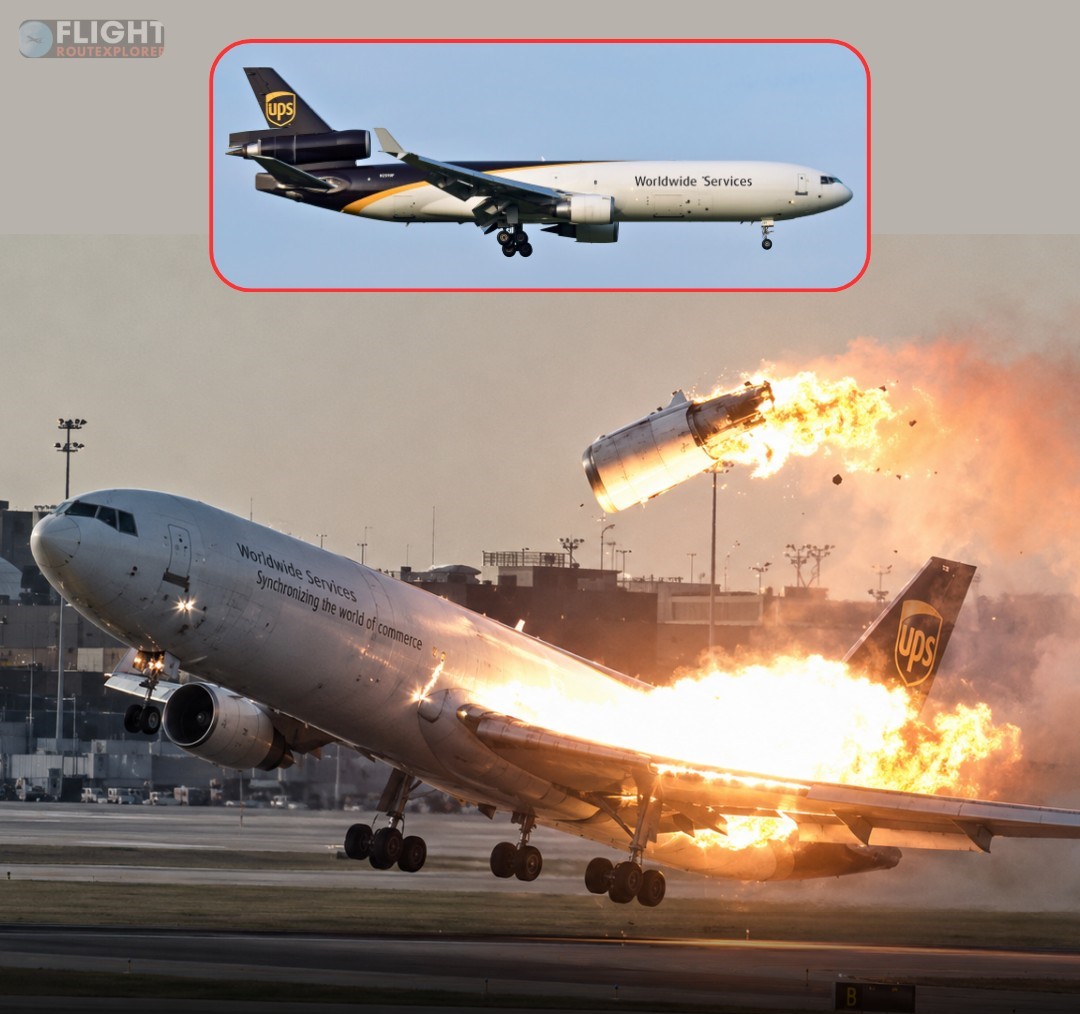
The two-day investigative hearing in Washington, D.C. shed light on the moments preceding the aircraft’s departure as well. The report states that a last-minute aircraft substitution placed the crew on a different plane than originally scheduled to fly. Investigators say the aircraft had been assigned as a replacement after another plane developed a fuel leak before departure. Cockpit audio and flight data reviewed during the hearing indicate the crew encountered catastrophic structural failure seconds after rotation from Louisville Muhammad Ali International Airport (SDF).
According to testimony presented during the NTSB hearing, N259UP was not the aircraft originally intended for the route to Honolulu. The substitute MD-11 was brought into service after a pre-flight fuel leak was discovered and grounded the intended aircraft shortly before departure, and was the source of light-hearted jokes between the flight and loading crew. The replacement decision has become a key focus because records show the aircraft involved in the accident carried a long operational history and had undergone prior maintenance tied to its engine mounting structure.
Federal investigators disclosed that the aircraft’s left engine and pylon assembly separated from the wing immediately after takeoff rotation. Surveillance footage released during the hearing showed the engine detaching before the plane entered an unrecoverable descent. When examining the wreckage, officials found cracks in a critical bearing within the engine mount assembly which were not noticed during the routine maintenance checks by the airline.
In addition to this new information, the cockpit voice recorder captured a rapid sequence of alarms and crew reactions in the seconds before impact. Investigators have not publicly released full audio recordings, consistent with longstanding federal restrictions on cockpit voice recorder dissemination, but hearing materials referenced warning sounds and urgent communication between pilots as the aircraft lost control. Excerpts of the transcripts depict chaotic moments in which the pilots fought hard to recover the aircraft’s unexpected roll.
The NTSB hearing has also focused heavily on whether warning signs about the MD-11’s engine mounting system were overlooked for years before the crash. Investigators revealed that similar flaws involving the same component had been documented multiple times over the past 15 years, yet only a fraction of those findings were formally reported to the FAA. According to Associated Press reporting from the hearing, investigators identified at least 10 prior cases involving related cracking issues on similar aircraft. Boeing had previously advised operators to replace problematic spherical bearings but did not require mandatory corrective action. Regulators likewise stopped short of issuing an airworthiness directive before the crash.
The revelations have intensified scrutiny of maintenance oversight involving aging MD-11 cargo fleets operated by major carriers. UPS retired its MD-11 fleet following the crash, while FedEx emporarily grounded and later resumed operations after enhanced inspections and revised maintenance procedures received FAA approval. Investigators are also examining whether inspection intervals were sufficient to identify metal fatigue before the aircraft returned to service. Hearing testimony indicated some components tied to the failed engine mount had not undergone detailed inspection since 2021.
The current investigation remains preliminary, and the NTSB has not issued a final determination on probable cause. Officials say the inquiry will continue examining engineering design standards, maintenance procedures, inspection practices, and FAA oversight of aging cargo aircraft. A final report is not expected for more than a year. For families of the victims, however, the newly disclosed cockpit details and evidence presented during the hearing have sharpened concerns that the disaster may have been preventable. The hearing’s central question is no longer simply why the engine failed, but whether the aviation industry had enough warning signs to stop the flight from ever leaving the runway.