
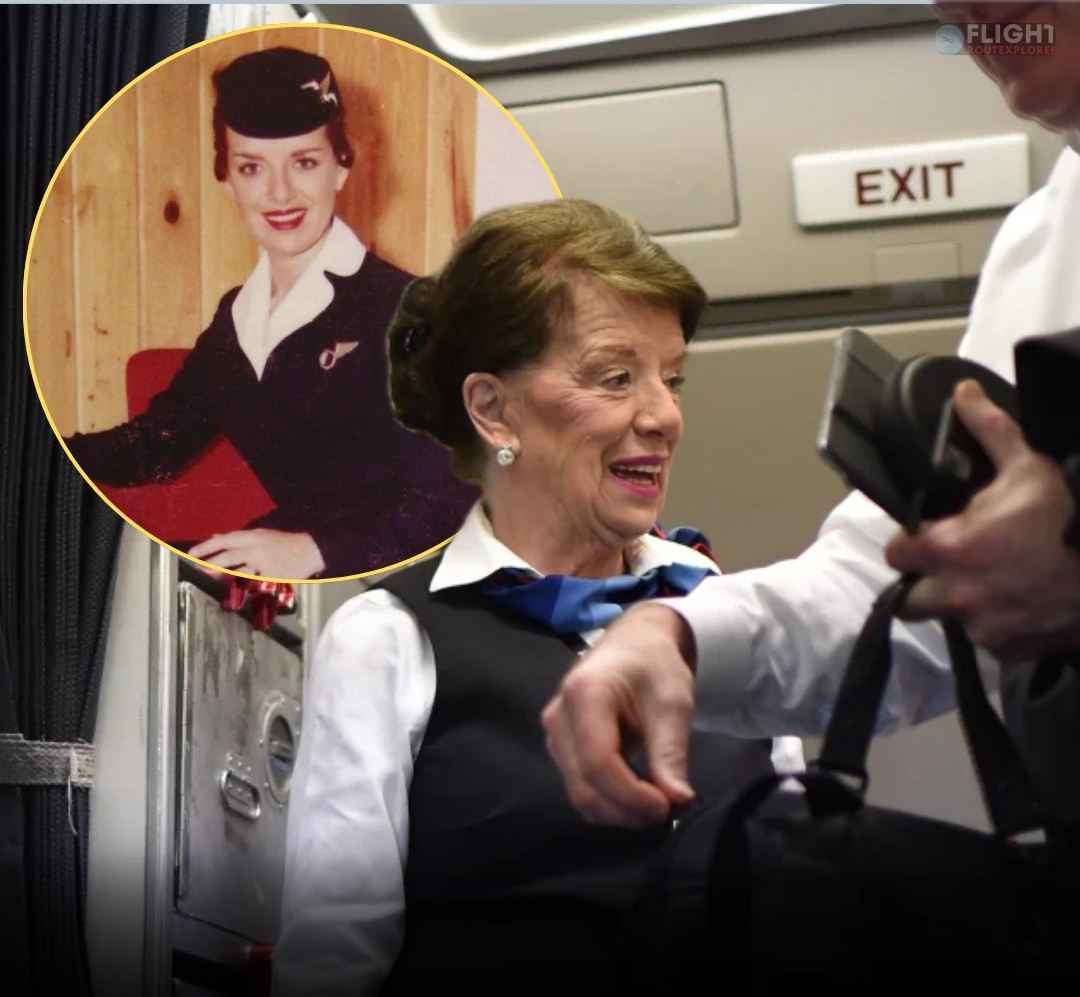
This May, aviation world is remembering Bette Nash — the legendary American flight attendant who passed away two years ago after spending nearly seven decades in the skies. Nash, who died at age 88 in May 2024, still holds a special place in airline history as the world’s longest-serving flight attendant and one of the most recognizable faces in American aviation.
Born Mary Elizabeth Burke-Nash, she began her flying career in 1957 with Eastern Air Lines during the golden age of air travel. Over the decades, she witnessed aviation transform from handwritten tickets, glamorous onboard dining, and smoking cabins into the modern digital airline industry passengers know today. Despite massive changes in technology, aircraft, and airline mergers, Nash remained devoted to one thing — caring for passengers.
Nash became especially famous for operating the Washington–New York–Boston shuttle route, a service so closely associated with her that frequent travelers nicknamed it the “Nash Dash.” Even after earning enough seniority to fly anywhere in the world, she chose shorter shuttle routes so she could return home nightly to care for her son with Down syndrome.
In 2022, Guinness World Records officially recognized her as the longest-serving flight attendant in history after more than 64 years in active service. Yet she never slowed down. Colleagues described her as energetic, witty, and deeply passionate about aviation even into her late 80s. Remarkably, Nash never officially retired and continued attending mandatory FAA training sessions until shortly before her death.
Her career also reflected how dramatically the role of flight attendants evolved over the years. Nash often recalled the strict appearance rules women faced in the 1950s and 1960s, including mandatory weigh-ins and restrictions on marriage. Through generations of change, she remained a living connection to aviation’s past.
Following her passing in hospice care after a breast cancer diagnosis, tributes poured in from across the aviation industry. American Airlines called her “a legend,” while fellow crew members praised her warmth and dedication to passengers. Many travelers who flew with her remembered being greeted by name and treated with genuine kindness — something increasingly rare in modern air travel.
Two years later, Bette Nash’s legacy continues to inspire flight attendants and aviation enthusiasts worldwide. In an industry defined by schedules, aircraft, and technology, she became a reminder that the human touch still matters most at 35,000 feet.