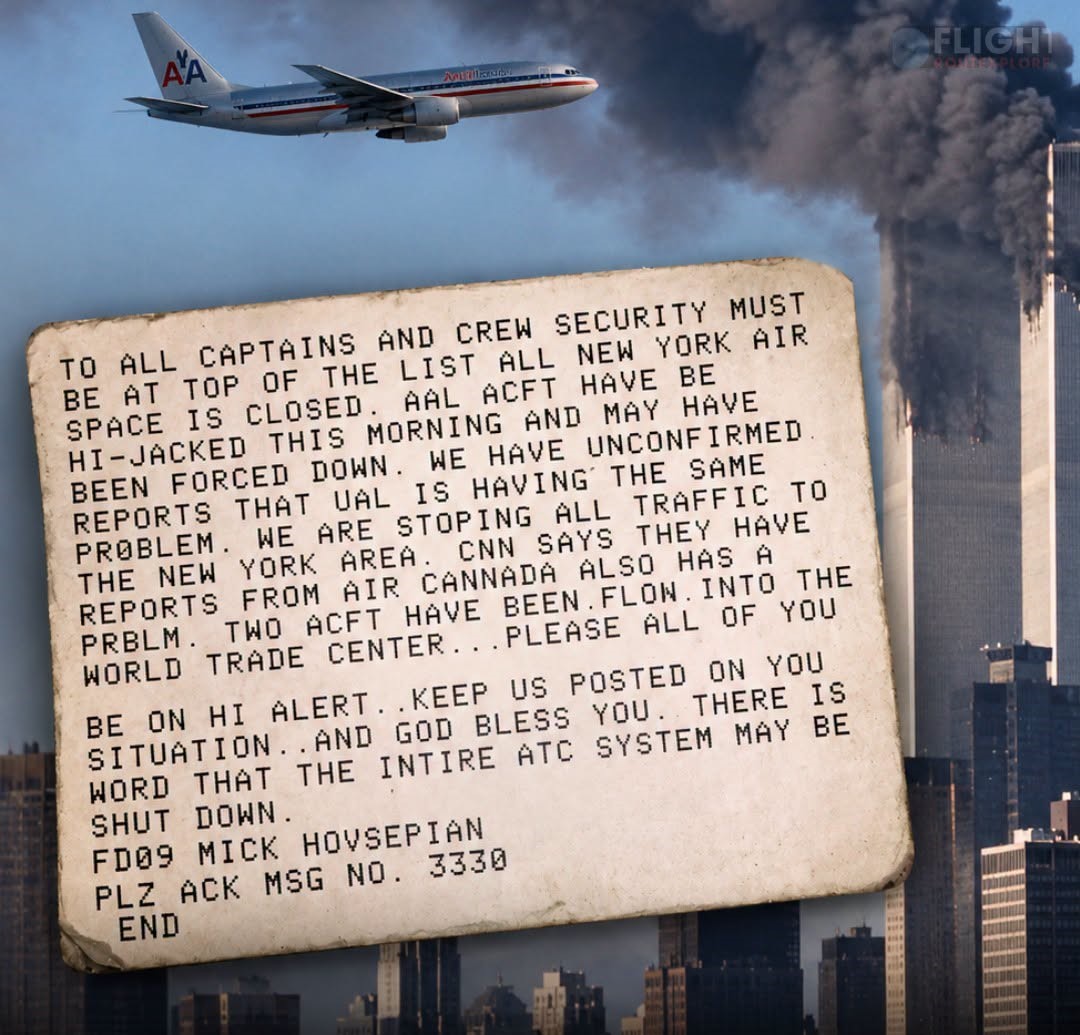
On September 11, 2001, an extraordinary ACARS message went out to aircraft operating in the New York airspace as the scale of the attacks became clear.
“SECURITY MUST BE AT TOP OF THE LIST.”
The message warned crews that American Airlines aircraft had been hijacked, reported unconfirmed information involving United Airlines, and ordered traffic to be stopped in the New York area.
It also contained a chilling update:
“TWO ACFT HAVE BEEN FLOW INTO THE WORLD TRADE CENTER.”
Crews were told to remain on high alert and keep dispatchers informed of their situation. The message ended with a routine request that, under these circumstances, felt anything but routine:
“PLZ ACK MSG NO. 3330.”
ACARS was normally used for routine airline communications, but on 9/11 it became a vital link between aircraft and dispatchers as an unprecedented emergency unfolded.
Around the same time, United Flight 93 received warnings about cockpit intrusions and the attacks on the World Trade Center. Minutes later, Flight 93 itself was hijacked.
This small printed message captures a terrifying moment in aviation history: crews in the air were learning, piece by piece, that something unimaginable was happening on the ground.