
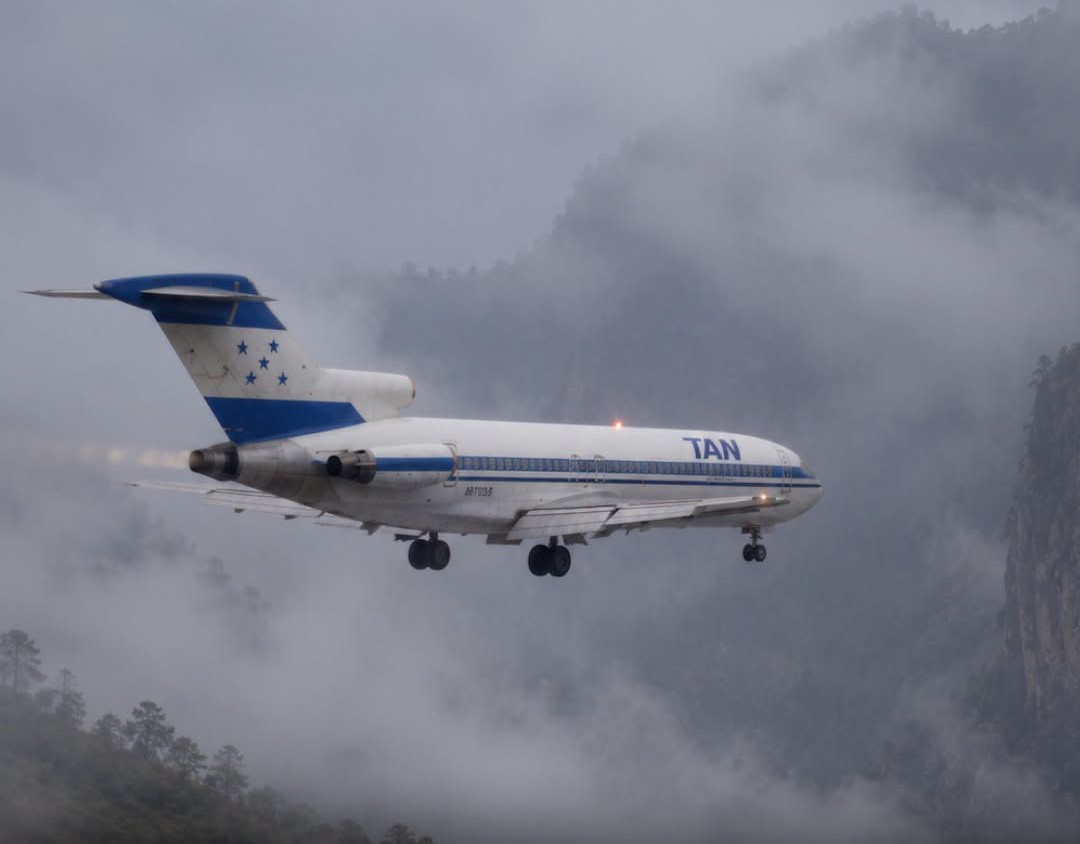
On October 21, 1989, TAN-SAHSA Flight 414, a Boeing 727-224, crashed into Cerro de Hula while approaching Toncontín International Airport in Tegucigalpa, Honduras.
The disaster killed 131 of the 146 people aboard, leaving just 15 survivors in one of Central America’s deadliest aviation accidents.
The aircraft, registered as N88705 and leased from Continental Airlines, was operating a scheduled passenger service from San José, Costa Rica, with a stop in Managua, Nicaragua, before continuing to Tegucigalpa.
On board were 138 passengers and eight crew members. The flight was approaching its destination on a Saturday morning when disaster struck.
At approximately 7:30 a.m. local time, air traffic control cleared the aircraft for a VOR/DME approach to Runway 01 at Toncontín Airport. The mountainous terrain surrounding the airport made strict adherence to the published approach procedure essential.
Pilots were required to descend through a series of specified altitude steps to maintain safe clearance from the surrounding mountains.
However, the crew began a continuous descent from approximately 7,600 feet while still about 11 nautical miles from the airport, instead of following the prescribed step-down altitudes. The aircraft descended dangerously low as it approached the airport through poor visibility.
The Boeing 727 struck Cerro de Hula at an elevation of approximately 4,800 feet, about 800 feet below the mountain’s summit and less than five nautical miles from the runway threshold. The aircraft was still configured for landing when it hit the terrain, leaving passengers with virtually no warning before impact.
The force of the collision broke the aircraft into three major sections, scattering wreckage and burning debris across the mountainside. The forward section, containing the cockpit and first-class cabin, remained comparatively intact, helping explain why some occupants survived.
Fifteen people ultimately survived, including all three flight crew members. Some initial survivors later died before receiving medical treatment, as poor weather delayed rescue efforts.
Investigators from Honduras, assisted by the United States National Transportation Safety Board, examined the wreckage, flight data and circumstances surrounding the approach.
The central finding was that the pilots had failed to follow the published instrument approach procedure, descending below the required altitudes and into the mountain’s path.
One particularly troubling detail emerged: although the aircraft was equipped with a ground proximity warning system designed to alert pilots to dangerous terrain, the system had been disconnected. Its use was not mandatory under Honduran regulations at the time.
In the aftermath, the three pilots faced charges of manslaughter and negligence, but the legal proceedings were never conclusively resolved. The tragedy exposed serious concerns about approach discipline, terrain awareness and aviation safety around mountainous airports.
Flight 414 remains a sobering reminder that ignoring prescribed descent altitudes can turn an otherwise routine landing into a catastrophe.