

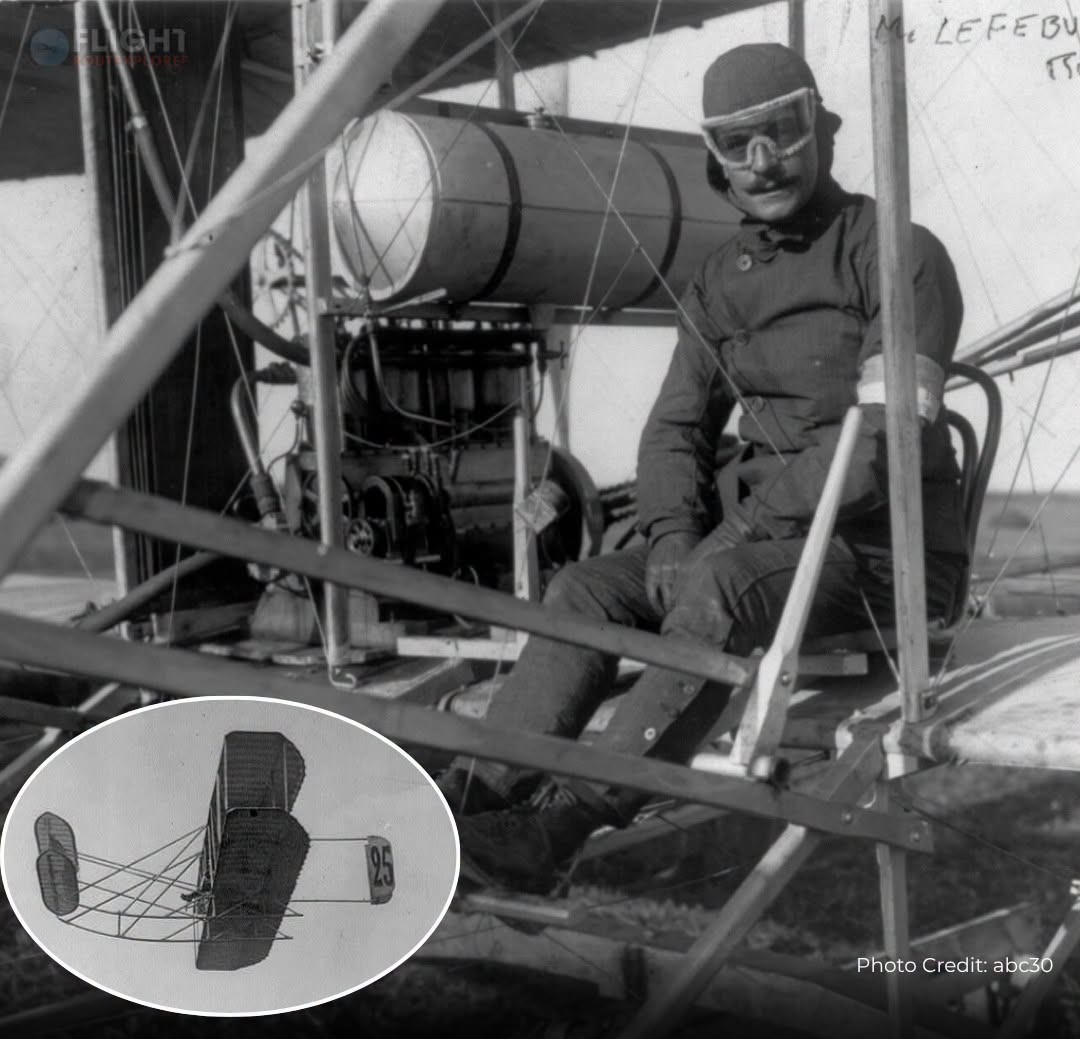
On This Day in 1909: He Flew Into History — And Paid the Ultimate Price
On September 7, 1909, Eugène Lefebvre took to the skies at a time when aviation was still in its infancy.
There were no modern cockpits. No sophisticated instruments. No flight computers. No established safety procedures.
There was simply an aircraft, a pilot, and the courage to believe that humans belonged in the sky.
Lefebvre was the chief pilot of the French Wright Company and had already made headlines at the 1909 Reims aviation meeting, where his daring flying was described as one of the earliest displays of stunt flying. He even finished fourth in the international air race.
But just nine days later, at Port-Aviation near Paris, tragedy struck.
While testing a Wright biplane, Lefebvre’s aircraft suddenly plunged from only about 20 feet above the ground. He was just 30 years old.
His death made him the first pilot in history to die while piloting a powered airplane.
Today, his name may not be as famous as the Wright brothers or Louis Blériot. But every time an aircraft takes off, we are reminded of people like Lefebvre who ventured into the unknown before aviation had answers to many of the questions we take for granted today.
His story is not simply about an accident.
It is about courage, curiosity, and the human desire to explore what seems impossible.
The pioneers of aviation did not know where the journey would lead.
They simply had the courage to begin.
Remembering Eugène Lefebvre — one of the earliest pilots who helped push humanity toward the future of flight.