

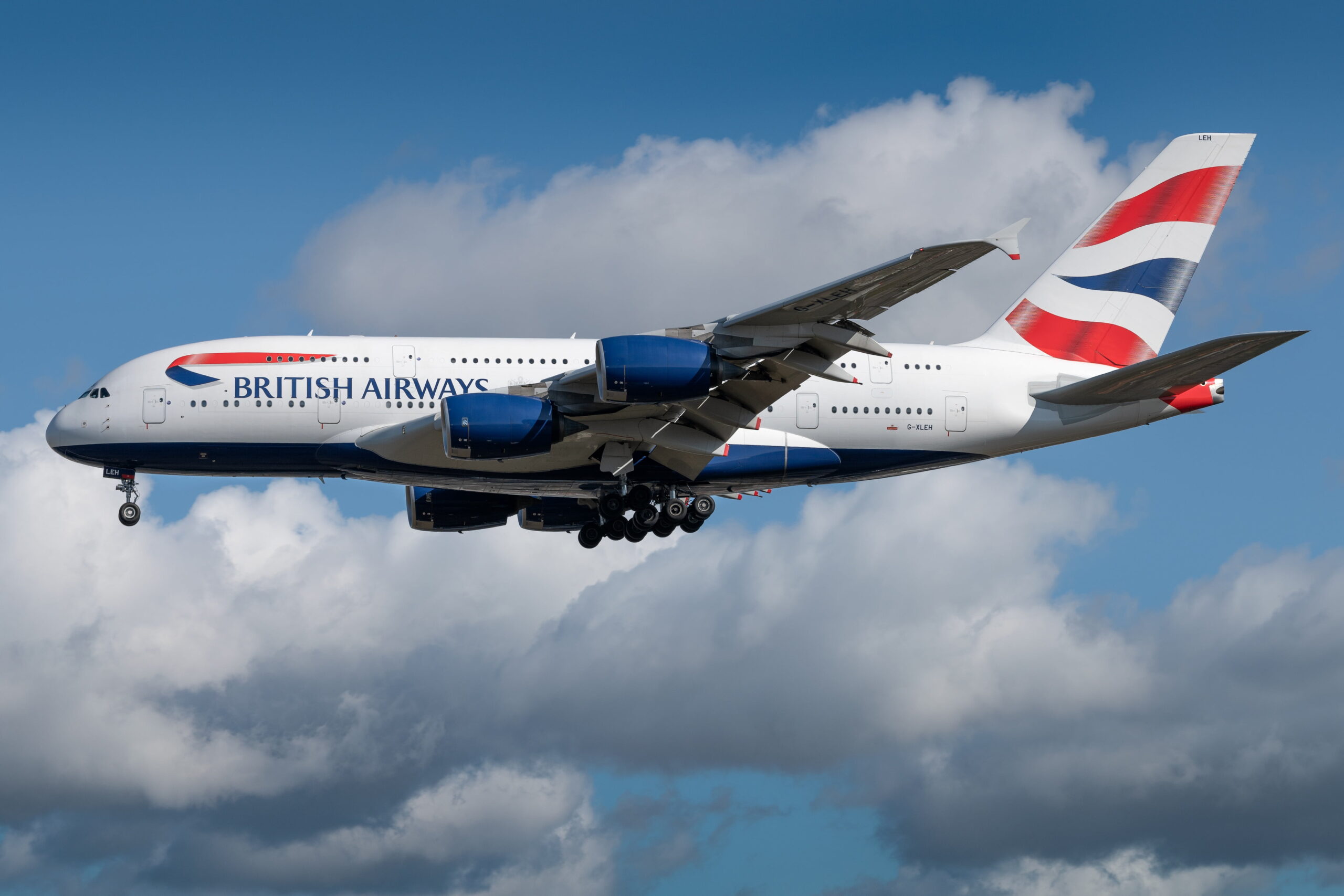
Dec 6th 2024 : A British Airways Airbus A380-800 operating a transatlantic service from Los Angeles to London Heathrow sustained a turbulence-related accident over the North Atlantic that resulted in serious injuries to a cabin crew member and a passenger, according to findings released by the UK Air Accidents Investigation Branch (AAIB).
The aircraft, registration G-XLEI, was operating flight BA-268 with 277 passengers and 24 crew on board. While cruising at flight level 390 (FL390) south of Greenland, the aircraft entered an area of forecast turbulence. In anticipation, the flight crew had already switched on the fasten seat belt signs and instructed the cabin crew to secure the cabin.
Despite these precautions, the aircraft encountered a short but significant episode of turbulence lasting approximately 10 to 15 seconds. The flight crew later described the event as light to moderate turbulence. Recorded flight data showed airspeed fluctuations of approximately ±13 knots, which remained under control of the autopilot.
During the turbulence, a flight attendant was in the process of lowering her crew seat in preparation to strap in. The sudden vertical movement lifted her off balance, causing her to fall and sustain a serious ankle fracture. She immediately contacted the flight deck via interphone to report her injury. Shortly afterward, the in-flight lead (IFL) was informed that a passenger seated on the upper deck had also suffered a serious leg injury.
The injured passenger reported that he had left his seat to use the lavatory. Although the seat belt signs were illuminated, he stated he had been asleep and did not notice them or hear any related announcements. While returning to his seat, he felt a sudden upward and sideways movement of the aircraft, during which he believed the motion of the cabin floor caused his ankle to fracture.
The flight crew consulted MedLink ground-based medical services for advice. Two passengers who were medical doctors assisted the cabin crew in treating the injured individuals, using splints from the onboard medical kits and improvising additional supports from available materials and clothing. Pain relief was administered, and the injured were stabilized for the remainder of the flight.
Despite the injuries, the crew determined that diversion options were limited due to weather constraints at nearby airports. With guidance from MedLink and air traffic control, the decision was made to continue to London Heathrow, where the aircraft landed safely without further incident.
On January 8, 2026, the AAIB released its bulletin concluding that the probable cause of the accident was a brief encounter with turbulence during which a cabin crew member and a passenger sustained serious leg injuries. The investigation highlighted several contributing and mitigating factors.
The AAIB noted the effectiveness of real-time weather application technology used by the flight crew, which provided localized and up-to-date turbulence information. The commander followed established procedures for anticipated turbulence, including early activation of the seat belt signs and instructions to secure the cabin. The AAIB concluded that had the seat belt signs not been illuminated, the number of injured occupants could have been significantly higher.
The investigation also emphasized the importance of cabin resource management during in-flight medical situations. With two serious injuries and an additional unrelated medical issue onboard, the IFL recalled additional cabin crew from rest periods to support the medical response. The presence of medically qualified passengers and the use of ground-based medical advice were identified as key factors in managing the situation effectively.
The AAIB concluded that this event underscores the benefits of live weather data, adherence to turbulence procedures, and access to professional medical support in helping flight crews make informed decisions during long-haul operations.