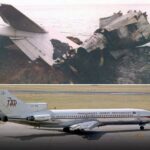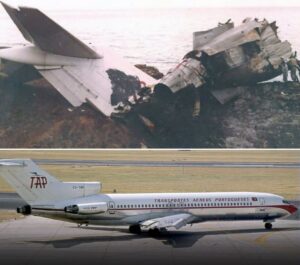

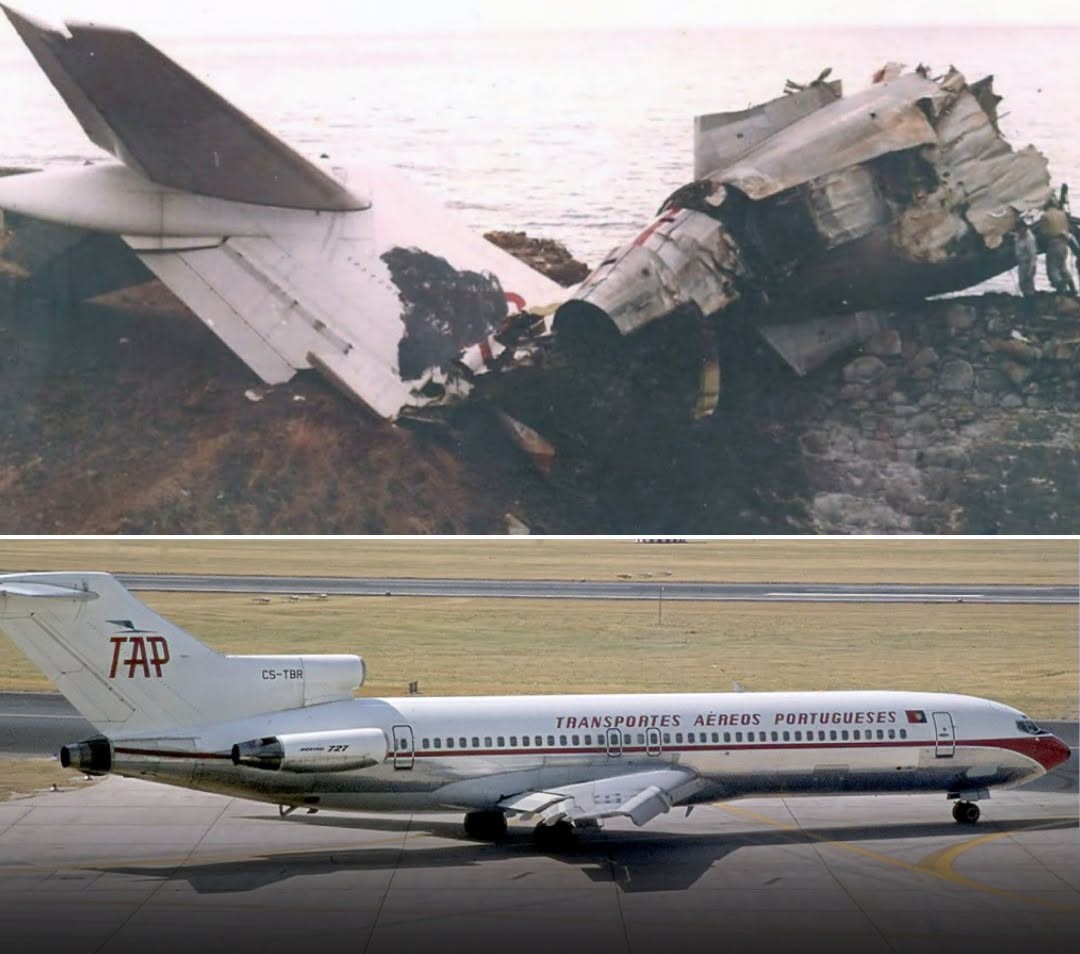
On November 19, 1977, TAP Air Portugal Flight 425, operating a Boeing 727-282B registered as CS-TBR, was approaching Funchal Airport, also known as Santa Catarina Airport, on the Portuguese island of Madeira.
The aircraft was flying from Brussels, Belgium, with an intermediate stop in Lisbon. There were 156 passengers and eight crew members on board.
As the aircraft approached Madeira, the pilots received warnings of heavy showers, changing winds and visibility reduced to between three and five kilometres.
The airport was particularly challenging because its runway was relatively short, measuring just 1,600 metres.
The crew initially attempted to land on Runway 06 but abandoned the approach after losing visual contact with the runway.
A second approach, this time towards Runway 24, was also discontinued when heavy showers again obscured visibility. The aircraft subsequently positioned itself for a third landing attempt.
At approximately 9:48 pm local time, the Boeing 727 approached Runway 24 in difficult weather conditions. Although the aircraft crossed the runway threshold at approximately 50 feet, it was travelling at around 154 knots, significantly faster than the recommended landing speed.
The aircraft floated during its landing flare before finally touching down at approximately 148 knots, around 628 metres beyond the displaced runway threshold. This left only about 912 metres of runway available for stopping.
The pilots deployed the spoilers and activated reverse thrust, but the aircraft failed to decelerate sufficiently. It began skidding across the wet runway, and a sudden directional correction further complicated the situation. Despite braking efforts, the Boeing 727 continued towards the runway end.
It eventually crossed the runway boundary at approximately 78.5 knots and plunged down an embankment. The aircraft struck a stone bridge approximately 28 metres below runway level.
The impact tore the aircraft apart, separating the tail section from the main fuselage. The remaining wreckage fell onto a rocky beach near the sea, where a devastating fire and explosion followed.
Of the 164 people aboard, 131 lost their lives, including 125 passengers and six crew members. Only 33 people survived, and all suffered injuries. The accident became the deadliest disaster in TAP Air Portugal’s history.
The official investigation found no aircraft mechanical defect that contributed to the accident. Investigators determined that the disaster resulted from several factors rather than a single failure.
These included extremely unfavourable weather, a landing speed approximately 19 knots above the reference speed, an excessively long landing flare and a touchdown far beyond the normal touchdown point.
Investigators also identified possible dynamic hydroplaning, a phenomenon in which water creates a layer between the tyres and runway, significantly reducing braking effectiveness. The investigation further noted delayed spoiler deployment and a sudden rudder correction after touchdown.
The tragedy prompted recommendations for improved navigation and landing aids, better weather monitoring around Madeira and stricter compliance with approach and landing minima. Madeira Airport would eventually undergo major runway extensions, dramatically changing its operational capabilities.
Forty-nine years later, Flight 425 remains a sobering reminder of how adverse weather, excessive landing speed and limited runway distance can combine to produce catastrophic consequences.