

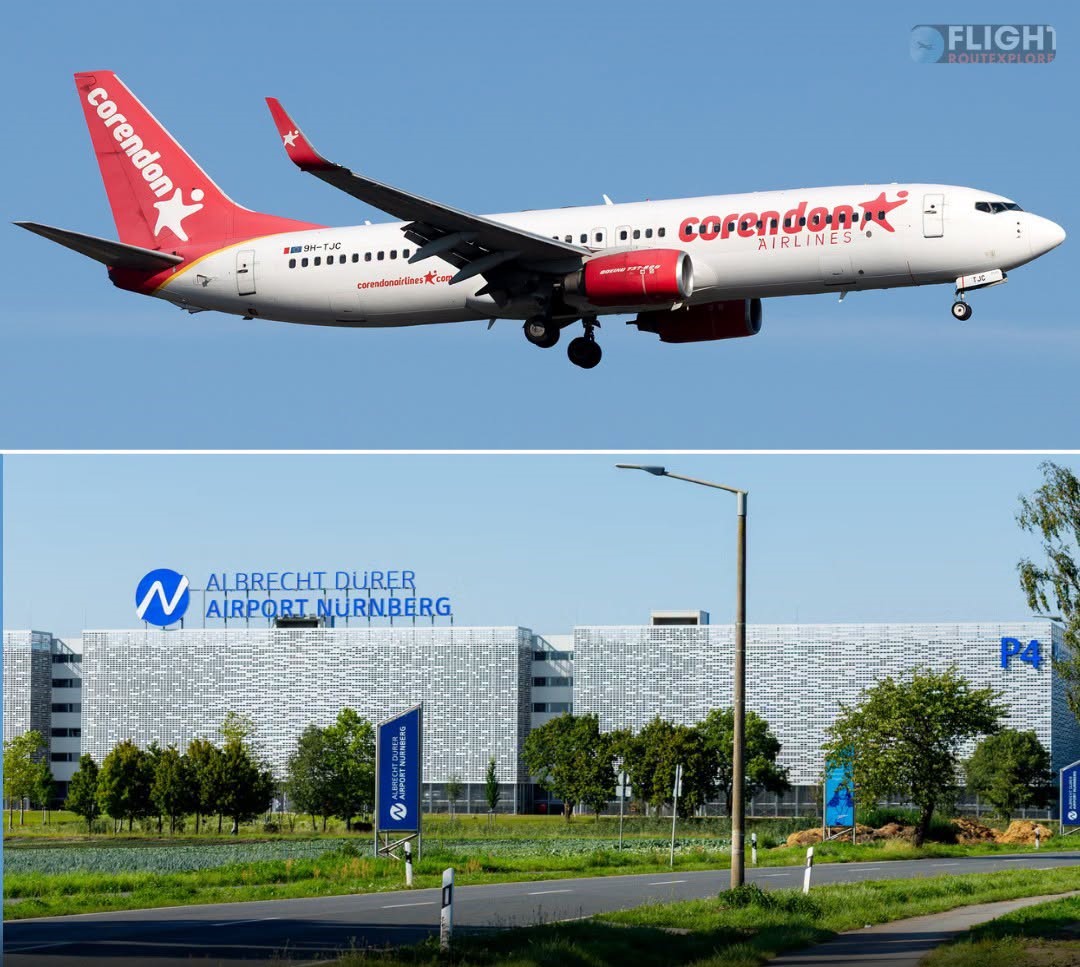
A routine passenger flight from the Greek island of Corfu to Nuremberg, Germany, suddenly became the centre of a major security scare after its emergency transponder code indicated a possible hijacking.
Corendon Airlines Flight XR456, operated by a Boeing 737-800, reportedly transmitted squawk 7500 while flying over Croatia. This four-digit transponder code is internationally recognised as a signal that an aircraft is being hijacked.
With air traffic controllers unable to establish radio contact with the cockpit, authorities had to treat the alert as a potential real-world threat.
The response was swift. A French-built Rafale fighter jet was scrambled from Croatia to intercept the aircraft, while the German military also dispatched fighter jets. Meanwhile, police temporarily cordoned off Nuremberg Airport as security teams investigated the situation.
The scare disrupted airport operations, with six flights delayed and two incoming flights diverted to other airports as a precaution.
But the situation took a dramatic turn when Corendon Airlines explained that a brief malfunction in the aircraft’s radio communication system had accidentally triggered the alert.
The airline confirmed that no emergency had occurred and that all 178 passengers, the crew and the aircraft were never in danger. The Boeing 737 eventually landed safely in Nuremberg.
The incident highlights a critical challenge in aviation: when a hijack code is transmitted and cockpit communication is lost, authorities cannot simply assume it is a technical fault. They must respond as though the threat could be real until the situation is clarified.
A single radio malfunction was enough to trigger an international security response, scramble military aircraft and disrupt commercial flights.
In aviation, even a false alarm can set an extraordinary chain of events in motion.










