

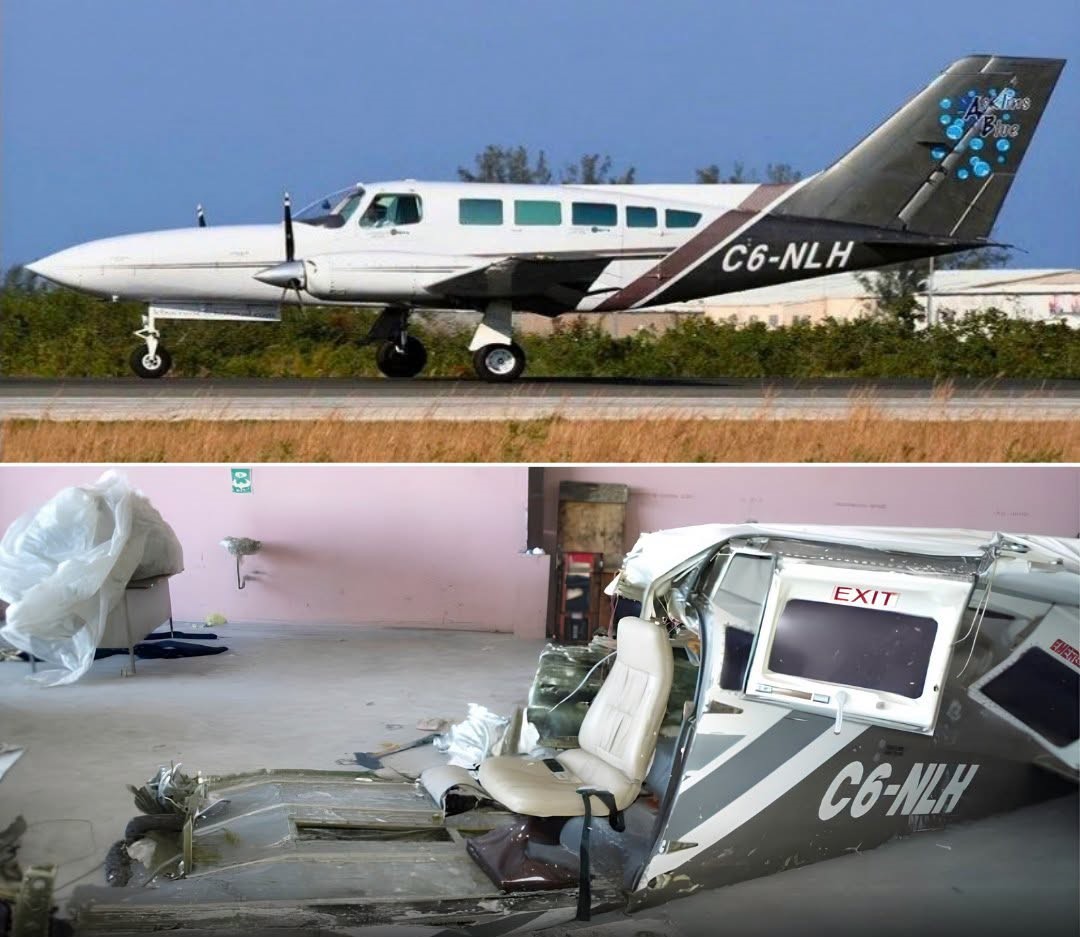
On October 5, 2010, Cessna 402C C6-NLH departed Lynden Pindling International Airport in Nassau, Bahamas, on a charter flight to Cockburn Town, San Salvador.
Minutes later, the aircraft crashed into Lake Killarney, killing the pilot, second pilot and seven passengers.
The flight took off from Runway 14 at about 12:35 p.m. Witnesses immediately saw white smoke streaming from the left engine and heard sounds resembling misfiring or backfiring. The aircraft struggled to climb and remained unusually low.
About a minute after becoming airborne, air traffic control warned the crew about the smoke and instructed them to return. The crew acknowledged and accepted a landing on Runway 27.
The aircraft began a left turn toward the airport, but its bank angle progressively increased. The landing gear was lowered during the turn, further reducing performance.
The aircraft remained at very low altitude, eventually rolled into an extremely steep bank and lost control. It nosedived into Lake Killarney, inverted, struck the water and came to rest after breaking apart.
The investigation found that the left engine had suffered a mechanical failure involving its No. 2 cylinder. The cylinder could not produce rated power, but investigators found no evidence that the engine had suffered a complete loss of power.
More importantly, the right engine was later found with its electrical and engine-control switches in the OFF position.
Investigators concluded that the functioning right engine had been shut down while the damaged left engine was already producing insufficient power. The resulting total loss of thrust left the overweight aircraft unable to climb.
The attempt to return to the airport then became fatal when the aircraft entered a steep turn with the landing gear down and stalled.
The investigation also uncovered serious operational problems. The aircraft was more than 500 pounds above its maximum permitted takeoff weight of 6,850 pounds, with its center of gravity outside the approved envelope.
Three authorized charter operators had reportedly refused the flight after judging the passengers, luggage and equipment too heavy for their aircraft.
There were also warnings before the crash. During an earlier flight that morning, a passenger who was an airline pilot noticed an abnormal left-engine manifold-pressure indication and warned the crew.
The pilots reportedly dismissed the discrepancy, saying it would clear when full power was applied. The same aircraft then returned to Nassau before undertaking the fatal flight.
The charter operator was not recognized by Bahamian authorities as an authorized air-taxi operator. Investigators also identified inadequate pilot training, maintenance shortcomings, poor weight-and-balance controls, weak oversight and serious deficiencies in passenger and flight-plan documentation.
The flight plan listed only one person aboard, although nine people were ultimately on the aircraft.
After the crash, recovery operations were complicated by bad weather, rough lake conditions and darkness. Eight bodies were recovered initially, while the ninth victim was found and recovered two days later.
The investigation concluded that the crash resulted from a chain of failures rather than one isolated problem: the left-engine mechanical failure, shutdown of the functioning right engine, excessive aircraft weight, inadequate performance and the attempted low-altitude turnback that ended in loss of control. All nine people aboard died.










