

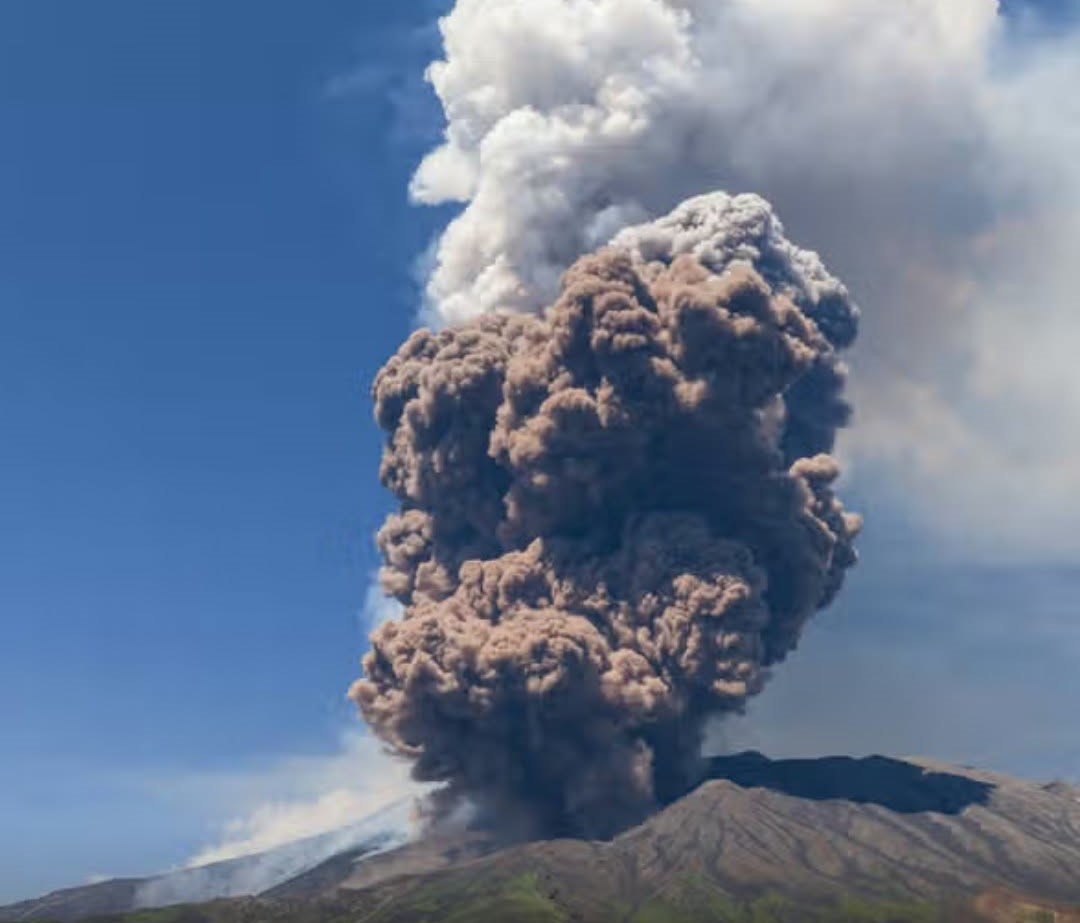
Mount Etna Grounds Every Flight at Italy’s Fifth-Busiest Airport for a Second Day — And the Danger Is Almost Invisible
Mount Etna has forced another major disruption at Catania-Fontanarossa Airport, with all arrivals and departures suspended through Sunday, September 27.
The airport operator SAC extended the shutdown until 11:59 p.m. local time, after flights that were expected to resume Sunday afternoon remained grounded.
And there’s a serious reason.
Volcanic ash may look like harmless dust, but it contains tiny fragments of rock, minerals and volcanic glass. When ingested by a jet engine, those particles can melt inside the hot sections and later solidify, potentially disrupting airflow and causing engine power loss.
Ash can also damage aircraft windscreens and other exposed surfaces.
That means the danger isn’t simply whether pilots can see through an ash cloud. The real concern is what those microscopic particles can do to an aircraft flying through it.
For Catania, this is a familiar challenge. Mount Etna has been active for hundreds of thousands of years, while modern aviation has had to develop increasingly sophisticated ways of monitoring the volcano and keeping aircraft away from hazardous ash.
The disruption also highlights the difficult relationship between one of Europe’s most active volcanoes and a busy international airport located nearby.
Italy’s National Institute of Geophysics and Volcanology (INGV) and aviation regulator ENAC have been strengthening cooperation on volcanic-ash monitoring, particularly after repeated disruptions affecting Catania.
For passengers, the advice remains simple: check directly with your airline before travelling to the airport.
Because sometimes the biggest threat to your flight schedule isn’t a technical problem with the aircraft — it’s a mountain that decides to remind everyone who is in charge.










