
A flight instructor was killed and a student pilot seriously injured after a Piper PA-28-140, N1039X, crashed near Clinton, Michigan, on June 10, 2024, during an instructional flight.
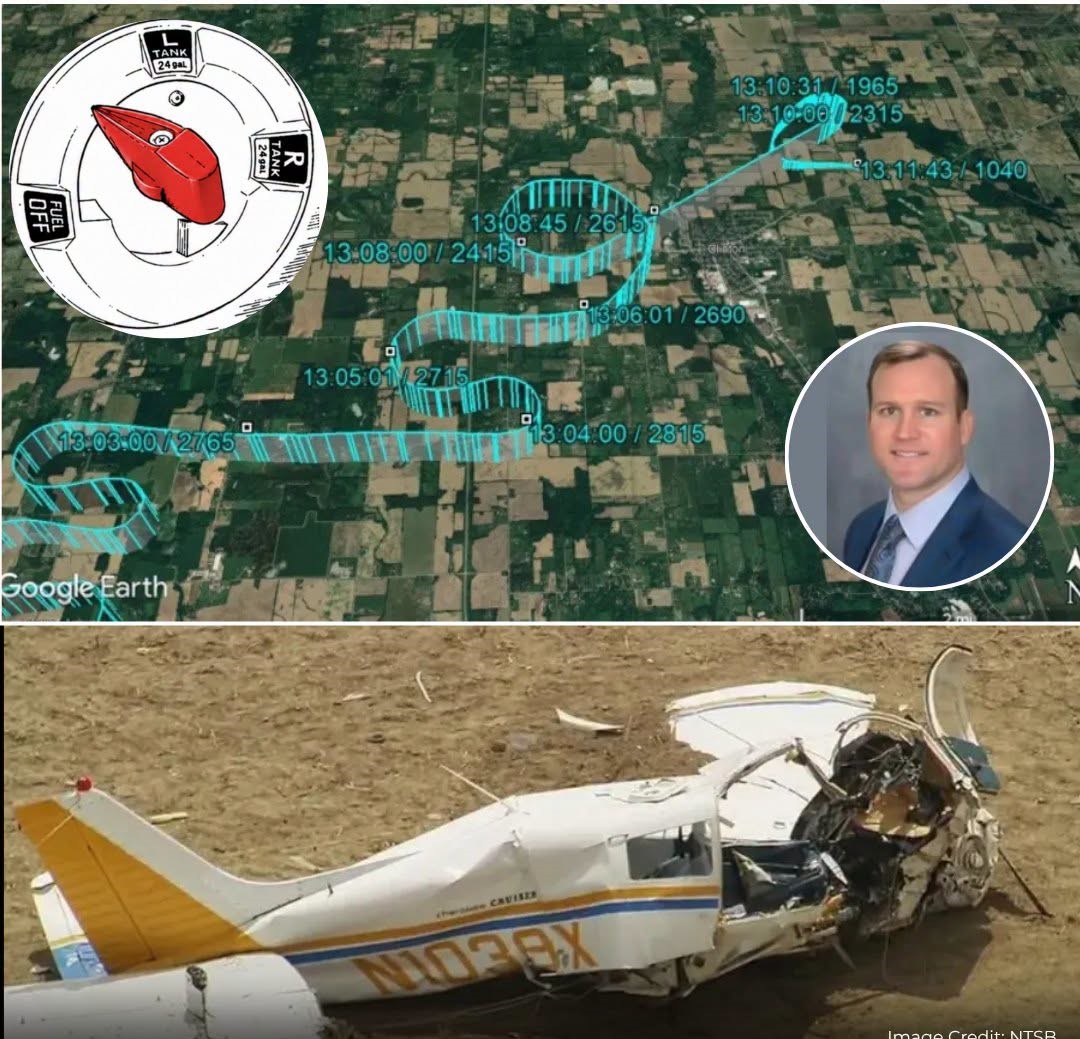
According to the NTSB investigation, the aircraft experienced a possible reduction in engine power after completing training maneuvers south of the departure airport. The instructor contacted air traffic control to return to the airport, and the airplane entered a descent consistent with its recommended best-glide speed.
The aircraft then made an approximately 270° left turn toward a road and field, consistent with an attempt to conduct a forced landing.
At about 200 feet above ground level, the airplane began turning right away from the road. Investigators found evidence that the right wingtip struck the ground first, followed by the nose, consistent with a loss of control while maneuvering at very low altitude.
The post-crash examination found no mechanical failure that would have prevented normal operation. Investigators did, however, find usable fuel remaining in the left tank, while the fuel system downstream of the selector contained little or no fuel.
The fuel selector was found positioned between the Left Tank and Off positions, which would prevent fuel from reaching the engine.
Fuel records indicated the aircraft had been filled with 36 gallons two days before the accident. Based on the aircraft’s subsequent flight history and estimated fuel consumption, investigators concluded the accident flight was consistent with the airplane having operated on one fuel tank for the entire 1.7-hour flight until that tank was depleted.
The NTSB determined that the evidence was consistent with fuel starvation causing a total loss of engine power. Investigators said the fuel selector was likely inadvertently moved toward the Off position while attempting to restore engine power, although they could not determine when it was moved or which occupant moved it.
The investigation also examined toxicology findings involving both occupants. Cannabis-related findings were detected, but the available evidence was insufficient to determine whether impairment contributed to the accident.
The NTSB determined the probable cause was the flight instructor’s failure to maintain airplane control while maneuvering for a forced landing.
Contributing factors were the inadvertent positioning of the fuel selector between the Left Tank and Off positions, resulting in fuel starvation and total loss of engine power, and inadequate fuel monitoring by the flight instructor.