
On September 16, 2011, the National Championship Air Races at Reno-Stead Airport in Nevada turned into one of the deadliest air-racing disasters in U.S. history.
The aircraft, a heavily modified North American P-51D Mustang named The Galloping Ghost, was being flown by 74-year-old veteran racing pilot Jimmy Leeward during the Unlimited Class Gold Race.
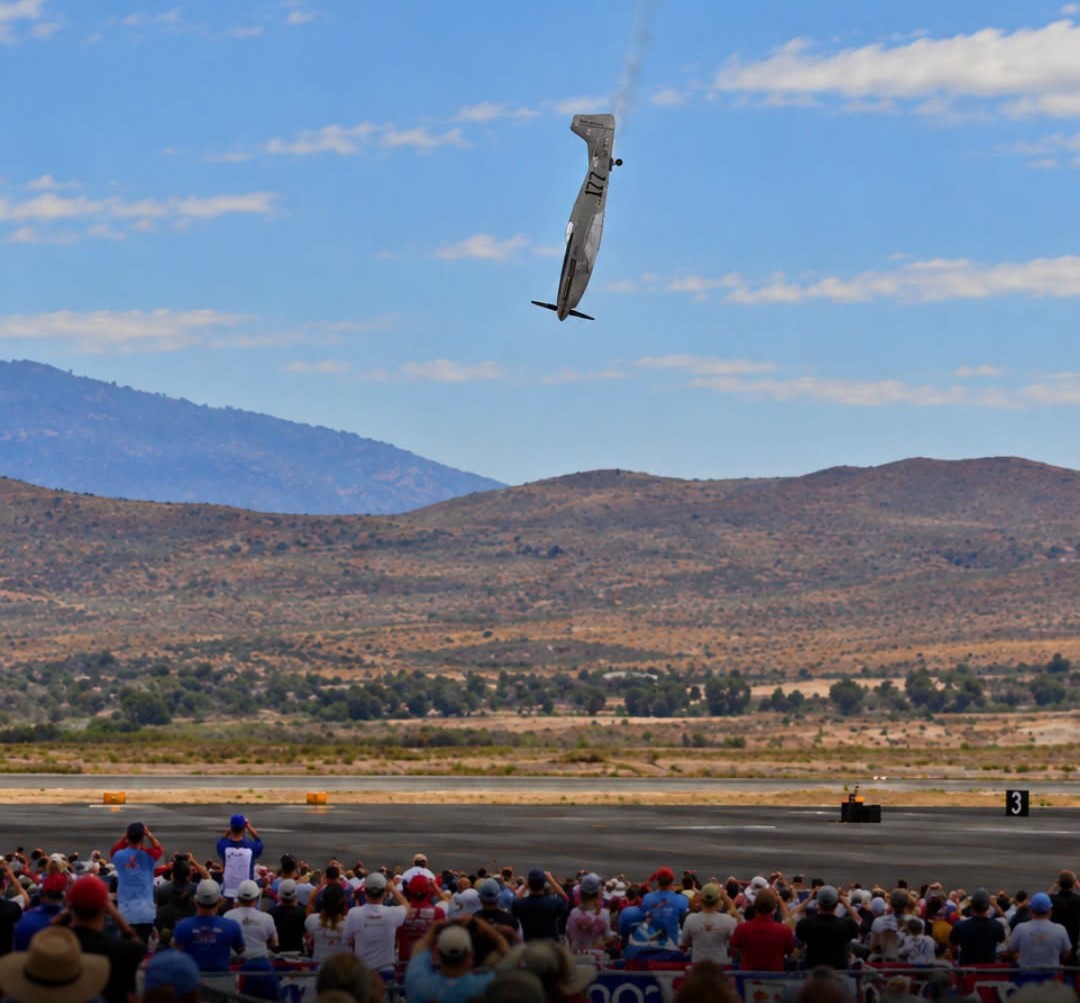
The Galloping Ghost was in third place on the third lap of the six-lap race. As Leeward passed Pylon 8 at roughly 445 knots, or more than 500 mph, the aircraft suddenly experienced a violent left-roll upset. It then pitched sharply upward and entered a right-rolling climb.
The vertical acceleration reached an extraordinary 17.3 G, far beyond what a person could withstand for more than a moment. Investigators later determined that Leeward’s useful consciousness was probably less than one second, leaving him effectively incapacitated.
The aircraft continued climbing without effective pilot control before beginning a helical descent toward the airport ramp. During the sequence, part of the left elevator trim tab separated from the aircraft. The Mustang then plunged toward the spectator area directly in front of the grandstands.
Traveling at extreme speed, it struck the ramp and disintegrated, scattering debris across the box seating area. The pilot and 10 people on the ground were killed. At least 64 spectators were injured, with at least 16 suffering serious injuries.
The crash brought the remaining races to an immediate halt and prompted a major investigation into both the aircraft and safety practices at air races. Investigators recovered wreckage, examined photographs and videos taken by spectators, and analyzed telemetry and recorded aircraft data to reconstruct the final seconds of the flight.
The eventual investigation revealed that the disaster was not simply the result of a pilot losing control. The National Transportation Safety Board found that the elevator trim tab system had become insufficiently stiff, allowing aerodynamic flutter at racing speeds.
Deteriorated locknut inserts had allowed trim-tab attachment screws to loosen, while fatigue cracking had developed in one screw. The resulting flutter produced enormous dynamic loads that caused the left trim-tab link assembly to buckle and fracture.
The failure then triggered similar flutter and failure in the right trim-tab system, producing abnormal elevator movement and the catastrophic loss of control.
Investigators also uncovered another important problem: The Mustang had undergone numerous major structural and flight-control modifications that were undocumented and had not been adequately flight-tested or analyzed for their effects on strength and handling.
The NTSB identified these modifications and the operation of the aircraft in the unique high-speed air-racing environment without sufficient testing as contributing factors.
The tragedy resulted in new safety recommendations covering modified race aircraft, technical inspections, pilot high-G training, spectator protection and race-course design. The Reno disaster became a major turning point in the way the risks of highly modified racing aircraft and high-speed air-show operations were evaluated.