
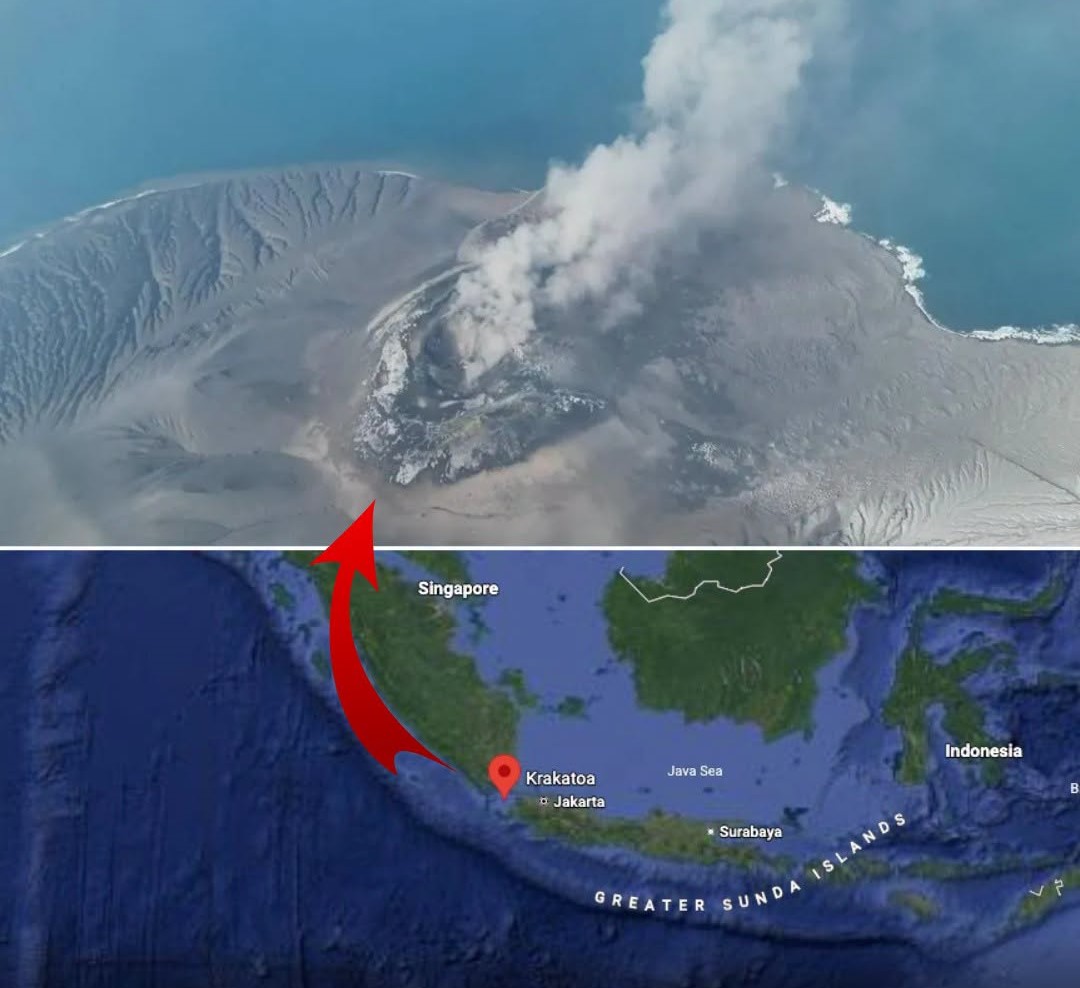
Indonesia designates three Java airports as alternatives after volcanic ash from Anak Krakatau forces six airports to close and disrupt flights.
The volcano had started erupting late on Friday night, generating continuous seismic activity, lava fountains, and booming sounds across surrounding regions. Two more eruptions happened early on Sunday, authorities said.
Authorities have confirmed there is no tsunami warning linked to the recent activity of the volcano, which is in the Sunda Strait between the islands of Java and Sumatra.
One resident, Aldi Candra Prayogi, told the outlet that he felt since Friday evening and it felt like “small grains of sand had gotten into my eyes”, and that he needs to use eye drops to ease the irritation.
The dust is so thick that he has to sweep the front yard of his house every five minutes, he also said.
Anak Krakatau, which means Child of Krakatoa, has been sporadically active since it emerged from the sea at the beginning of last century in the caldera formed after the 1883 eruption of Mount Krakatoa.
The volcano – also known as Anak Krakatoa – collapsed in December 2018, triggering a huge tsunami which killed over 400 people, and displaced and injured thousands more on the nearby coastlines of Sumatra and Java.
Indonesia has designated Kertajati International Airport, Jenderal Ahmad Yani International Airport and Juanda International Airport as alternative landing locations for domestic and international flights affected by volcanic ash from the Anak Krakatau eruption.
The number of closed airports reached six after Husein Sastranegara Airport in Bandung was shut on Sunday. The other affected airports include Soekarno-Hatta International Airport, Radin Inten II Airport, Halim Perdanakusuma Airport, Pondok Cabe Airport and Budiarto Airport.
Transportation Minister Dudy Purwagandhi said volcanic ash was still detected during airport testing, prompting authorities to keep the closures in place while conditions were reassessed.
Kertajati Airport remained operational and had already received two Garuda Indonesia flights diverted from Jeddah and Madinah. However, airlines were urged to remain vigilant as weather conditions and the movement of volcanic ash could change rapidly.
Authorities also instructed airlines to promptly notify passengers of cancellations and facilitate electronic cancellations and refunds.
With air travel disrupted, the government encouraged passengers and businesses to consider rail, road and sea transport. Ferry services across the Sunda Strait remained operational despite the eruption.
The closures highlight the major aviation risks posed by volcanic ash, which can severely affect aircraft engines and flight operations.