
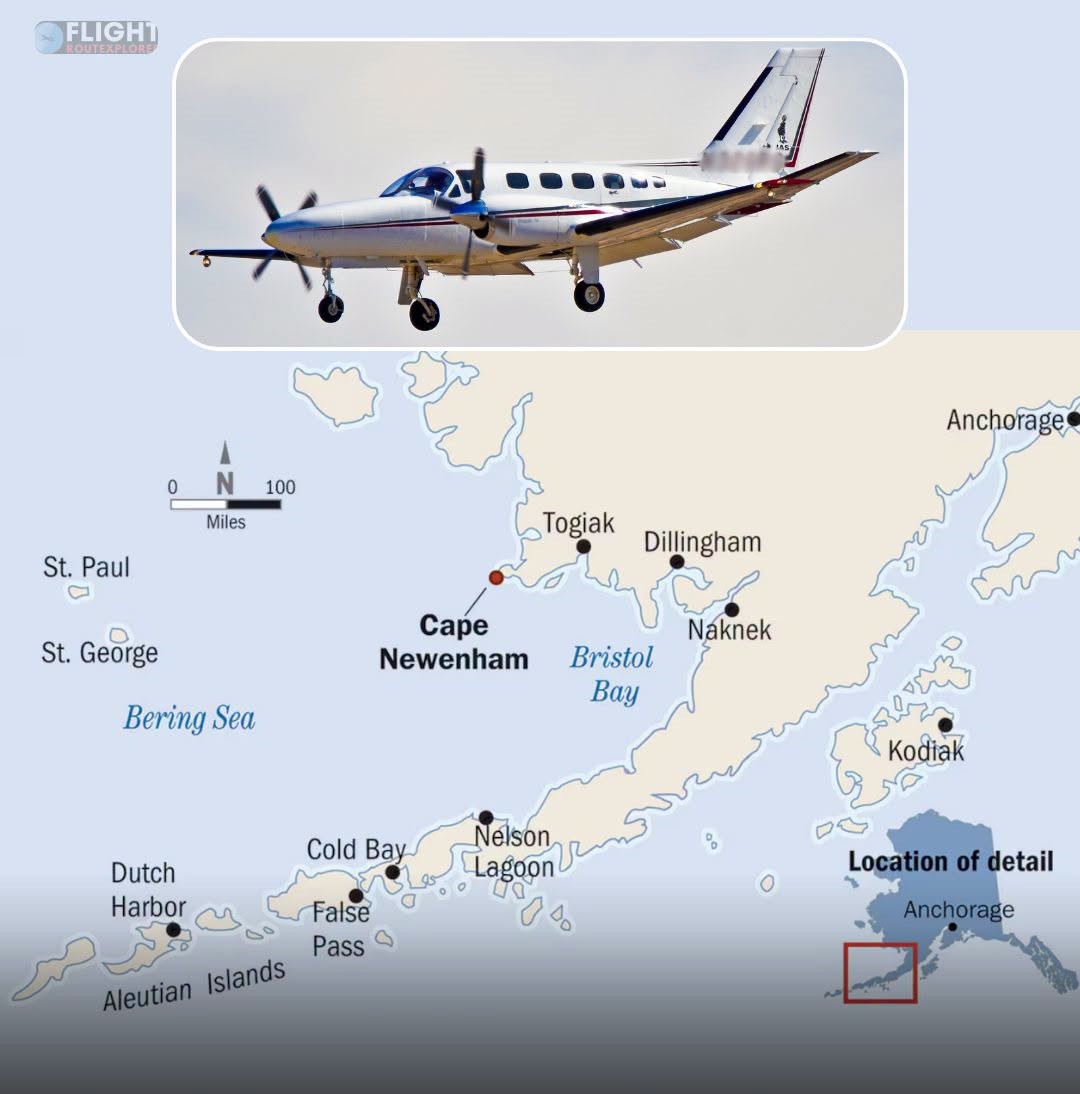
A charter aircraft carrying eight people crashed Thursday near a remote U.S. military radar site in Southwest Alaska, killing everyone on board.
The Security Aviation twin-engine Cessna Conquest had departed Ted Stevens Anchorage International Airport at about 9:15 a.m. and was attempting to land at the Cape Newenham Long Range Radar Site Airport when it went down around 11:45 a.m.
The aircraft was carrying two pilots and six passengers, including two U.S. Army Corps of Engineers employees and four contractors.
Investigators say extremely poor visibility appears to have played a major role. Weather observations near the time of the crash showed fog and mist with visibility of about three-quarters of a mile, before conditions deteriorated to almost zero visibility.
The pilot was flying under instrument flight rules and had already aborted at least one landing attempt because the runway could not be seen. The aircraft climbed and attempted another approach.
During the second approach, the plane was heading south when air traffic controllers lost contact with it. It crashed into steep terrain just west of the runway, producing a fiery impact that left the wreckage highly fragmented.
The airport itself presents significant challenges. The runway sits on the slope of a 2,305-foot mountain, with high terrain on both sides and at the southern end. Pilot information warns that a successful go-around is “improbable.”
Search and rescue teams reached the site Thursday, but an Alaska Air National Guard rescue helicopter confirmed there were no survivors. The victims have not yet been publicly identified pending positive identification and notification of their families.
The NTSB has launched a six-member investigative team, with specialists examining areas including weather and air traffic control. Investigators will also determine what weather information was available to the pilots and why the aircraft crashed during its approach.
The remote radar station is part of a network of facilities used to monitor aircraft operating in Alaska’s airspace.
Security Aviation said it was “heartbroken” by the tragedy and is cooperating with investigators.