
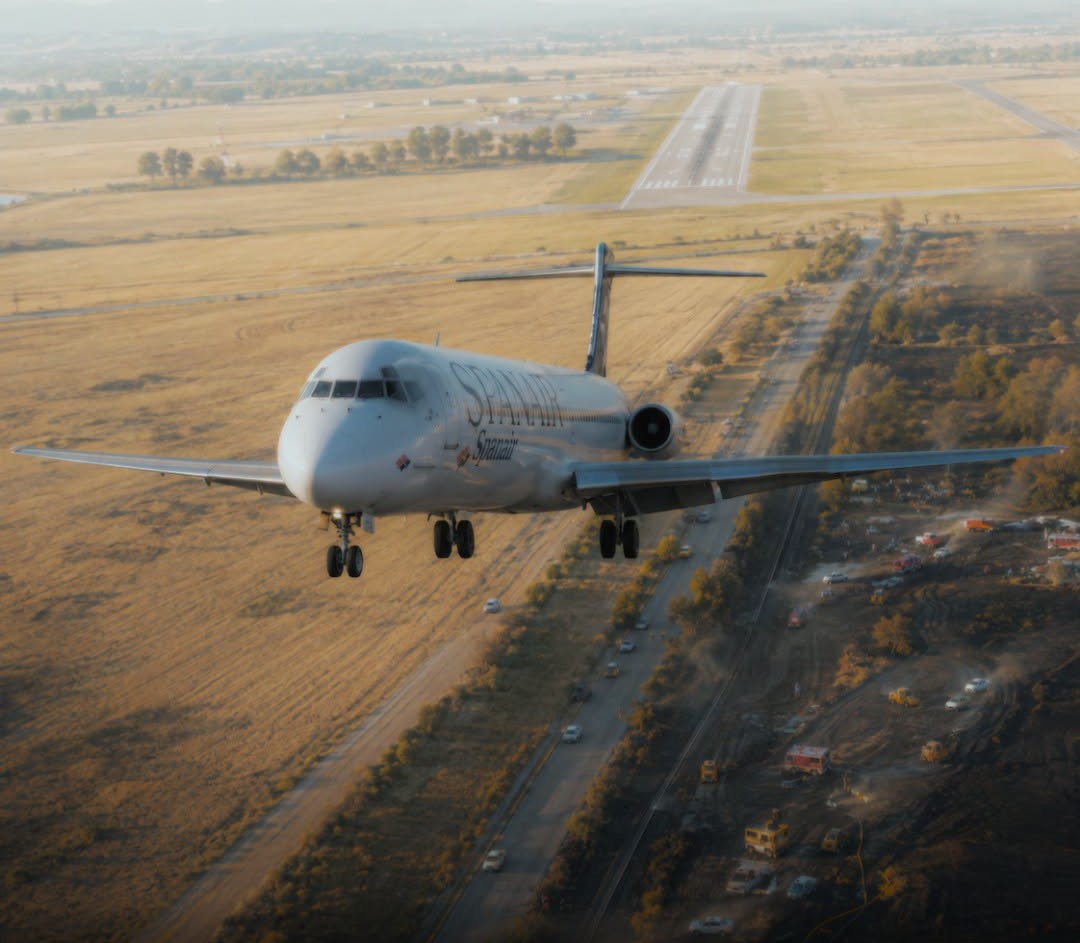
On August 20, 2008, Spanair Flight 5022 was preparing to fly from Madrid-Barajas Airport to Gran Canaria with 166 passengers and six crew members aboard.
Seconds after takeoff, the McDonnell Douglas MD-82 stalled, rolled, and crashed beside the runway. Of the 172 people on board, 154 died and only 18 survived. It became one of Spain’s deadliest aviation disasters and revealed a chain of human error, cockpit distractions, and a failed safety system.
The aircraft, EC-HFP “Sunbreeze,” was built in 1993 and had already flown from Barcelona to Madrid that morning without issues. It was then scheduled for JK5022 to Gran Canaria.
However, the flight was already delayed.
During the first takeoff attempt, the crew noticed an abnormal rise in the Ram Air Temperature (RAT) probe reading. The takeoff was aborted and the aircraft returned for maintenance. Technicians found a malfunctioning RAT probe heater that was heating on the ground.
After consulting the Minimum Equipment List, they determined the aircraft could still fly because no icing conditions were expected. The heater was disconnected via circuit breaker, the defect logged, and the aircraft released.
This disruption created an unstable cockpit environment. The crew had to restart departure preparations, and the autothrottle was also unavailable, increasing workload.
At 14:12, during engine start and checklist execution, a critical step was missed: the flaps and slats were not selected or verified. The captain was focused on taxi clearance, and attention was divided.
The aircraft taxied to Runway 36L with flaps still at zero. The Taxi checklist also failed to properly confirm configuration. A final check during the “Takeoff Imminent” phase also did not detect the error.
Three opportunities to catch the mistake were lost.
The final safeguard was the Takeoff Warning System (TOWS), designed to alert crews if the aircraft is incorrectly configured. It did not sound. Investigators could not determine why….