
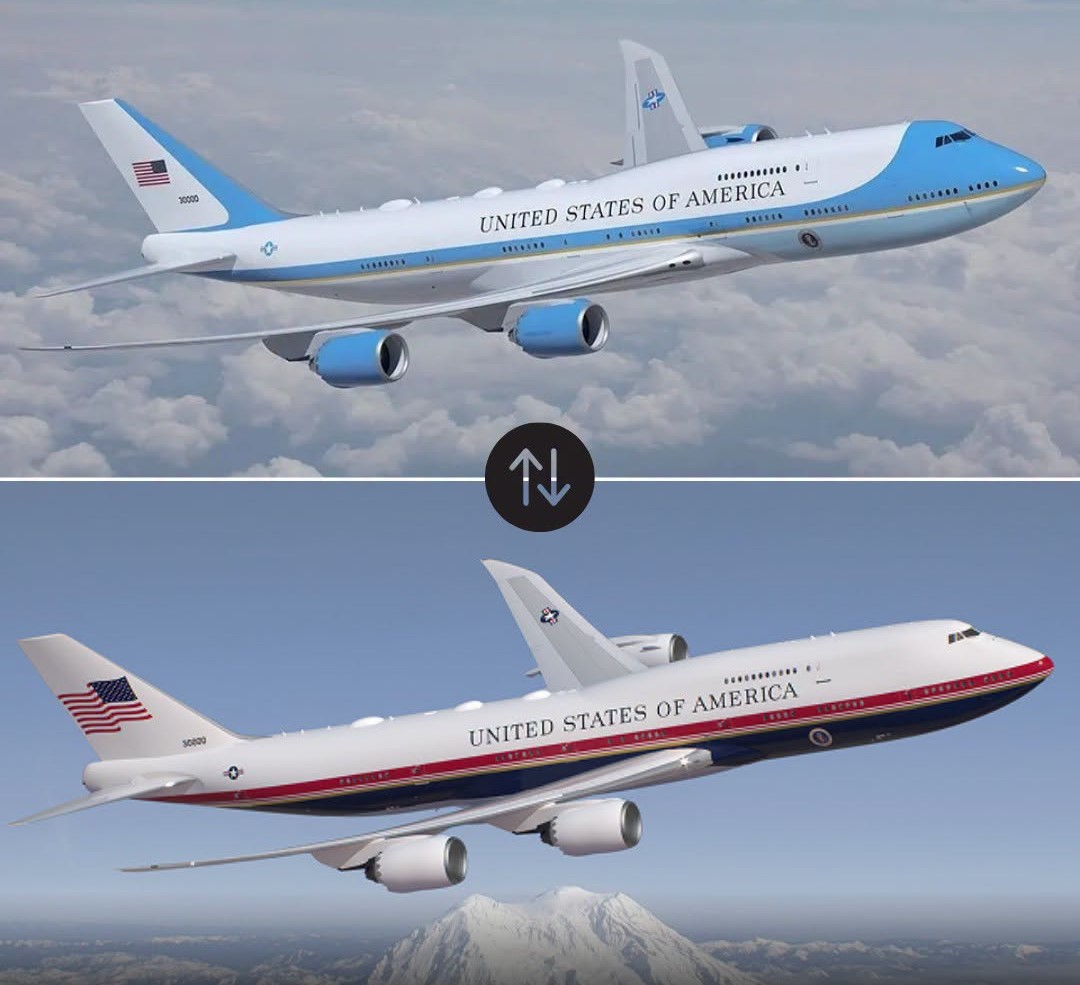
Earlier this month, U.S. President Donald Trump reportedly abandoned the Qatar-donated Boeing 747-8 and transferred to the older, heavily protected Air Force One during an overseas trip after U.S. intelligence detected what officials described as a credible missile threat linked to Iranian proxy forces.
According to reports from The New York Times and CBS News, the incident unfolded during Trump’s visit to Turkey for the NATO summit. Trump had arrived aboard the luxurious Boeing 747-8, a jet reportedly gifted by Qatar and valued at approximately $400 million after being modified for presidential transport.
However, intelligence agencies reportedly intercepted information suggesting a credible plan to launch a missile at the presidential aircraft. Officials stressed that Trump himself—not the airplane—was believed to be the intended target.
Faced with the potential threat, the U.S. Secret Service reportedly recommended an immediate switch to the legacy Air Force One, which is equipped with some of the world’s most advanced airborne defensive systems.
Unlike the newer Boeing 747-8, the existing Air Force One is believed to carry sophisticated electronic warfare equipment, missile warning sensors, infrared countermeasures, and laser-based defense systems capable of helping defeat incoming missile attacks. Officials reportedly felt the aircraft offered significantly greater protection in the evolving threat environment.
After leaving Turkey aboard the legacy Air Force One, Trump traveled onward to the United Kingdom before later returning to the Qatar-donated Boeing 747-8 for his journey back to the United States.
At the time, the White House described the aircraft change as a routine operational decision. Trump also told reporters that he wanted U.S. military personnel stationed in Britain to have an opportunity to tour the newer aircraft, downplaying suggestions that the switch was driven by security concerns.
The reports have now renewed debate over the readiness of the Qatar-donated aircraft. While White House Press Secretary Karoline Leavitt has stated that the aircraft is safe for presidential travel, she confirmed it will undergo additional upgrades later this year. Trump himself recently said the aircraft would soon be “maxed out” with further enhancements before becoming a long-term presidential transport.
The reported incident occurred during a period of heightened tensions between Washington and Tehran following recent military exchanges in the Middle East. According to The New York Times, this reported missile threat was separate from other intelligence regarding alleged Iranian plots targeting Trump.
Speaking during the NATO summit, Trump said, “They want to take out the U.S. leader – me.”
Secret Service Director Sean Curran has also warned that threats against senior U.S. officials are at their highest levels in recent memory, describing today’s security environment as one of the most dangerous the agency has ever faced.
The incident offers a rare glimpse into the extraordinary security measures surrounding presidential travel, where intelligence assessments can trigger last-minute changes—even for the President of the United States. While officials have not publicly disclosed the exact nature of the threat or the full defensive capabilities installed on the Qatar-donated Boeing 747-8, the reported aircraft swap underscores the importance of the legacy Air Force One’s advanced protection systems.