
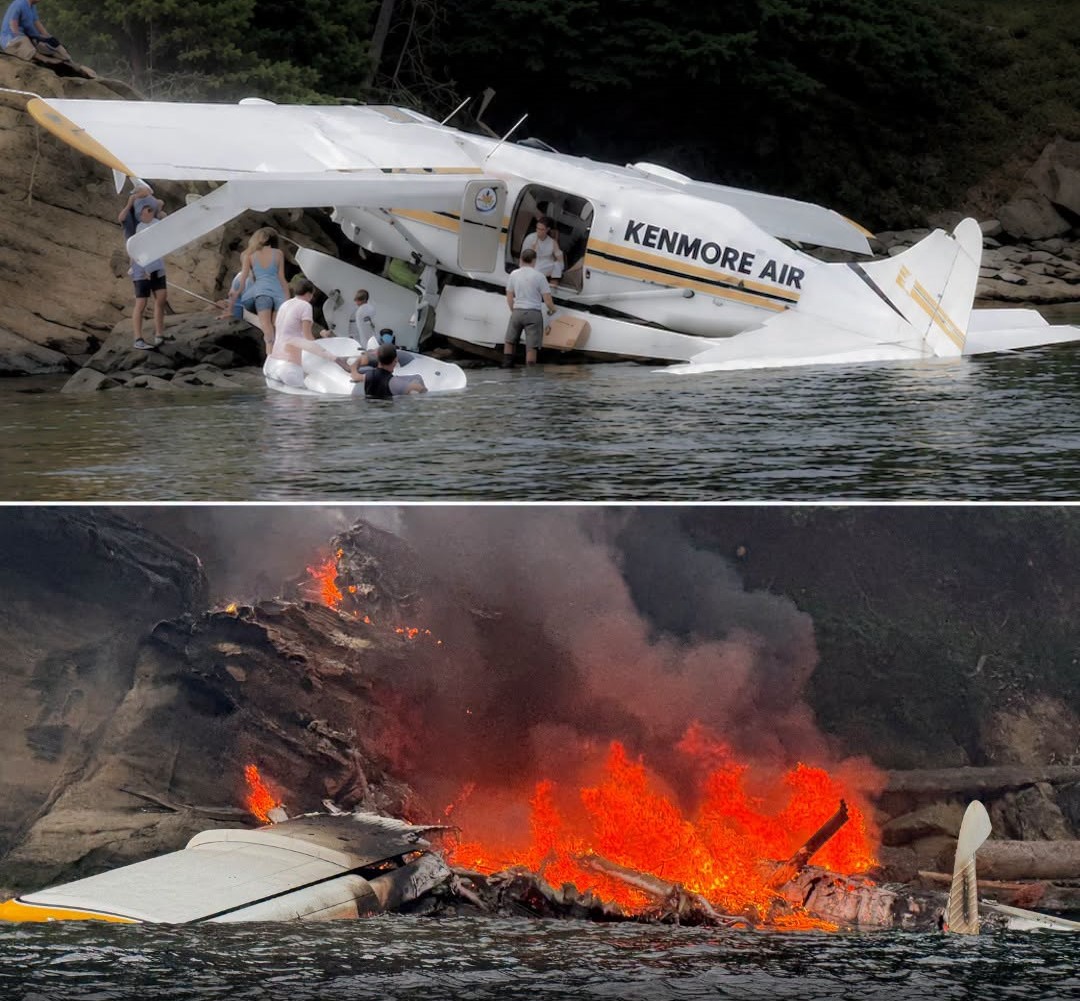
A remarkable civilian rescue effort is being credited with saving all 11 people aboard Kenmore Air Flight 140 after a de Havilland DHC-3 Otter floatplane crashed along the rocky shoreline of Sucia Island, Washington, on Thursday.
The aircraft, flying from Seattle’s Lake Union to Roche Harbor in the San Juan Islands, reportedly encountered rapidly changing weather, including sudden thunderstorms, before making an emergency landing attempt. Witness videos show the seaplane touching down on the water before crashing into rocks, where it became wedged and began smoldering. Moments later, the wreckage erupted into flames.
In an extraordinary display of courage, nearby recreational boaters rushed to the scene before emergency responders arrived. Passengers and the pilot managed to escape the aircraft, with the pilot helping people evacuate despite the dangerous conditions. Civilians quickly moved survivors away from the burning wreckage, tied multiple boats together to create a floating triage station, provided first aid, treated injuries using improvised splints made from life jackets, and kept victims warm with blankets.
Medical professionals who happened to be nearby also joined the rescue. One certified nurse midwife even borrowed a kayak to reach the crash site, where volunteers treated passengers suffering from concussions, broken bones, cuts, and other injuries until official rescue teams arrived.
Emergency crews from the U.S. Coast Guard, Canadian Coast Guard, U.S. Navy, San Juan County authorities, and other agencies later took over the operation. Several injured passengers were airlifted to hospitals by Coast Guard helicopter, while others were transported by boat. Three people remained hospitalized as of Friday, while the pilot has since been discharged.
Authorities have praised the actions of the civilian boaters, with witnesses saying they “saved the day.” By the time first responders reached the scene, dozens of private boaters had already rescued everyone from the aircraft and were providing lifesaving care.
The cause of the crash remains under investigation by the National Transportation Safety Board (NTSB) and the Federal Aviation Administration (FAA). Investigators will examine weather conditions, radar data, maintenance records, and pilot information to determine what led to the accident. A preliminary report is expected within 30 days, while the final investigation could take up to two years.
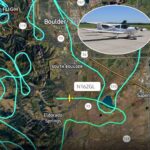
Kenmore Air confirmed that the pilot had adjusted the flight path due to deteriorating weather. Flight-tracking data shows the aircraft made a sudden turn before rapidly descending near Sucia Island. The 1960-built DHC-3 Otter had passed all required inspections, including a 100-hour inspection completed in June.
While investigators work to determine exactly what caused the crash, the outcome stands as a powerful reminder that the quick actions of ordinary people can make an extraordinary difference. Thanks to the bravery of nearby boaters and volunteers, what could have become a tragic aviation disaster ended with every person on board surviving.