
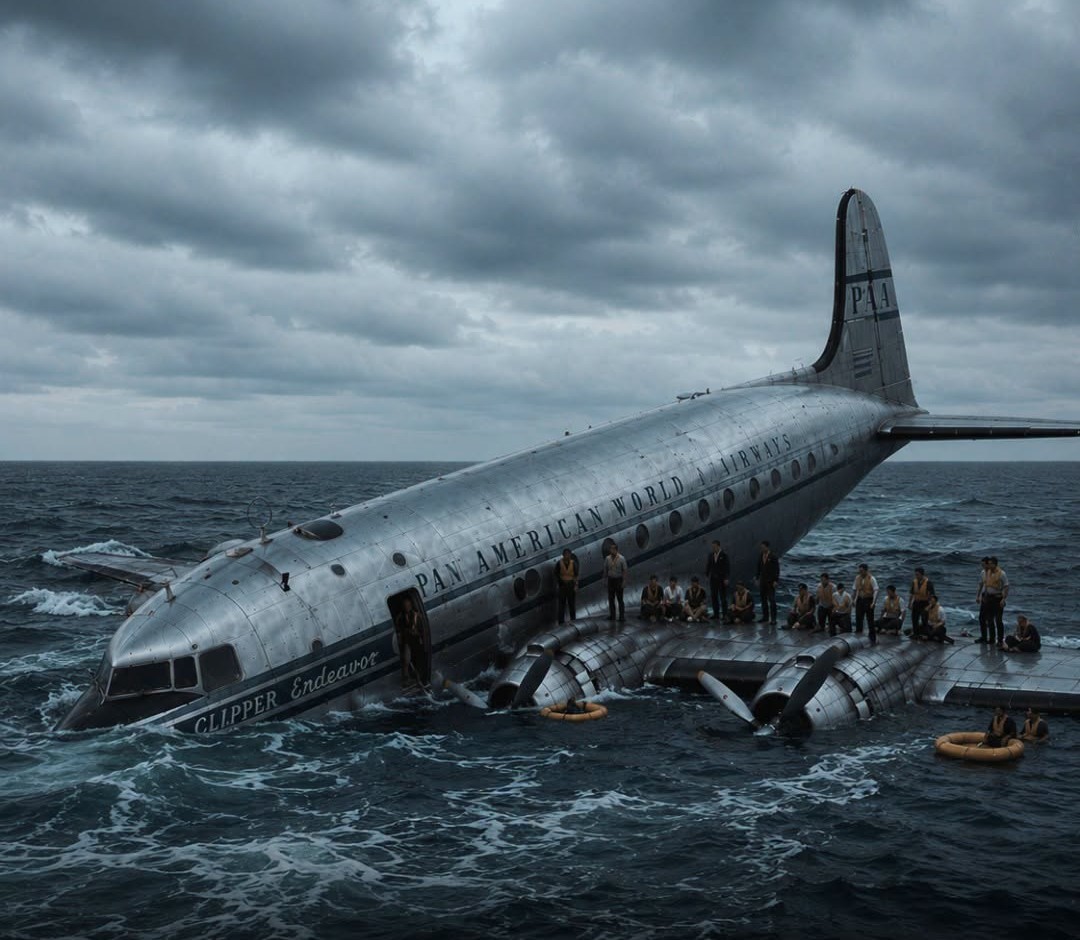
For 74 years, the Atlantic Ocean kept the final resting place of Pan Am Flight 526A a secret. This week, the wreckage of the Douglas DC-4 Clipper Endeavor was finally found nearly 2,000 feet beneath the waters off Puerto Rico, bringing closure to one of aviation’s most important tragedies.
But this discovery is about much more than finding a lost airplane.
On April 11, 1952, the aircraft lost two engines shortly after takeoff and was forced to ditch into the ocean. Captain John C. Burn executed a remarkable emergency water landing, and investigators later determined that nearly everyone on board survived the initial impact. Tragically, the aircraft sank within minutes. Many passengers were unable to locate or properly use their life jackets, while others hesitated to leave the sinking aircraft. In the end, 52 people lost their lives—not because of the ditching itself, but because emergency preparedness and passenger safety procedures were far less developed than they are today.
The heartbreaking lessons from Flight 526A became a turning point for commercial aviation.
The accident prompted sweeping safety reforms. Airlines introduced mandatory pre-flight passenger safety briefings on overwater flights, ensuring travelers knew where life jackets were stored and how to use them before takeoff. Emergency evacuation procedures were standardized, flotation equipment was improved, crew training for ditching emergencies became more comprehensive, and greater emphasis was placed on passenger preparedness during emergencies. These changes gradually became standard practice across the global airline industry.
Today, every time you board an aircraft, fasten your seatbelt, watch the cabin crew demonstrate the use of life jackets, or listen as they point out the emergency exits, you’re witnessing a legacy shaped by the lessons of Flight 526A. What many travelers now consider a routine safety briefing exists because aviation learned from tragedies like this and committed to ensuring history would not repeat itself.
The discovery of Clipper Endeavor is not just the end of a 74-year search—it is a powerful reminder that every aviation safety procedure has been written in response to real events and real lives. The skies are safer today because investigators uncovered the causes, regulators acted on the findings, airlines embraced change, and the industry transformed painful lessons into life-saving standards.
Sometimes, the greatest legacy of a tragedy isn’t found in the wreckage itself—it’s found in the millions of passengers who arrive home safely because of the changes it inspired.