
When reports of paint cracks and peeling began appearing on Airbus A350 aircraft a few years ago, the aviation world was flooded with questions. Were these cracks a sign of a deeper structural problem? Was the world’s most advanced composite airliner safe to fly? Some even called for the aircraft to be grounded worldwide.
But what followed became one of the most fascinating engineering success stories in modern aviation.
The issue was not with the A350’s carbon-fiber fuselage itself. Instead, it involved the interaction between three different materials: the composite fuselage, the aircraft’s exterior paint, and the expanded copper foil (ECF) embedded beneath the paint to provide lightning-strike protection.
Unlike aluminum, carbon fiber reinforced polymer (CFRP) barely expands or contracts with temperature changes. However, the paint layers and copper foil expand and shrink much more dramatically. During long-haul flights, an A350 can leave a scorching runway where temperatures exceed 43°C (110°F) and climb to cruising altitudes where outside temperatures fall below -54°C (-65°F). These rapid temperature swings created mechanical stress between the different material layers.
Over time, this caused localized paint cracking, flaking, and small blisters, particularly around fuselage panel joints. Although the damage looked alarming, extensive inspections confirmed that it remained confined to the outer paint and protective foil. The aircraft’s composite structure stayed completely intact, dry, and structurally sound.
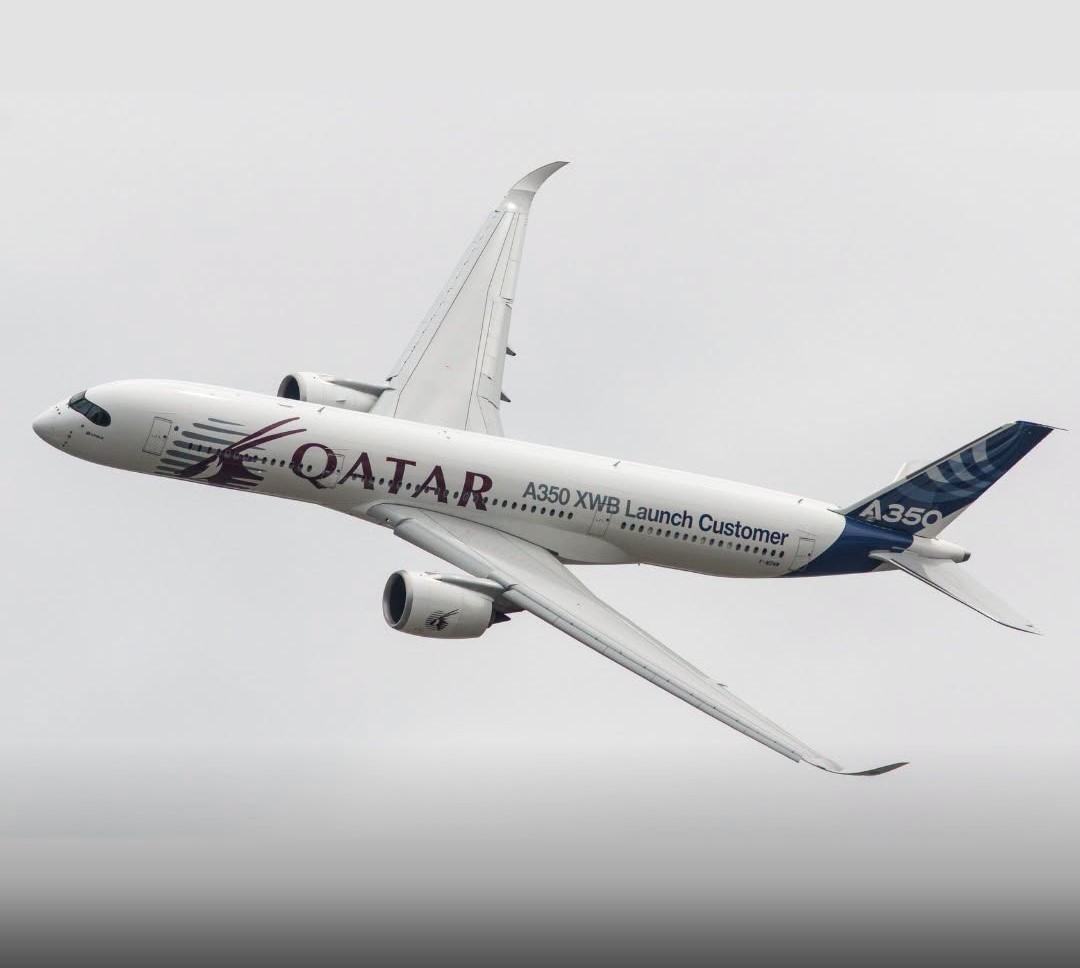
The issue became highly publicized after Qatar Airways grounded more than 20 of its A350s, arguing that the deterioration affected the aircraft’s lightning protection system. Airbus strongly disagreed, maintaining that the aircraft remained fully airworthy. The dispute eventually escalated into a major legal battle.
Meanwhile, aviation regulators including EASA and the FAA conducted detailed technical investigations. Their findings consistently concluded that the cosmetic deterioration did not compromise the structural integrity or overall flight safety of the aircraft. Instead of ordering a worldwide grounding, regulators required inspections and localized repairs on affected aircraft while allowing airlines to continue normal operations.
Airbus engineers then focused on eliminating the root cause rather than simply repairing the visible damage.
The breakthrough came with the redesign of the lightning protection layer. Airbus replaced the original Expanded Copper Foil (ECF) with a far more flexible Perforated Copper Foil (PCF). Tiny precision-drilled holes in the new material allow it to flex with the composite fuselage during extreme temperature changes instead of resisting movement. This significantly reduces the mechanical stresses that previously caused paint cracking.
The improved design was introduced on newly built A350s beginning in late 2022, ensuring future aircraft left the factory with enhanced protection against surface degradation.
For aircraft already in service, Airbus developed an efficient repair process that avoided lengthy and expensive repainting. Instead of stripping the entire aircraft, maintenance crews repair only the affected areas by removing damaged paint, cleaning the lightning-protection layer, applying specialized composite resin patches, and repainting localized sections. The entire procedure can often be completed during scheduled maintenance visits, minimizing downtime and avoiding costly operational disruptions.
Airlines including Delta Air Lines, Singapore Airlines, Lufthansa, and many other A350 operators continued flying their fleets throughout the issue while performing targeted maintenance as needed. This allowed airlines to maintain schedules without the enormous financial impact of grounding hundreds of aircraft.
Perhaps the biggest concern throughout the controversy involved lightning protection, especially around the A350’s fuel tanks. Since commercial aircraft are struck by lightning approximately once every year on average, ensuring the aircraft could safely conduct electrical energy away from sensitive systems was critical.
Extensive engineering analysis confirmed that even where cosmetic paint damage existed, the aircraft’s multiple redundant lightning-protection layers remained fully functional. Tests demonstrated that electrical current could still safely travel across the aircraft’s outer skin without creating dangerous hotspots or compromising fuel tank safety.
Today, the A350 continues to accumulate millions of safe flight hours across global long-haul routes. Rather than becoming a failure, the paint degradation issue became an important lesson in composite aircraft engineering.
Instead of grounding an entire global fleet, Airbus identified the true cause, redesigned the material interface, introduced an improved manufacturing standard, and developed an efficient maintenance solution—all while airlines continued operating safely.