
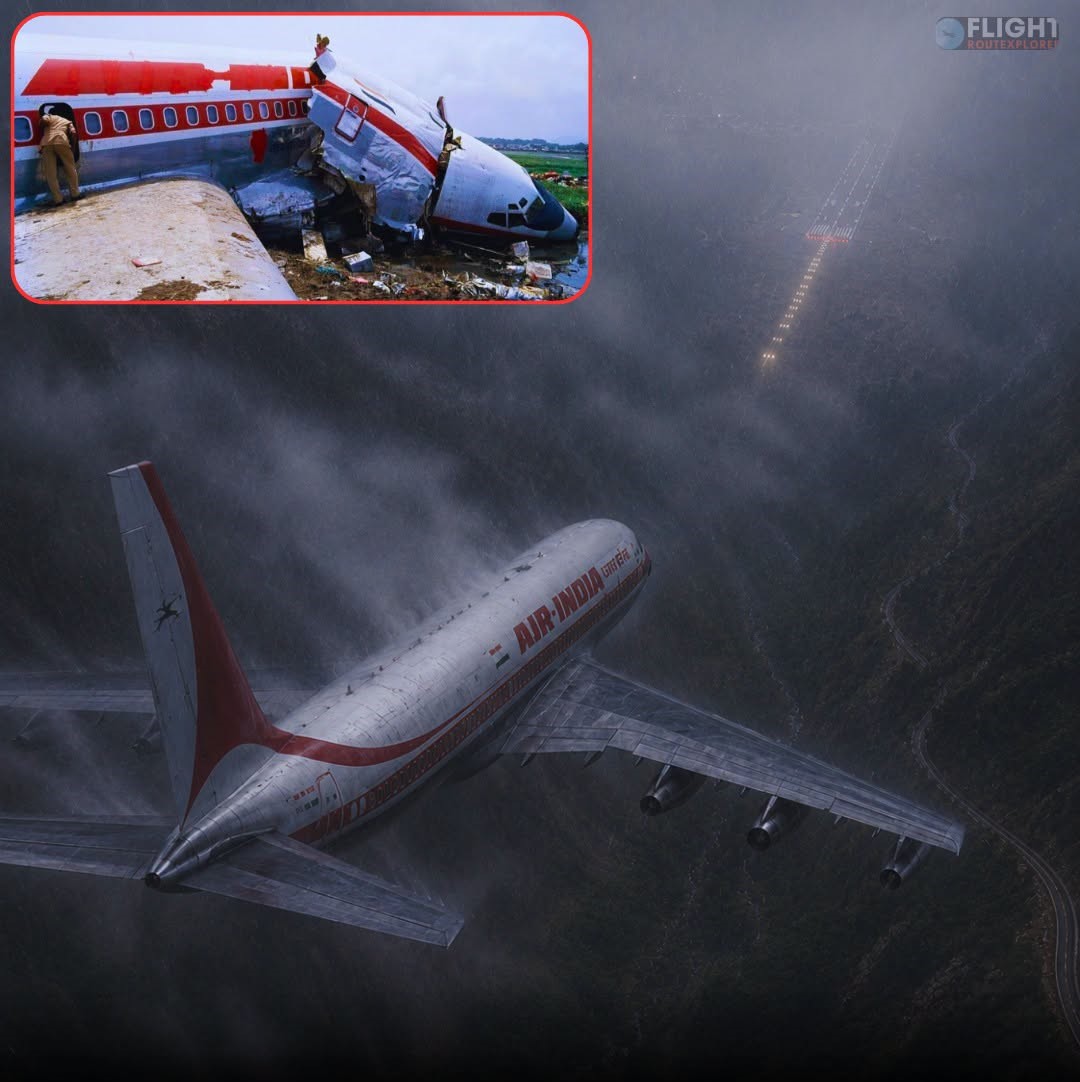
On the night of June 21, 1982, Air India Flight 403, a Boeing 707-437 named “Gauri Shankar,” was completing an international passenger service to Bombay (now Mumbai) after arriving from Kuala Lumpur.
What should have been a routine landing at Sahar International Airport turned into one of the most dramatic accidents in Air India’s history, leaving 17 people dead and dozens injured.
The crash became an enduring reminder of the dangers posed by India’s monsoon weather and the importance of maintaining precise altitude awareness during instrument approaches.
The aircraft involved was a Boeing 707-437 registered VT-DJJ. It held a special place in Air India’s fleet because it was the first Boeing jetliner acquired by an Asian airline. On board were 111 people, including 99 passengers and 12 crew members. Among the survivors was noted Indian nuclear scientist Raja Ramanna.
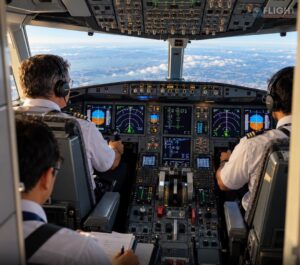
As Flight 403 approached Bombay, the city was being battered by a severe monsoon rainstorm. Visibility was poor, the runway environment was difficult to see, and the flight crew had to rely heavily on their instruments while descending through heavy rain and turbulence. Weather conditions around the airport were challenging, with intense rainfall and strong winds reducing the margin for error during the final stages of the approach.
During the final approach to Runway 27, the Boeing 707 descended lower than it should have. Investigators later determined that the captain became unaware of the aircraft’s actual altitude. Approximately 12 seconds before the first impact, engine power was reduced, causing the aircraft to develop a dangerously high rate of descent. Unaware that the jet was already too low, the crew continued toward the runway.
The aircraft struck the ground roughly 1,300 feet short of the runway threshold. The impact was severe. Instead of smoothly touching down on the runway, the Boeing slammed into the ground and bounced. Damage occurred to the landing gear and wheel wells, and multiple warnings sounded in the cockpit. The crew attempted to recover, but the aircraft was already out of control.
After the first impact, the aircraft bounced back into the air before crashing down again. During the second impact, a wingtip struck the ground and engines were torn from the aircraft. The Boeing then skidded off the runway area at high speed, losing parts of its undercarriage as it plowed through muddy terrain beyond the airport boundary.
The crippled jet finally smashed through a boundary wall and broke apart. The fuselage separated into three major sections before coming to rest. Despite the violent breakup, there was no major post-crash fire, a factor that undoubtedly helped save many lives. Emergency responders rushed to the scene and began rescuing survivors from the wreckage amid heavy rain and darkness.
Seventeen people lost their lives in the accident, including 15 passengers and 2 cabin crew members. Another 25 occupants suffered injuries, many of them serious. Remarkably, 94 people survived the crash despite the extensive destruction of the aircraft.
In the immediate aftermath, many observers initially blamed the severe weather. Air India representatives noted that the aircraft had been attempting to land during a heavy monsoon storm with poor visibility. The conditions were unquestionably difficult, and the storm played a significant role in creating a hazardous environment for the crew.
However, the official investigation painted a more detailed picture. The Indian Court of Inquiry concluded that the primary cause was not a mechanical failure but a loss of altitude awareness by the pilot. The investigation found that engine power had been reduced while the aircraft was already too low, resulting in an excessive descent rate. The Boeing subsequently undershot the runway by approximately 1,300 feet and made an extremely hard impact with the ground. Weather was identified as a contributing factor because the heavy rain and poor visibility made it harder for the crew to accurately judge their position and altitude.
The accident became an important case study in controlled flight into terrain and approach-and-landing accidents during adverse weather. It highlighted how even experienced crews can lose situational awareness when operating in challenging meteorological conditions. The crash also reinforced the need for strict instrument monitoring, stabilized approach criteria, and improved crew resource management during monsoon operations.
More than four decades later, Air India Flight 403 remains one of the most significant monsoon-weather aviation accidents in India. The tragedy of “Gauri Shankar” serves as a lasting reminder that a few seconds of altitude misjudgment during a storm can transform a routine landing into a disaster.