
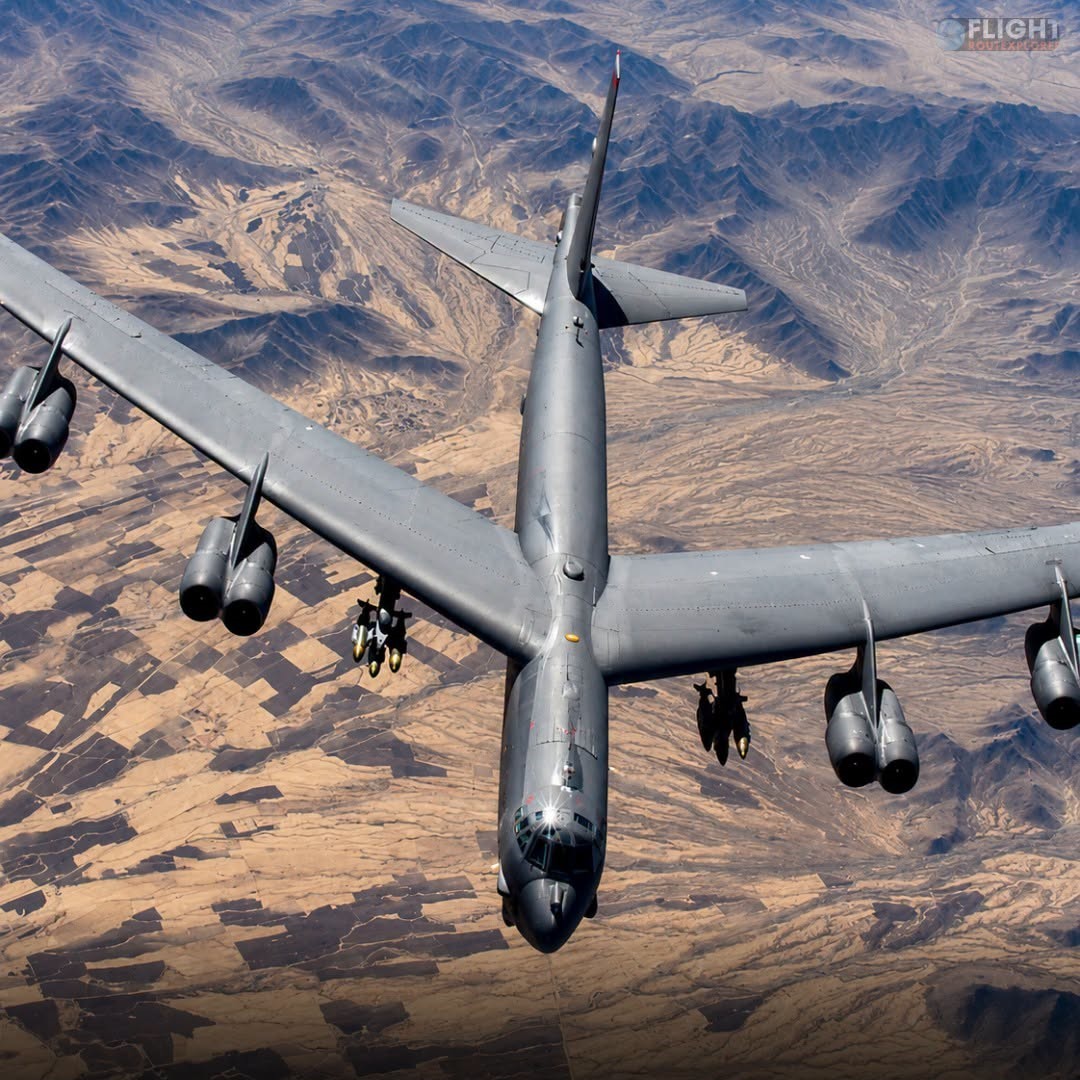
Operating the Boeing B-52 Stratofortress costs the US Air Force approximately USD 88,000 for every single hour it spends in the sky.
This massive operational budget accounts for aviation fuel, preventative maintenance, and the immense logistical tail required to keep the 1950s-era bomber flying.
The majority of this hourly cost comes directly from the aircraft’s extreme fuel consumption. Powered by eight ageing TF33 turbofan engines, the massive heavy bomber burns through roughly 3,300 gallons of highly refined aviation fuel every 60 minutes.
Despite the staggering USD 88,000 hourly rate, the B-52 is actually the most cost-effective heavy bomber in the US arsenal. Operating the newer B-1 Lancer or the radar-evading B-2 Spirit costs upwards of USD 150,000 per flight hour due to their highly sensitive stealth coatings.
Keeping a 70-year-old airframe combat-ready requires an intensive mechanical commitment. For every single hour the B-52 spends flying, ground crews must perform dozens of hours of rigorous maintenance to prevent catastrophic structural or engine failures.
Building on this, because the original production lines closed decades ago, sourcing replacement parts is incredibly expensive. Military engineers frequently rely on the aviation ‘boneyard’ in Arizona, cannibalising retired B-52 hulls to find rare mechanical components to keep the active fleet flying.
The Pentagon is currently executing a massive Commercial Engine Replacement Program (CERP) to reduce these astronomical operating costs. By swapping the original turbofans with modern Rolls-Royce F130 engines, the US Air Force expects to cut the bomber’s fuel burn by 30 per cent.
With 76 active bombers in the fleet, the total annual operating cost easily reaches into the billions. However, the military considers this a strategic bargain, as the B-52’s unmatched 70,000-pound payload makes it an indispensable airborne missile truck for global deterrence.