

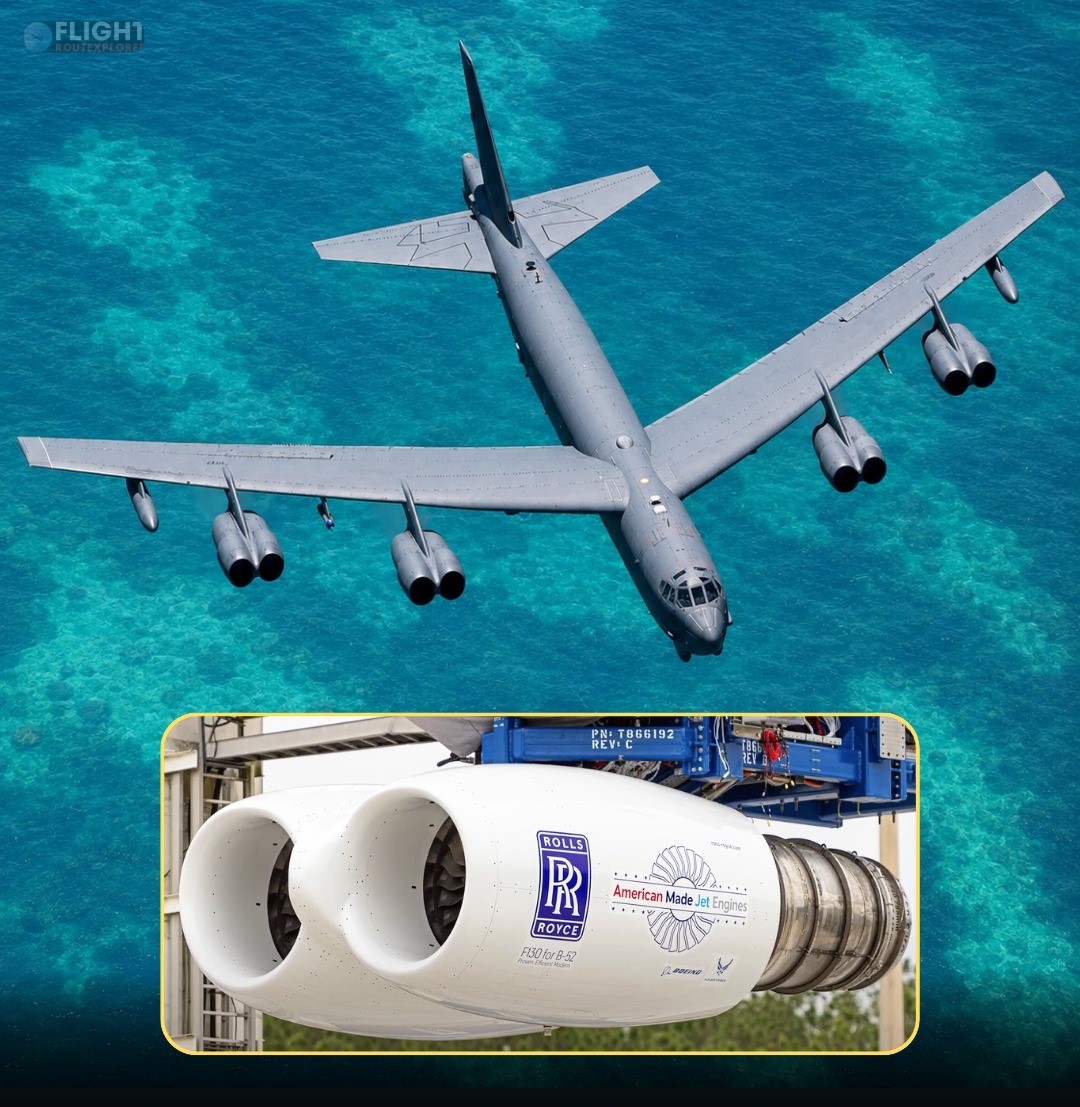
The U.S. Air Force has awarded Boeing a $2 billion contract on Dec 2025 to continue work on the B-52 Commercial Engine Replacement Program (CERP), a major modernization effort aimed at extending the operational life of the iconic B-52 Stratofortress bomber well into the 2050s and beyond.
The program represents one of the most significant upgrades in the aircraft’s decades-long service history. First entering service in the 1950s, the B-52 remains a critical part of America’s long-range strategic bomber fleet. Despite its age, the aircraft continues to receive extensive upgrades to avionics, weapons systems, communications equipment, and propulsion technology to ensure it remains combat capable in modern warfare environments.
At the center of the CERP initiative is the replacement of the bomber’s aging Pratt & Whitney TF33 engines. The TF33 powerplants, which have powered the aircraft for decades, are increasingly expensive to maintain and less fuel efficient compared to modern commercial-derived turbofan engines. The Air Force selected the Rolls-Royce F130 engine as the replacement powerplant after a competitive evaluation process.
Under the latest contract, Boeing will continue engineering, integration, testing, and development activities associated with installing the new engines on the B-52 fleet. Boeing serves as the prime integrator for the program, overseeing modifications to the aircraft structure, engine nacelles, electrical systems, cockpit interfaces, fuel systems, and onboard software required to accommodate the modern engines.
The B-52H currently operates with eight TF33 engines mounted in four twin-engine pods beneath the wings. The modernization effort will retain the bomber’s eight-engine configuration while replacing the older engines with eight Rolls-Royce F130 turbofans. The F130 is derived from the BR725 commercial engine family, which has accumulated millions of operational flight hours in business aviation service.
According to Air Force officials, the new engines are expected to provide several operational advantages. These include improved fuel efficiency, increased range, reduced aerial refueling requirements, lower maintenance costs, and enhanced reliability. The modernization is also projected to significantly reduce logistics demands while improving mission readiness rates.
Another major advantage of the new propulsion system is sustainment efficiency. The TF33 engines require intensive maintenance support due to aging components and diminishing parts availability. By transitioning to a modern commercial derivative engine with active production support, the Air Force expects long-term lifecycle cost savings and improved fleet availability.
The B-52 Commercial Engine Replacement Program also includes updates to associated subsystems such as engine controls, cockpit instrumentation, digital interfaces, and power generation systems. Modern digital engine controls will replace older analog systems, improving engine monitoring, diagnostics, and overall operational management.
Structural modifications to the aircraft are another key part of the project. Engineers must redesign pylons, nacelles, and supporting hardware to integrate the F130 engines while ensuring aerodynamic stability and maintaining the bomber’s performance characteristics. Extensive wind tunnel testing, computer modeling, and flight certification work are required throughout the development process.
Flight testing for the upgraded aircraft is expected to take place over several years. Prototype aircraft will undergo extensive evaluation to validate engine performance, vibration characteristics, fuel efficiency, and integration with the bomber’s existing systems. The Air Force plans to eventually upgrade its entire operational B-52H fleet.
The B-52 remains a cornerstone of U.S. strategic deterrence operations. The aircraft is capable of carrying both conventional and nuclear weapons and plays a vital role in long-range strike missions, maritime operations, close air support, and strategic presence missions worldwide. Continuous modernization ensures the aircraft can remain relevant even as newer bombers such as the B-21 Raider enter service.
In addition to the engine modernization program, the B-52 fleet is receiving several other upgrades including new radar systems, advanced communications equipment, updated mission computers, and expanded weapons integration capabilities. Together, these improvements are intended to transform the aircraft into the B-52J configuration.
The Air Force has repeatedly emphasized that the B-52’s large payload capacity, long endurance, and operational flexibility make it uniquely valuable even in modern combat scenarios. Officials believe the combination of upgraded engines and advanced avionics will allow the aircraft to remain operational for decades to come.
The latest $2 billion contract highlights the strategic importance of the B-52 modernization effort and demonstrates continued investment in sustaining America’s long-range bomber capability amid evolving global security challenges.