
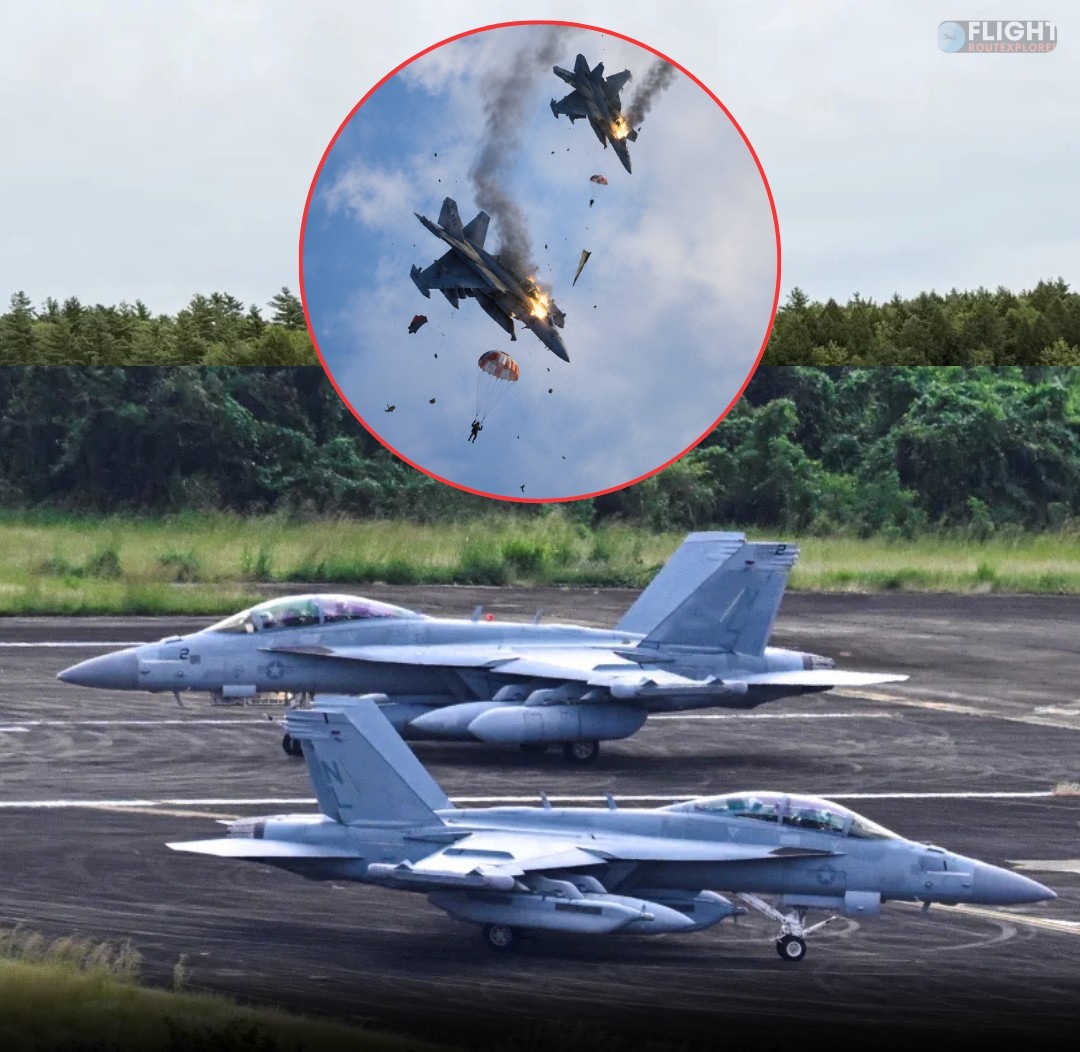
The crash of two US Navy jets at an Idaho air show last weekend is raising questions about why the Pentagon risks multimillion-dollar warplanes – and their crews – for entertainment.
“Those calls are almost always part of the noise surrounding an accident,” said John Venable, a senior resident fellow at the Mitchell Institute for Aerospace Studies and a former US Air Force fighter pilot.
Sunday’s accident during the Gunfighter Skies Air Show at Mountain Home Air Force Base involved two Navy EA-18 Growlers, an electronic warfare aircraft based on the F/A-18 fighter jet platform.
The jets were assigned to Electronic Attack Squadron 129 from Whidbey Island, Washington, and crewed by members of the Growler Airshow Team, according to a Navy statement.
After the two jets collided mid-air, the four air crew ejected successfully, with only one requiring hospital treatment for non-life threatening injuries, the statement said.
Growlers cost around $68 million apiece, according to a 2021 Navy fact sheet, but replacement costs would be much higher. Production of the EA-18 jets has ended, although Boeing still has F/A-18s under construction.
Operating costs for jets in the F/A-18 family run about $20,000 an hour, according to a 2022 Boeing press release.
So why burn through that amount of money while risking multimillion-dollar hardware and the lives of skilled crew simply to delight the crowds?
The Growler Airshow Team is just a small part of the US military’s lineup of demonstration teams, who perform daring maneuvers at air shows year-round.
The most well-known are the Navy’s Blue Angels and the Air Force’s Thunderbirds, which have headlined dozens of events each year for decades flying with their distinctive liveries.
Annual budgets for each team are not publicly disclosed, and the Pentagon did not provide figures after several CNN requests.
But, according to a 2012 cost-benefit analysis by three Navy officers attending the service’s post-graduate school in California, the Blue Angels budget was about $98.6 million. That amount covered personnel, travel expenses, aircraft and equipment maintenance, operations and support costs.
Congress in 2024 required the Pentagon to perform a new cost-benefit study, but to date the military has not released any public figures.
The 2012 paper found an extremely lopsided cost-benefit balance from the Navy’s Blue Angels team.
For more than $98 million spent on the Blue Angels in a year, the Navy came away with less than $1 million in recruiting benefits, a negative 99% return on investment, the officers concluded.
If “goodwill” – things like the economic benefit of air show spending to nearby communities – the cost-benefit ratio narrows considerably, but still yielded a negative 41% return on investment, the study found.
“The costs outweigh the benefits,” the study said.
The tens of millions spent by the Blue Angels and the Thunderbirds are only part of the Pentagon’s community outreach though.
Venable said the two teams combined can only do around 70 of the 325 to 350 air shows put on in North America every year.