
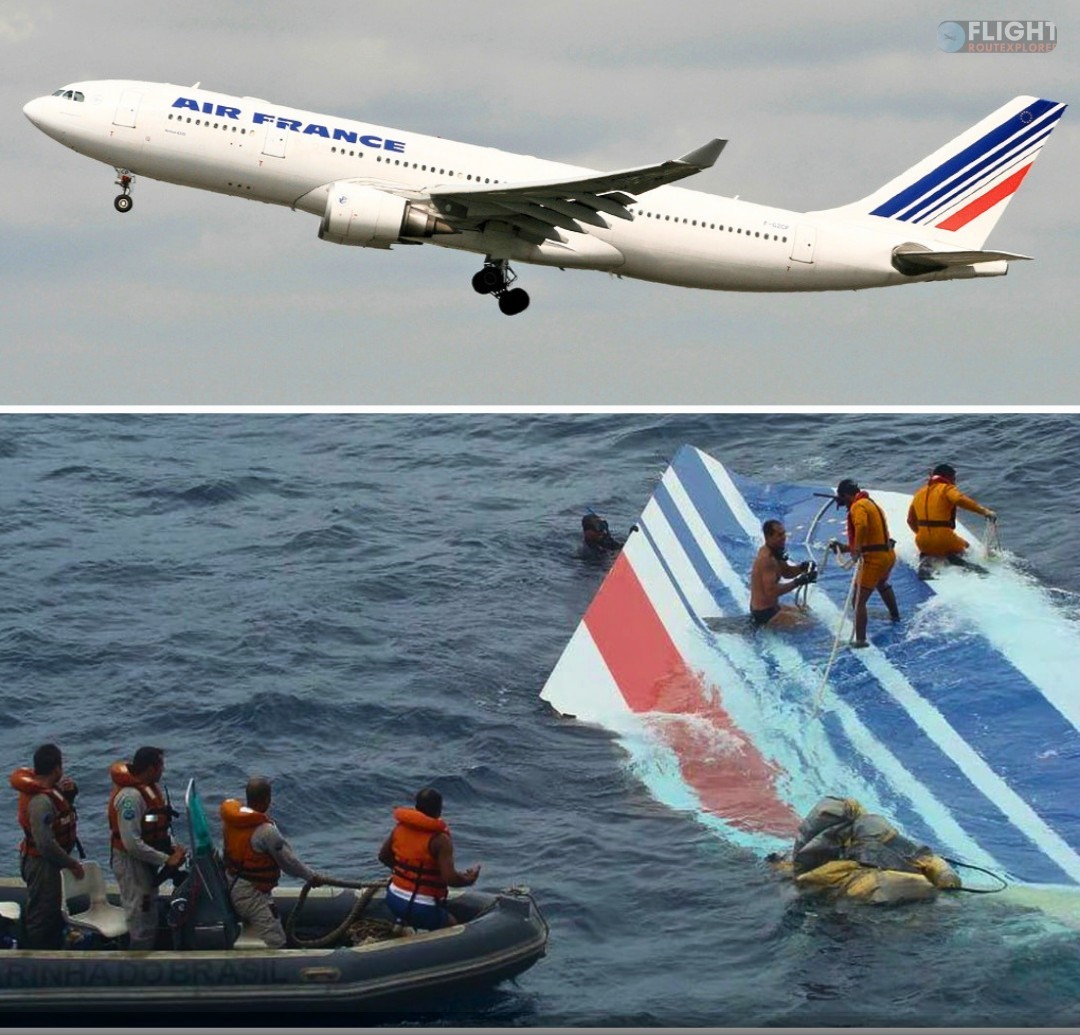
French airline Air France and aircraft manufacturer Airbus have been found guilty of “corporate manslaughter” in a case linked to the tragic 2009 plane crash that killed 228 people. Although a lower court acquitted the companies in 2023, the Paris Appeals Court found them guilty on Thursday following an eight-week trial tied to what has infamously gone down in history as the worst French air disaster.
While both companies continue to repeatedly deny the charges, the French court ruled this week that Air France and Airbus were “solely and entirely responsible” for the heart-rending crash nearly two decades ago.
Back in June 2009, all 12 crew members and 216 passengers aboard the Air France 447 flight (Airbus A330) died after the aircraft flying from Rio de Janeiro to Paris crashed into the Atlantic Ocean.
According to the Paris Appeals Court’s verdict this week, the companies must pay the maximum fine for “corporate manslaughter”: €225,000 ($261,720).
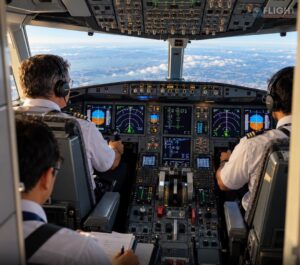
Although the “pilot errors” were not ruled out during the verdict, the judge presiding over the case asserted that the crew had not been sufficiently trained to deal with the “extremely complex failure.”
“The pilots of AF447 truly tried everything to get out of this absolutely dreadful situation,” the judge said. “They went as far as their abilities allowed and nothing can be held against them.”
In addition to Air France being held responsible for failing to provide adequate pilot training, the court blamed Airbus for multiple issues, including underestimating the gravity of the sensor problems.
Since AF447 carried passengers from 33 different countries, including France, Brazil, Germany, the USA, the UK, and Ireland, the much-extended legal showdown pitted the families of the mainly French, Brazilian, and German victims against two of France’s representative companies.
According to Reuters, members of some of those grieving families were present in court to hear the verdict after a nearly two-decade legal marathon. Despite the court ordering both top French companies to pay the maximum fine, many family groups dismissed it as a token penalty. They are now hoping for a conviction in the case.
Conversely, Airbus and Air France said they will appeal, which could potentially prolong the legal battle.
On June 1, 2009, Flight AF447 vanished from radar screens. According to the final accident report detailed by the Bureau d’Enquêtes et d’Analyses (BEA) and the Federal Aviation Administration (FAA), a routine flight from Rio to Paris encountered a predicament it had repeatedly faced before: ice blocking the sensors.
The incident caused the autopilot to relinquish control of the flight to the two co-pilots. “At around 2 h 02, the captain left the cockpit,” the report says. “At 2 h 10 min 05, likely following the obstruction of the pitot probes by ice crystals, the speed indications were incorrect and some automatic systems disconnected.”
“The aeroplane’s flight path was not controlled by the two copilots. They were rejoined 1 minute 30 later by the Captain, while the aeroplane was in a stall situation that lasted until the impact with the sea at 2 h 14 min 28.”
The report further stated that the “pilot flying” (PF) made reactions identified as “inappropriate control inputs that destabilised the flight path.” It also suggested that the “pilot not flying” (PNF), who was more experienced, failed to overrule his co-worker’s actions.
In light of the confusion caused by faulty air-speed readings, the pilots mistakenly pointed the plane’s nose upward instead of down.
At the time of the crash, Air France issued a statement saying the pilot in control had over 11,000 hours of flight time, including 1,700 hours on the same type of plane.
Despite initial investigations, the flight recorder was not found until 2011. Years later, in 2012, French investigators found that both technical failure related to the plane’s sensors and the pilots’ inability to react to the plane stalling caused the air tragedy.
Of the 216 passengers aboard the plane that day, there were 126 men, 82 women, 7 children, and one infant. As reported by the BBC, only 51 bodies, many still buckled into the plane’s seats, were discovered in the first 26 days of searches.