
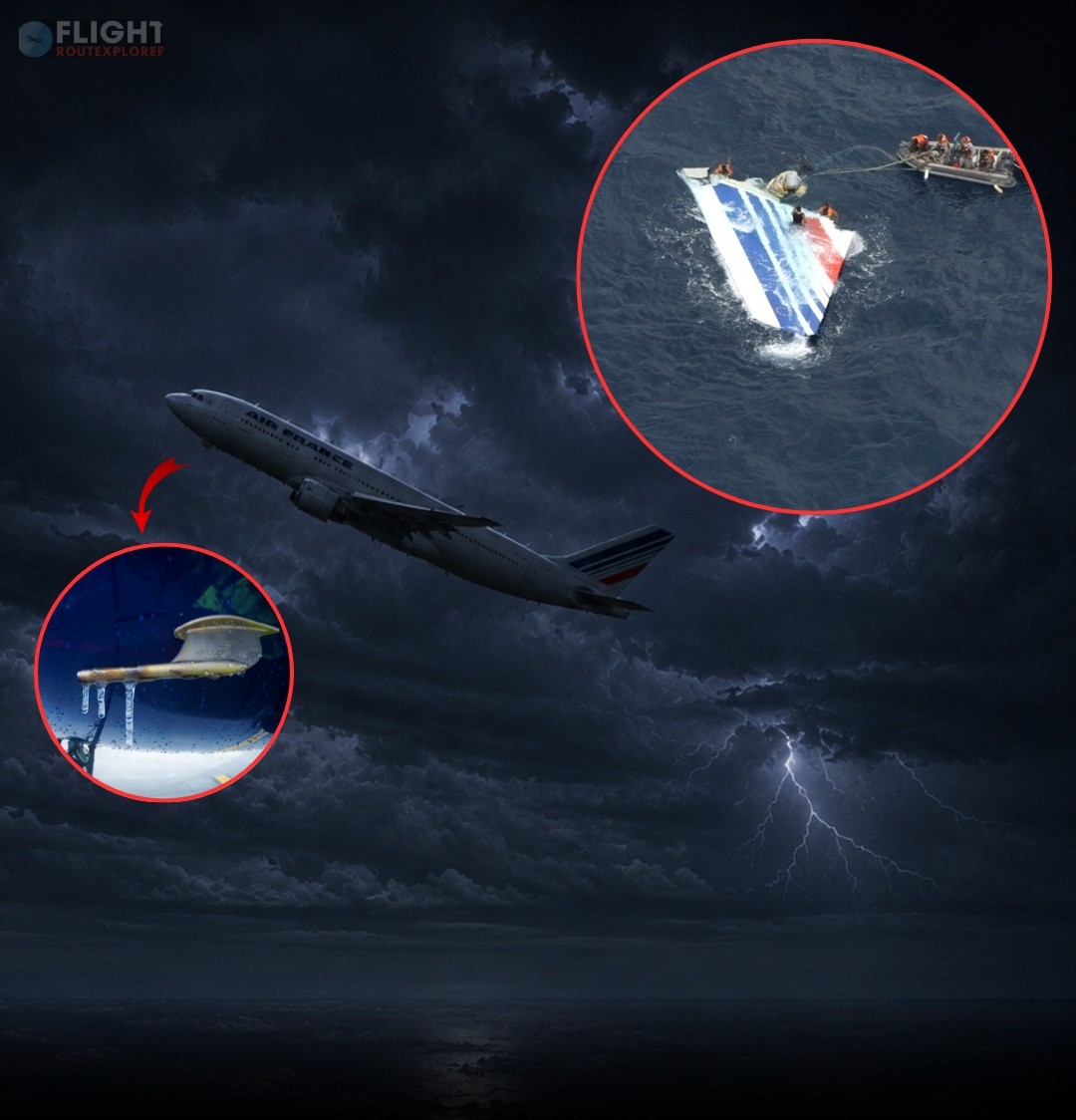
On the night of June 1, 2009, Air France Flight 447 vanished into one of the most violent storm systems over the Atlantic Ocean. The flight had departed Rio de Janeiro bound for Paris with 228 people onboard. Then, somewhere in the darkness above the ocean, the aircraft disappeared without a distress call — triggering one of aviation’s greatest mysteries.
For days, there was almost nothing. No wreckage. No survivors. Just silence over thousands of miles of open ocean. Search crews battled brutal weather and massive waves while families across the world waited desperately for answers. When debris and bodies finally began washing up in the Atlantic, the scale of the tragedy became horrifyingly clear.
But the biggest mystery still remained:
How could one of the world’s most advanced airliners simply fall from the sky?
The crash site lay nearly 13,000 feet below the ocean surface in some of the roughest underwater terrain on Earth. Investigators spent almost two years searching the seafloor before finally recovering the aircraft’s black boxes in 2011. Those recordings revealed terrifying final moments inside the cockpit.
The aircraft had entered severe weather filled with high-altitude ice crystals. Those crystals clogged the plane’s pitot tubes — critical sensors that measure airspeed. As the sensors froze, the aircraft suddenly began feeding inconsistent speed data to the flight computers.
Seconds later, the autopilot disconnected.
Warning alarms erupted in the cockpit.
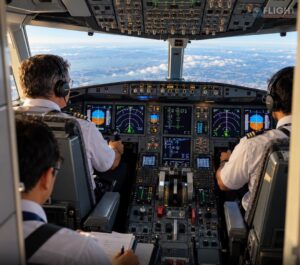
The pilots were suddenly forced to manually control the aircraft in violent turbulence at 35,000 feet in total darkness over the Atlantic.
Then came the fatal mistake.
One of the pilots pulled the aircraft’s nose sharply upward. Instead of stabilizing, the Airbus began climbing aggressively. The angle of attack increased rapidly until the wings could no longer generate enough lift. The aircraft entered an aerodynamic stall — one of the most dangerous situations a jetliner can face.
What made the disaster even more shocking was that the stall warning repeatedly sounded, yet the crew appeared confused about what was happening. In the chaos, they continued making nose-up inputs, unknowingly keeping the aircraft stalled. The jet climbed briefly to nearly 38,000 feet before beginning a catastrophic descent into the ocean.
For more than four minutes, the aircraft fell through the night sky.
The pilots never realized the plane was stalled.
At impact, the Airbus slammed into the Atlantic Ocean belly-first at high speed, killing everyone onboard instantly.
The final investigation concluded that the crash was caused by a deadly chain of events:
Frozen pitot tubes triggered unreliable airspeed readings, which disconnected the autopilot. The pilots then mishandled the situation, pulling the aircraft into a high-altitude stall and failing to recover from it. Investigators also criticized training procedures, cockpit ergonomics, and the airline’s handling of earlier pitot tube issues.