
Many Hawaii-bound travelers now board with at least one power bank in their carry-on. We plug in our personal devices and then settle into a flight where the nearest runway may still be up to three hours away if something starts smoking in the cabin.
Hawaii routes operate under strict long-range overwater requirements, and airlines always remain within approved diversion ranges throughout flights. Pilots continuously monitor alternate airports, fuel burn, weather systems, and aircraft performance when crossing the Pacific to and from Hawaii, and modern aircraft are designed specifically around this type of flying.
A Hawaii flight halfway between California and Honolulu, or a redeye returning overnight to the mainland, can remain hours from landing after a diversion is called for. Anyone who flies to and from Hawaii likely has given this some thought.
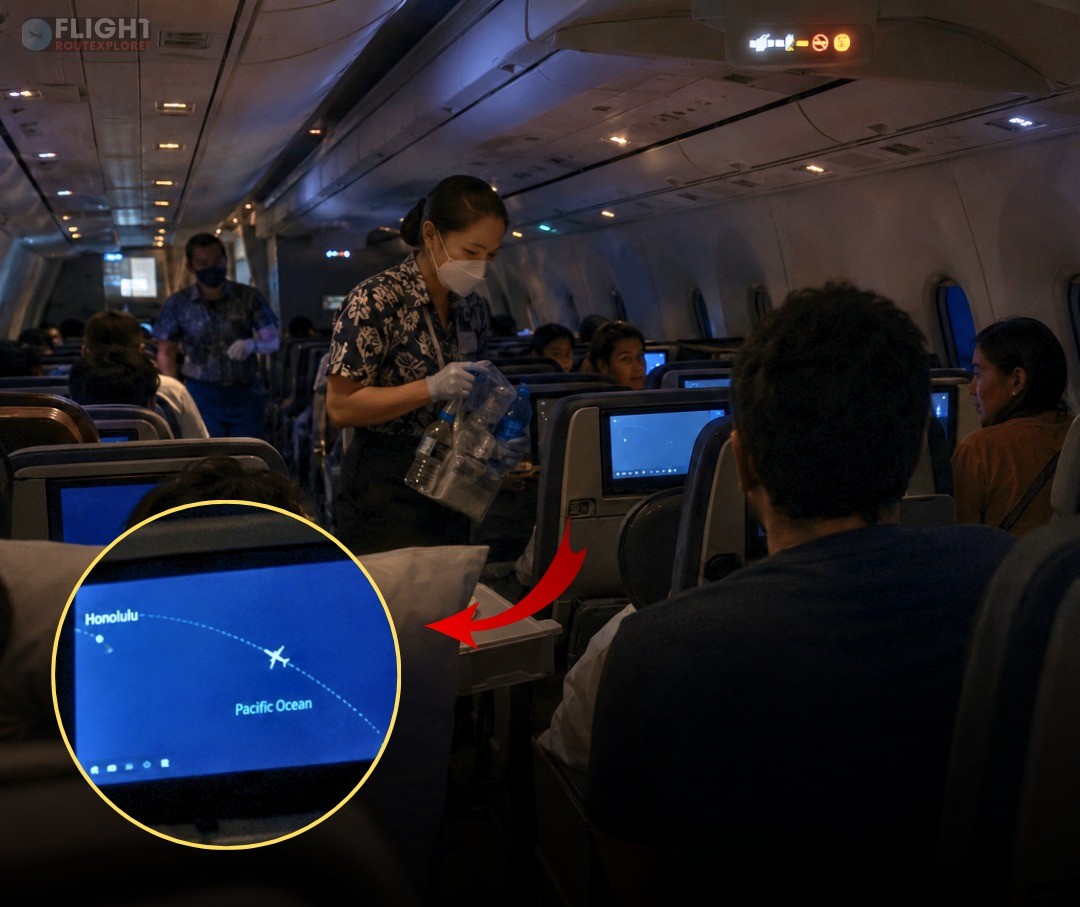
Picture a darkened overnight flight between Honolulu and the mainland, with the seatbelt sign illuminated above sleeping passengers. A faint smoke smell drifts into part of the cabin, nearby travelers begin looking around to understand where it is coming from, and flight attendants move quickly through the aisle carrying gloves, water bottles, and containment equipment.
Someone several rows away is told to unplug a device, while another passenger suddenly realizes the smell may be coming from a backpack pushed beneath a nearby seat. Outside the window, there are no visible city lights, highways, or coastline below, only darkness and open ocean stretching across the moving map screen.
Modern crews train extensively for exactly these situations, and commercial aviation remains remarkably safe. What changes is the sense of time, because passengers understand the airplane may still remain airborne for hours after the diversion decision happens.
The crew may be doing everything right and the battery may already be contained, yet the flight can still have hours left before anyone steps onto a runway.
Airlines are becoming more aggressive about portable charger policies, especially on longer and overwater routes. Southwest already requires power banks to remain visible while in use, with no charging inside bags or overhead bins, and other carriers are thought to be moving quickly in the same direction.
As we covered previously in New Inflight Portable Charger Ban Reaches Hawaii Route December 15, airlines increasingly view portable power banks as one of the highest-risk personal items regularly brought onboard. Long, overwater flying is where much of that enforcement is appearing first, and travelers should expect more restrictions ahead, not fewer.
For most Hawaii travelers, the practical takeaway is simple. Carry fewer spare batteries and keep portable power banks where you can see them, rather than buried inside luggage. Editor likes to keep his visible in his seat pocket.
Recently, more announcements include something to the effect that if a device becomes unusually hot, starts swelling, smells odd, or slips into a seat mechanism, to tell a flight attendant immediately rather than trying to handle it privately. Cabin crews would far rather respond early to a small problem than discover it later after smoke appears in the cabin.
The crew wants exactly what passengers want on a Hawaii flight: a long, uneventful crossing where nothing memorable happens. Portable chargers offer a new type of concern that is just now being addressed.