
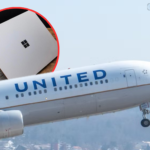



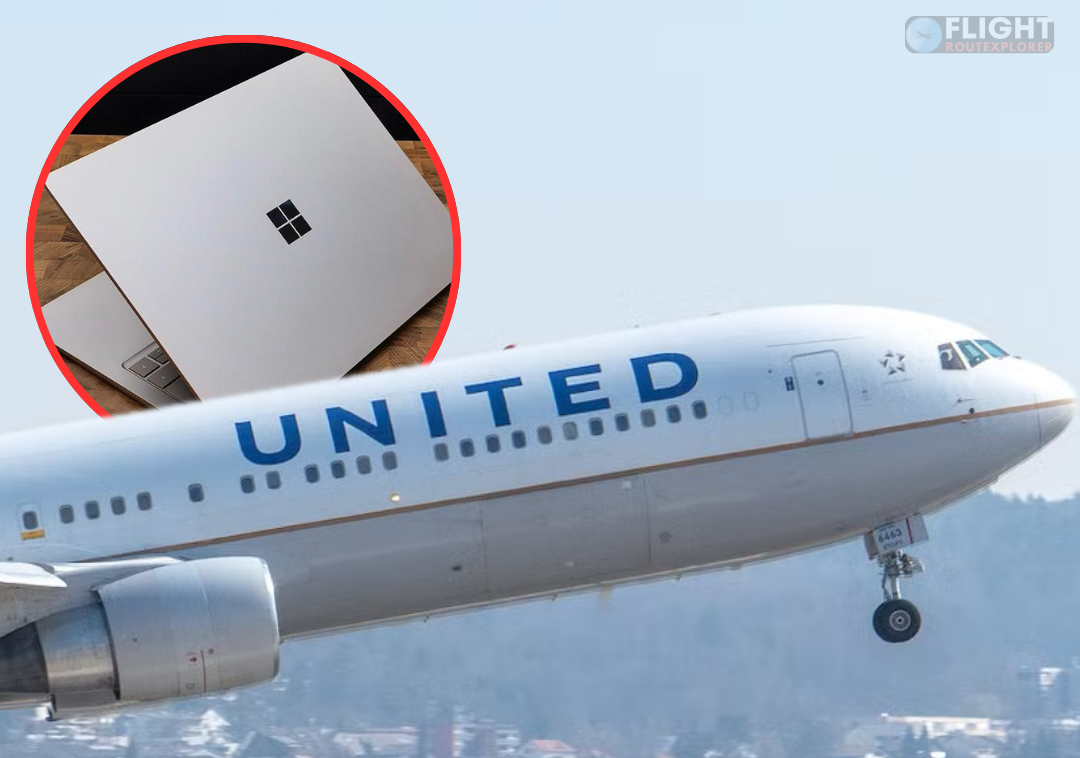
On January 22, 2026, United Airlines flight UA-748, a Boeing 767-300 aircraft registered as N668UA, operating from Washington Dulles International Airport (IAD), USA, to Geneva Airport (GVA), Switzerland, was forced to turn back and divert to Newark Liberty International Airport (EWR), USA due to an unusual safety concern involving a passenger’s laptop.
What Happened?
After departure, the aircraft climbed to its cruising altitude of Flight Level 330 (approximately 33,000 ft). While en-route, about 60 nautical miles east of Portland, Maine, the flight crew became aware that a laptop had slipped through a gap in the cabin sidewall and fallen into an inaccessible space leading toward the cargo area of the aircraft.
Although the laptop’s lithium-ion battery remained undamaged, its location posed a potential safety risk. Lithium batteries can ignite if damaged or overheated, and if such a fire were to occur in a part of the aircraft that cannot be accessed during flight, it could endanger the aircraft and everyone on board. For this reason, the flight crew elected to divert the aircraft back to a suitable airport.
Diversion and Retrieval
The aircraft safely executed a turnaround and landed at Newark Liberty International Airport (EWR) approximately 85 minutes after departure. Once on the ground, maintenance personnel were able to access the cargo area and retrieve the laptop without incident. The device’s lithium-ion battery was confirmed to be undamaged.
After an approximately 3-hour ground delay while the situation was resolved, the aircraft departed again for Geneva. Despite the delay, the flight continued safely and ultimately arrived in Geneva about 4.5 hours later than originally scheduled.
Why Such a Diversion Was Necessary
The decision to divert was based largely on safety protocols related to lithium-ion batteries. Batteries of this type pose a known risk of thermal runaway — a rapid and uncontrollable rise in temperature that can lead to fire. While these batteries are permitted in the passenger cabin where crews can respond to incidents, they are more hazardous when located in areas without direct fire suppression or crew access.
In this case, the laptop had slipped through a small gap near the cabin wall that is not easily accessible during flight, meaning the crew would be unable to confirm its condition or respond directly if a thermal event occurred. The crew, in consultation with operations and in accordance with safety standards, therefore opted to turn back.
A Rare but Reoccurring Issue
Although highly unusual, this was not the first time such an event has occurred on a United Airlines Boeing 767. Similar incidents over the past year — including other laptops falling through cabin gaps into inaccessible areas — have led to at least a few unscheduled diversions of transatlantic flights, prompting discussions within aviation circles about cabin design and mitigation strategies.