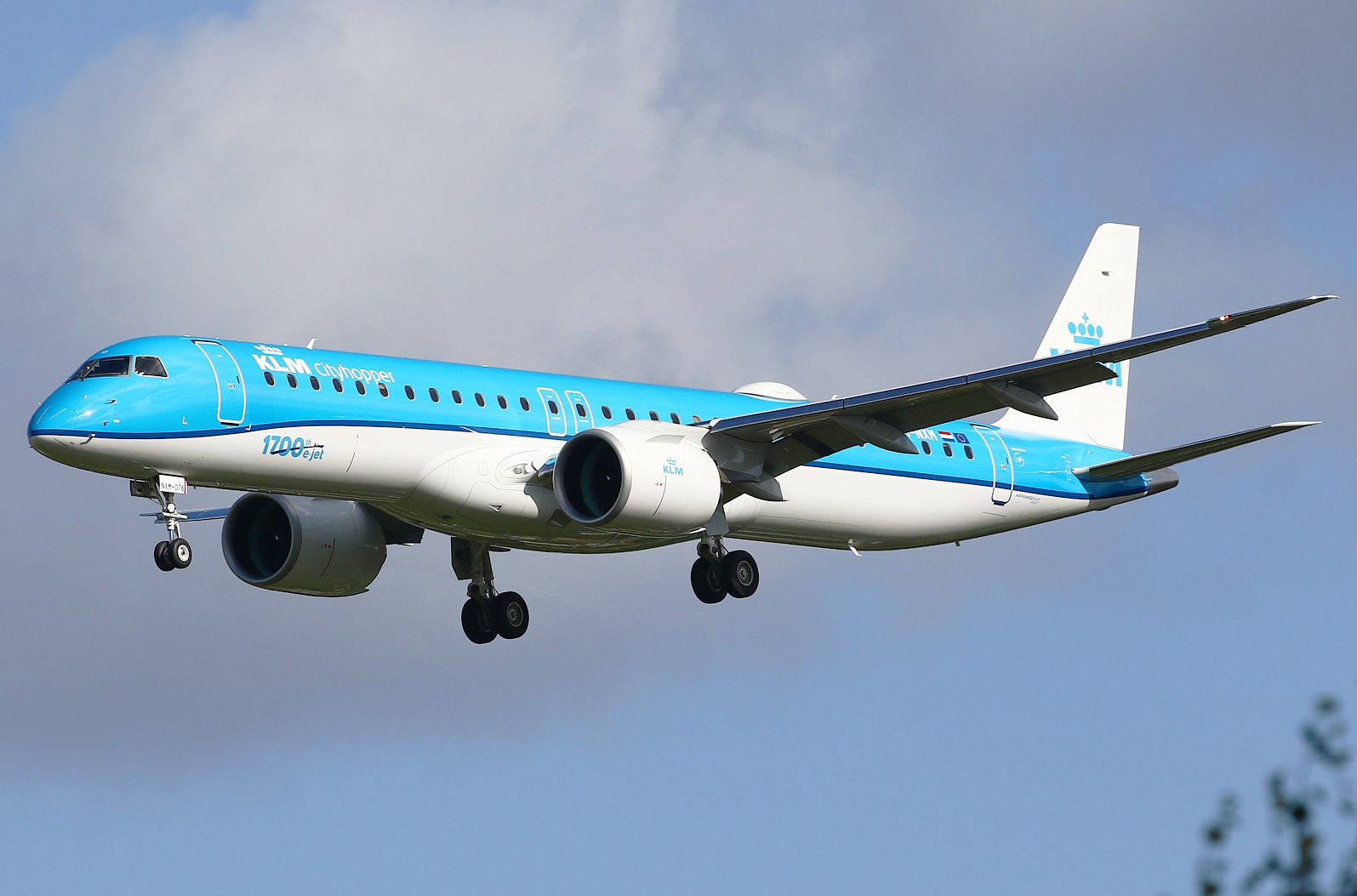






On Apr 15th 2025, an Alliance Airlines Embraer ERJ-190 operating on behalf of Qantas came closer than anyone realized to a far more serious outcome, after a subtle maintenance error revealed itself at a critical moment of flight. The aircraft, registered VH-UZD, was operating flight QF-1811 from Sydney, New South Wales to Launceston, Tasmania, carrying 95 passengers and 4 crew members.
As the jet was on approach into Launceston, the flight crew were confronted with multiple caution messages, including a “SLAT FAIL” alert. Recognizing the potential implications for low-speed handling during landing, the crew immediately initiated a missed approach. After completing the appropriate checklists and assessing the situation, they elected to divert to Melbourne, Victoria, selecting the airport with the longest available runway in the region. Approximately 75 minutes after the go-around, the aircraft landed safely on Melbourne’s runway 34. There were no injuries, and the decision-making by the crew ensured a controlled and uneventful conclusion to the flight.
While the incident itself ended safely, its underlying cause would take months to fully uncover. On Jan 16th 2026, the Australian Transport Safety Bureau released its final report, revealing that the root of the problem lay not in the cockpit, but in maintenance performed months earlier.
According to the ATSB, during scheduled maintenance in November 2024, the locking bolt for the left outboard slat torque tube had not been passed through the hole in the actuator’s splined shaft. The torque tube had been incorrectly positioned, allowing the aircraft to be released back into service in a condition that was not mechanically secure. After 50 flights, the torque tube disconnected entirely, resulting in failure of the slat system and triggering the warnings encountered by the crew on approach to Launceston.
Crucially, the ATSB found that the error went undetected at multiple stages. Two licensed aircraft maintenance engineers who fitted the torque tube did not recognize that it had been incorrectly assembled. In addition, the licensed aircraft maintenance engineer who checked the work, and a second LAME who carried out the required independent inspection, also failed to identify the incorrect fitment.
The investigation highlighted that there were no environmental or physical factors to explain the mistake. The work was carried out in a modern facility with good lighting, easy access, and components positioned at eye level. Instead, investigators concluded that the error was likely missed because the visual difference between a correctly and incorrectly assembled torque tube was extremely subtle. As little as 6.35 millimeters of additional exposed actuator spline distinguished the faulty installation from a correct one, a difference small enough to evade detection even during multiple inspections.
The ATSB also identified a strikingly similar occurrence involving another Embraer E190, VH-UYB, which underwent heavy maintenance at a different facility around the same time. In that case, a torque tube driving a left wing flap actuator had also been incorrectly assembled, with the locking bolt failing to pass through the splined shaft. That aircraft experienced a flap system failure just 35 flights after returning to service.
In both cases, aircraft protection systems functioned as designed, minimizing the impact on flight safety and allowing crews to manage the failures without loss of control. Nevertheless, the report underscored how small, easily overlooked details in maintenance can propagate silently through dozens of flights before manifesting at a critical phase of operation.
The incident stands as a sobering reminder that in modern aviation, safety margins are often protected not just by technology and pilot skill, but by millimeters of metal correctly aligned—and by the human ability to recognize when something looks just slightly wrong.