



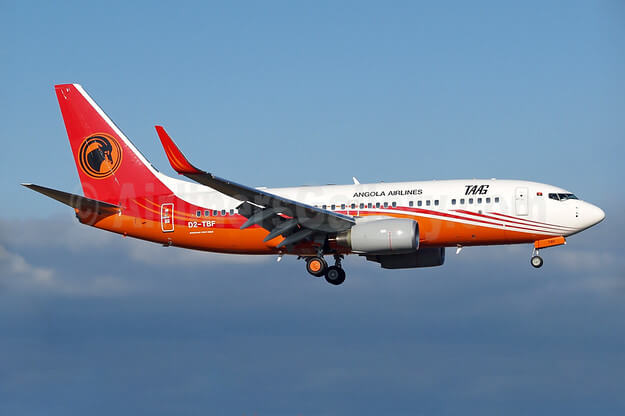
On Dec 2nd 2024, a TAAG Angola Airlines Boeing 737-700, registration D2-TBG, was forced into an emergency descent over southern Africa after a sudden loss of cabin pressurization at cruising altitude.
Operating flight DT-579 from Luanda to Cape Town with 93 passengers and six crew members on board, the aircraft was cruising at FL370 approximately 350 nautical miles north of Windhoek, Namibia, when the cabin altitude warning illuminated and warning horns sounded. The alerts indicated that cabin altitude had exceeded 10,000 feet.
According to a preliminary report released on Apr 3rd 2025 by Namibia’s Ministry of Works and Transport, the flight crew immediately followed standard operating procedures in an attempt to stabilize cabin pressure. Despite their efforts, the cabin altitude continued to climb uncontrollably, eventually reaching 15,000 feet.
Recognizing a pressurization failure, the crew declared an emergency and, after coordination with Windhoek Control, initiated a rapid descent to FL100. During the descent, passenger oxygen masks deployed; however, investigators found that only 46 percent of the masks released as intended. Passengers and crew donned oxygen masks in accordance with emergency procedures.
The aircraft diverted to Windhoek Hosea Kutako International Airport and landed safely at 11:15 UTC (13:15 local time), where emergency services were standing by. One flight crew member, one cabin crew member, and five passengers sustained minor injuries during the event.
Post-flight inspection revealed that the right Environmental Control System (ECS) pack had been inoperative for the entire flight, leaving the left ECS pack as the sole source of cabin pressurization. Preliminary findings indicate that the left ECS pack subsequently failed during cruise, resulting in the total loss of pressurization.
The aircraft remained grounded in Windhoek until Dec 23rd 2024, when it was ferried back to Luanda. It returned to commercial service on Jan 7th 2025.
On Feb 13th 2026, Germany’s Bundesstelle für Flugunfalluntersuchung (BFU) confirmed in its December 2024 bulletin that it was supporting the Namibian investigation, having been tasked with reading out the cockpit voice recorder (CVR) and flight data recorder (FDR).
The incident highlights the critical redundancy built into modern airliners’ pressurization systems—and the risks when that redundancy is compromised. With one ECS pack already inoperative before departure and the second failing at high altitude, the crew’s swift execution of emergency procedures likely prevented a far more serious outcome.