
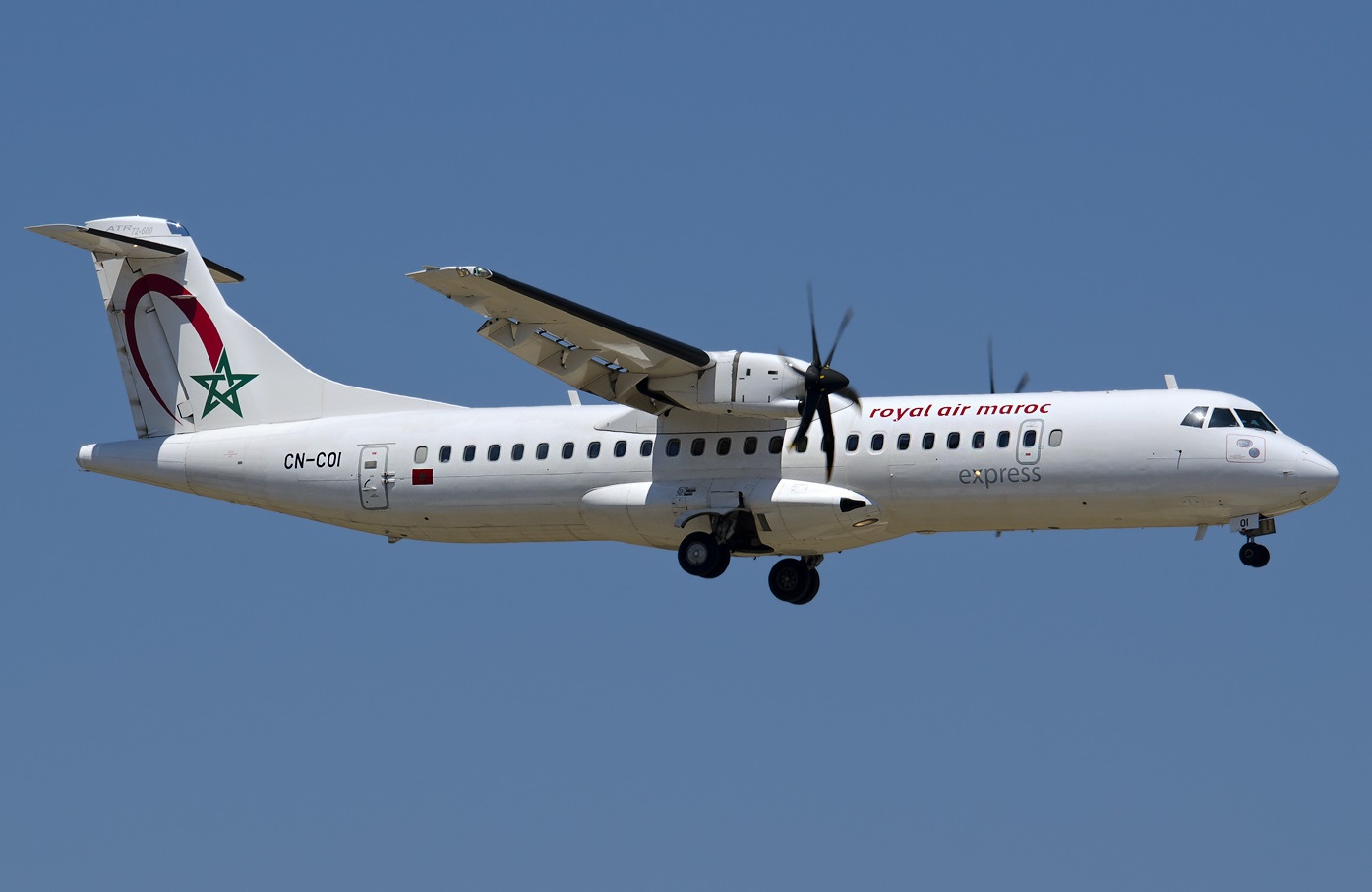
On Jun 19th 2024, a runway incursion at Seville Airport brought two departing aircraft into dangerous proximity when a Royal Air Maroc ATR crossed a hold short line just as a Ryanair jet was accelerating for takeoff.
The ATR 72-212A, registration CN-COE, operating flight AT-925 from Seville to Casablanca, was taxiing for departure to runway 27 when the crew missed the turn onto taxiway A. At 12:08:45Z, the aircraft crossed the hold short line at taxiway E1 and came to a stop approximately 40 meters (125 feet) beyond the line but still before the runway edge line.
Moments earlier, at 12:08:32Z, a Boeing 737-800, registration EI-DYC, operating flight FR-3262 from Seville to Cork, had begun its takeoff roll on runway 27. By 12:08:45Z, the 737 was accelerating through approximately 120 knots over ground. The aircraft became airborne at 12:08:59Z, around 520 meters (1,700 feet) before reaching the E1 intersection where the ATR had crossed the hold line. The Ryanair flight continued to Cork and landed without further incident.
After stopping, the ATR taxied onto the runway, vacated via E2, and returned to the apron. The crew later taxied again at 13:12Z, correctly followed the taxi route, departed at 13:26Z, and landed in Casablanca with a delay of about 65 minutes.
Spain’s CIAIAC opened an investigation into the occurrence. ADS-B data transmitted by both aircraft confirmed the runway incursion.
On Feb 20th 2026, CIAIAC released its final report, concluding that the probable cause of the incident was the ATR crew’s lack of adherence to taxi procedures, resulting in the runway incursion while the Ryanair aircraft was taking off.
Contributing factors included the controller not instructing the ATR to stop before it reached the runway edge despite the aircraft taxiing for over three minutes — including more than one minute in undue areas — as well as the absence of directional and informational signage from gate G3 toward taxiway A. Investigators also cited a transition from visual meteorological conditions to instrument meteorological conditions that should have triggered a change in taxiway lighting configuration. That change was not implemented due to delays in receiving the routine meteorological report (METAR).
The incident highlights how procedural lapses, signage deficiencies, weather transitions, and controller oversight can combine to erode safety margins in the critical ground movement phase — even as another aircraft is already committed to takeoff.