




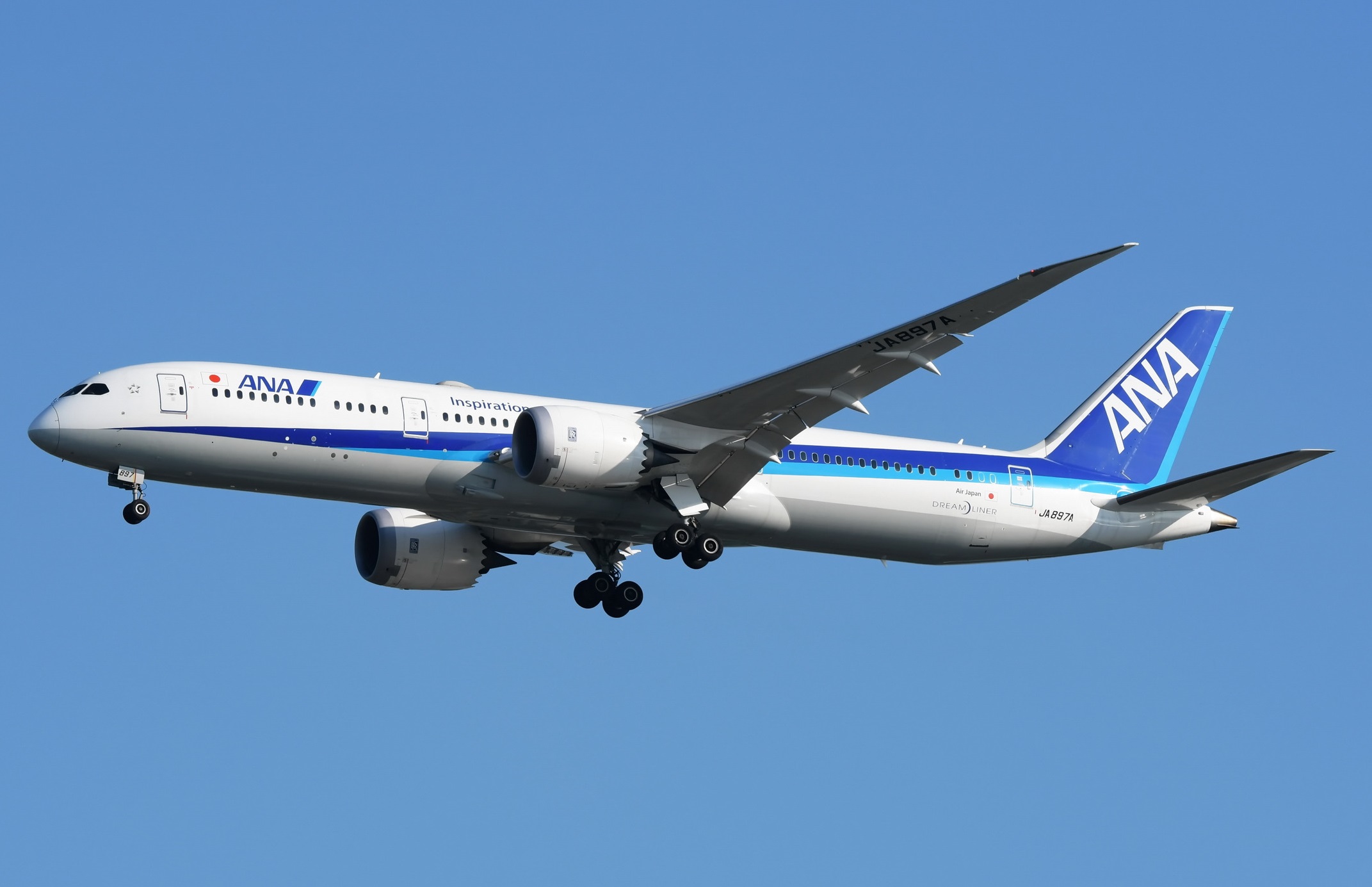
On Feb 17th 2026, an All Nippon Airways Boeing 787-9, registration JA875A, turned back toward Tokyo while enroute to Europe after the crew observed decreasing oil quantity indications on one engine.
Flight NH-223 had departed Tokyo Haneda bound for Frankfurt with 151 people on board and was cruising at FL350 over the Beaufort Sea north of Alaska when the crew detected a downward trend in oil quantity on the left-hand Rolls-Royce Trent 1000 engine. With the aircraft operating in a remote polar region far from diversion airports, the pilots elected to discontinue the transcontinental crossing and return to Japan.
The 787 climbed to FL360 for the westbound return and proceeded back across the Pacific. The aircraft landed safely on Haneda’s runway 34L approximately eight hours after the decision to turn around.
A replacement 787-9, registration JA871A, was dispatched to operate the service and later reached Frankfurt with a delay of about 19.5 hours.
As of roughly 29 hours after landing back in Tokyo, the occurrence aircraft remained on the ground for inspection and maintenance.
Engine oil quantity indications are closely monitored parameters, particularly on long-haul twin-engine flights over remote regions. While the aircraft is certified to continue flight on one engine if necessary, any abnormal trend—especially in isolated airspace—typically prompts a precautionary return to ensure system integrity before proceeding across vast stretches of ocean and Arctic terrain.