

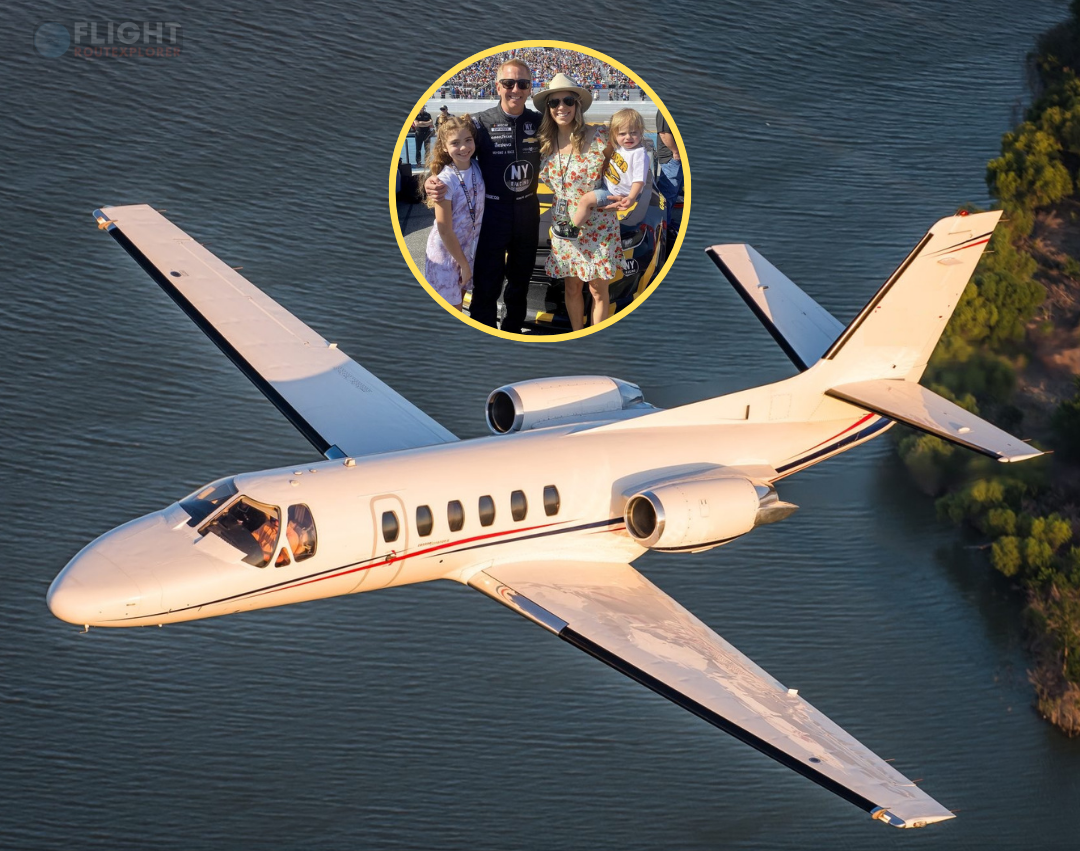
Preliminary reports indicate that Biffle’s aircraft struck the approach lights approximately 1,800 feet short of the runway before skidding across the infield after catching fire. Aviation podcaster Max Trescott, meanwhile, highlighted an anomaly in the ADS-B flight data that may point to an altimeter malfunction prior to the aircraft turning back.
According to Trescott, the data showed not a routine fluctuation but a sudden spike. In a span of just 1.64 seconds, the aircraft appeared to climb 1,374 feet. That immediately raised red flags.
“I discovered that it was more than a jump in altitude. It was a spike in the data. The ADS-B data shows that in 1.64 seconds, the aircraft climbed 1,374 feet,” he said on the podcast.
Trescott added that the altitude had remained unchanged for the 34 seconds leading up to that spike, strengthening the suspicion that something was amiss with the altimeter. While he emphasized that such an issue likely did not directly cause the crash, he also acknowledged that its role in triggering subsequent events has not been highlighted.
Another theory has surfaced from within the racing community. NASCAR veteran Kenny Wallace suggested that an engine failure may have set the chain reaction in motion. In Wallace’s view, the aircraft may have lost a motor and begun to experience significant drag.
Although planes can typically remain airborne on a single engine, Wallace speculated that with the flaps deployed, horsepower would have reduced, drag increased, and the aircraft simply could not stretch the glide far enough to reach the runway.