


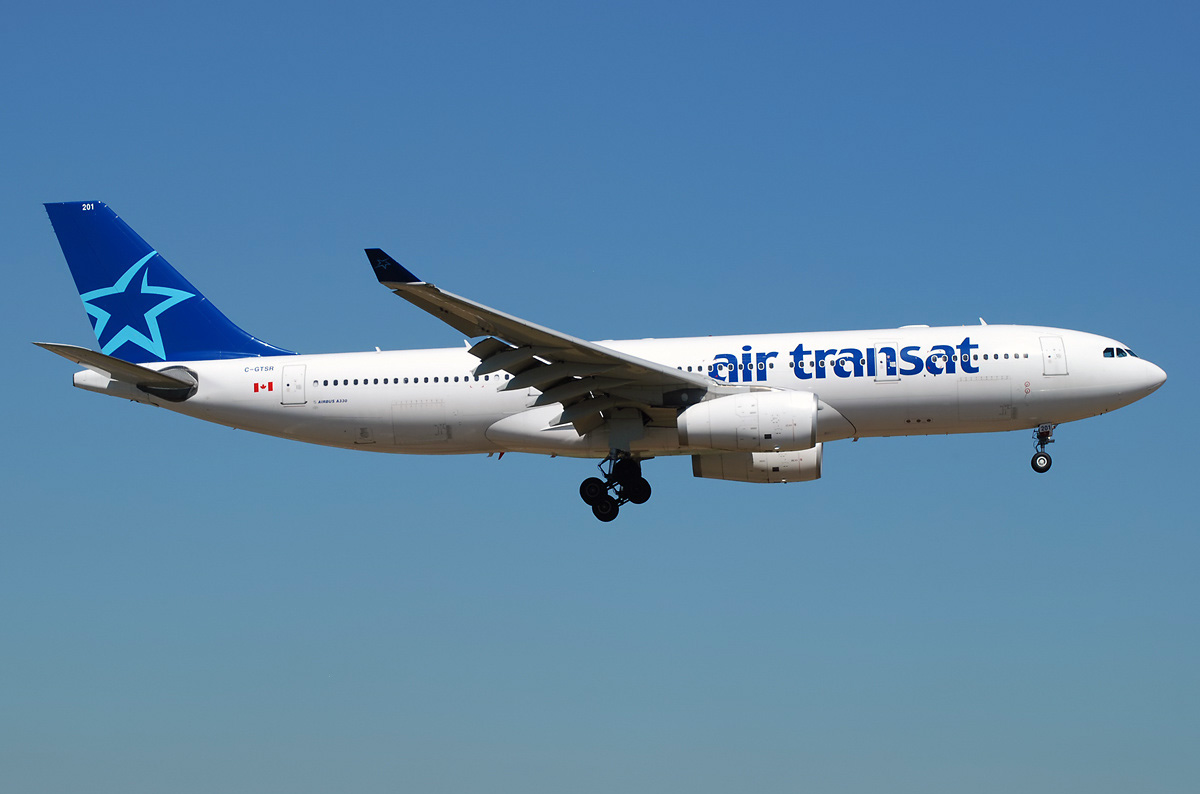
On Jan 16th 2026, an Air Transat Airbus A330-200 was forced to divert and declare an emergency after weather-related delays near its destination led to a critical fuel situation.
The aircraft, registered C-GUBF, was operating flight TS-187 from Punta Cana in the Dominican Republic to Toronto, Ontario, carrying 278 passengers and 11 crew members. As the widebody jet descended toward Toronto, deteriorating weather conditions prompted air traffic control to place the flight in a holding pattern at flight level 260. While circling, the crew calculated that continued delays would compromise their fuel margins and informed ATC that they were operating with minimum fuel.
As the situation worsened and further holding was anticipated, the pilots escalated the alert to PAN PAN, signaling an urgent but not yet life-threatening condition. With no immediate improvement in the weather and fuel reserves continuing to drop, the crew elected to divert to Hamilton, Ontario. During the downwind leg for Hamilton, fuel levels reached a point where the crew declared a Mayday, indicating a full emergency, and requested priority landing.
The aircraft landed safely on runway 12 in Hamilton approximately 50 minutes after first entering the holding pattern. According to the Transportation Safety Board of Canada, the A330 touched down with 3,420 kilograms of fuel remaining, below the computed minimum fuel requirement of 3,900 kilograms.
No injuries were reported, and the event is being reviewed to determine how weather, traffic flow management, and fuel planning combined to create a rapidly escalating situation, underscoring how quickly routine weather delays can evolve into an in-flight emergency.