




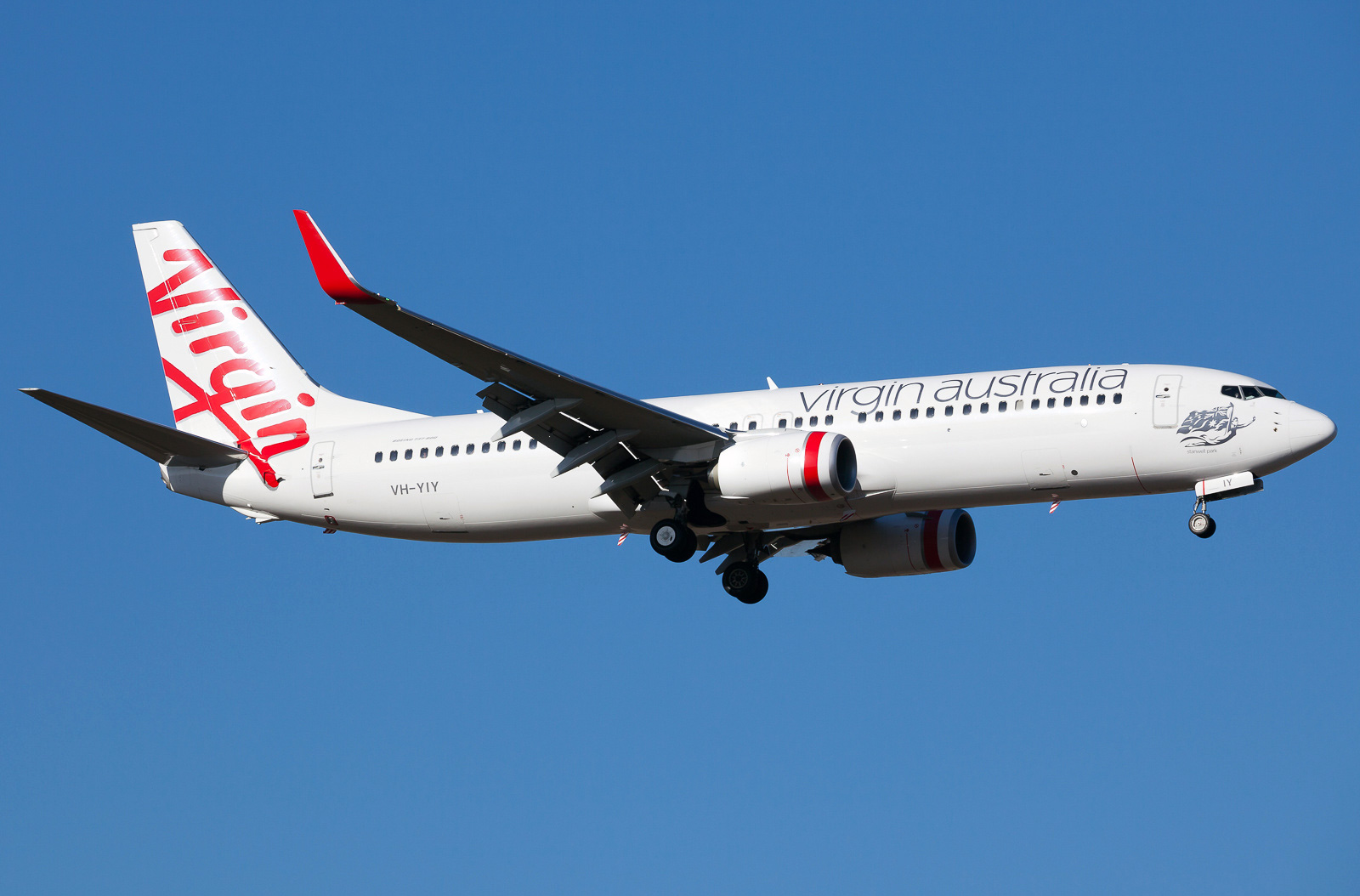
On Feb 4th, 2026, a Virgin Australia Boeing 737-800, registration VH-YFS, operating flight VA-1602 from Adelaide, South Australia, to Hobart, Tasmania, experienced a flap-related technical issue during its initial approach that led to a precautionary go-around and a later high-speed landing.
The aircraft was on final approach to Hobart’s runway 12 when the flight crew discontinued the landing and initiated a go-around, subsequently entering a holding pattern. While in the hold, the crew advised air traffic control that the flaps were stuck, prompting additional checks and preparation for a non-standard approach configuration.
After completing the necessary procedures, the crew informed controllers they were ready to attempt the approach again. The Boeing 737 returned for landing on runway 12 and touched down safely about 35 minutes after the go-around, albeit at a higher than normal groundspeed of approximately 160 knots, consistent with flap-limited landing performance requirements.
Virgin Australia later confirmed that the event was the result of a technical issue that required the aircraft to remain in a holding manoeuvre before landing. No injuries were reported, and the aircraft cleared the runway without further incident.
The event highlights how modern flight crews manage configuration-related issues by using established procedures, accepting higher approach and landing speeds when necessary to ensure a controlled and safe outcome.