

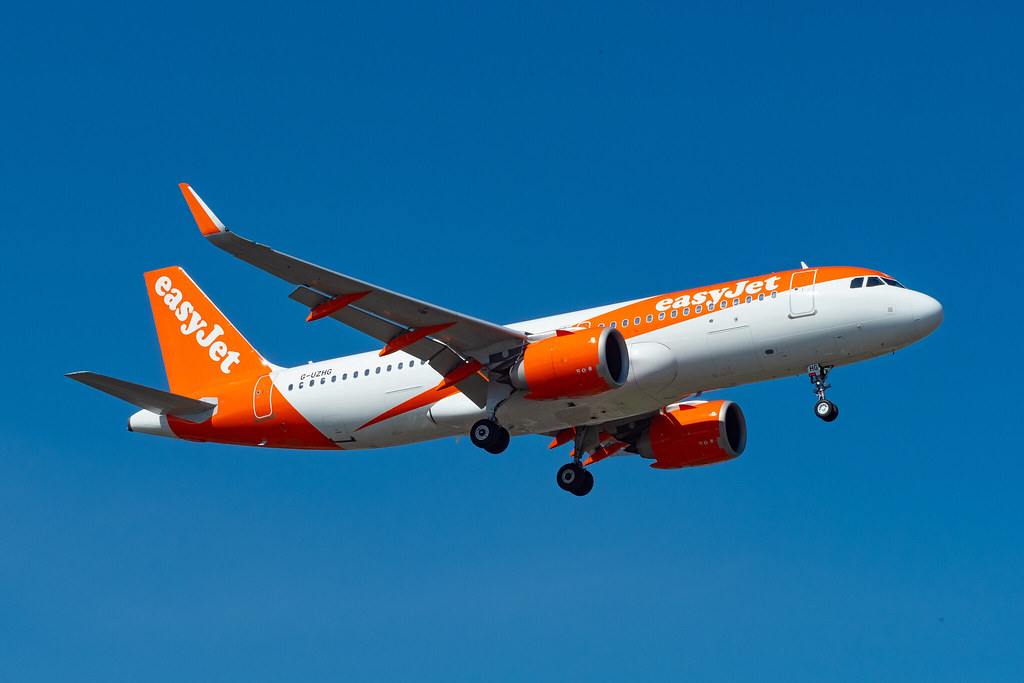
Apr 20th 2025 : An EasyJet Airbus A320-200N operating a flight from Belfast Aldergrove to Palma de Mallorca experienced a serious pressurisation incident shortly after departure, prompting an emergency descent before the flight continued safely to its destination, according to a bulletin released by the UK Air Accidents Investigation Branch (AAIB).
The aircraft, registration G-UZEF, was operating flight U2-3011 with 177 passengers and six crew on board. While cruising at FL390 approximately 140 nautical miles south of Belfast, the flight crew initiated an emergency descent after detecting a loss of cabin pressurisation. The aircraft descended to FL200, where the situation was stabilised. About six minutes later, after troubleshooting and corrective action, the crew climbed back to FL370 and continued to Palma, where the aircraft landed safely.
Following the incident, the aircraft departed Palma on its return sector with a delay of approximately three hours and subsequently continued normal service.
AAIB Investigation and Findings
The AAIB classified the occurrence as a serious incident and opened a formal investigation. On January 8, 2026, the AAIB released its bulletin outlining the probable cause and contributing factors.
The investigation concluded that the loss of cabin pressurisation resulted from checklist items that were not completed during aircraft reconfiguration after a de-icing procedure that ultimately was not required. Specifically, the crew left the ditching pushbutton selected, which prevented the aircraft from pressurising.
With the ditching pushbutton selected, the aircraft’s pack control valves remained closed, stopping airflow into the environmental control system. As the aircraft climbed, cabin pressure gradually decreased, and the cabin altitude increased unnoticed until system alerts were triggered at cruise altitude.
Sequence of Events
According to the AAIB, after configuring the aircraft for de-icing, the crew reconfigured the aircraft when de-icing was no longer needed. During this process, the ditching pushbutton was not deselected, and the outflow valve position was not checked, as required by the checklist.
The commander was acting as pilot monitoring (PM) and carried out the reconfiguration using a “read and do” method, with the co-pilot observing. The co-pilot was under training and unfamiliar with the de-icing checklist, having never performed the procedure before. Time pressure to depart close to schedule, combined with the unusual circumstances of cancelling de-icing, led to several checklist items being skipped.
Compounding the issue, flight deck annunciator lights were set to dim due to low ambient light conditions, and the ditching pushbutton is known to be difficult to see from the left seat. As a result, the illuminated button went unnoticed during the climb.
As the aircraft reached FL390, the Electronic Centralised Aircraft Monitor (ECAM) alerted the crew to a pressurisation issue. With the cabin altitude continuing to rise and no immediate cause identified, the commander instructed both pilots to don oxygen masks and initiated an emergency descent. During the descent, the commander increased annunciator light brightness and noticed the illuminated ditching pushbutton. Once it was deselected, normal pressurisation was immediately restored.
The aircraft levelled off at FL200, where the crew assessed the situation using the operator’s decision-making framework. Determining that the issue had been resolved and the aircraft was operating normally, the crew elected to continue to Palma, climbing back to FL370 and completing the flight without further incident.
Wider Context and Safety Lessons
The AAIB noted that the operator had recorded 19 previous events involving the ditching pushbutton not being deselected, although all occurred on the ground. Several of those reports highlighted poor visibility of the pushbutton from the left seat. Additionally, the aircraft manufacturer had recorded six in-flight events where ECAM pressurisation alerts were generated due to the ditching pushbutton remaining selected, with most linked to incorrect reconfiguration after de-icing.
The AAIB concluded that while the incident was caused by missed checklist actions, the crew’s prompt recognition of the developing pressurisation problem and effective management of the emergency descent prevented the situation from escalating to the point where passenger oxygen masks were required. The investigation underscores the importance of strict checklist discipline, especially during abnormal or infrequently used procedures, and highlights human-factors challenges such as time pressure, unfamiliar checklists, and cockpit ergonomics.