



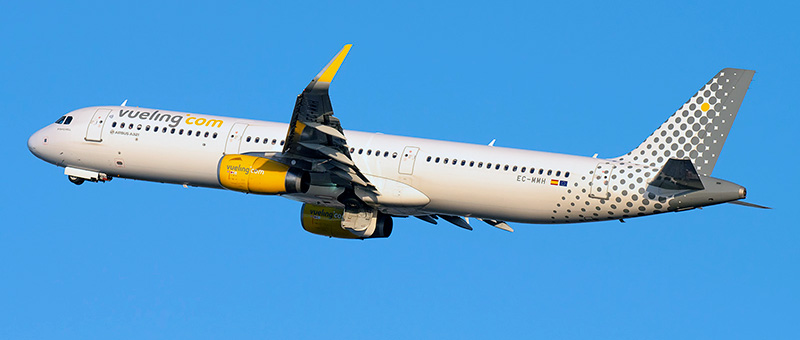
On Jan 22nd, 2026, a Vueling Airbus A321-200, registration EC-MGZ, operating flight VY-3015 from Fuerteventura, Canary Islands, to Barcelona, Spain, departed runway 01 carrying 204 passengers and 7 crew when an unusual technical failure occurred—without anyone on board realizing it.
During the takeoff roll and initial climb, the skin of a plate from the right engine’s thrust reverser system separated from the aircraft. The event generated no abnormal indications in the cockpit, and with all engine parameters appearing normal, the crew continued the flight to Barcelona, where the aircraft landed safely and used the thrust reversers normally during rollout.
Spain’s accident investigation authority CIAIAC later classified the occurrence as a serious incident and opened an investigation. The damage was only discovered during post-flight maintenance, highlighting how the failure went completely unnoticed in real time.
In an update released on Feb 9th, 2026, CIAIAC detailed that a section of the inner lining of the right engine’s thrust reverser side panel broke off, fragmenting into several pieces that were ejected onto the right side of the departure runway. The cockpit received no warnings, and the flight continued as planned. The crew of a subsequent departing aircraft spotted the debris, prompting a runway inspection and removal of the fragments. Air traffic control later informed the Vueling crew that debris linked to their departure had been found.
After arrival in Barcelona, ground inspections identified minor damage to the thrust reverser and the engine exhaust nozzle. The aircraft was withdrawn from service, remaining on the ground in Barcelona until Feb 1st, 2026, a downtime of 10 days, while repairs and checks were completed.