


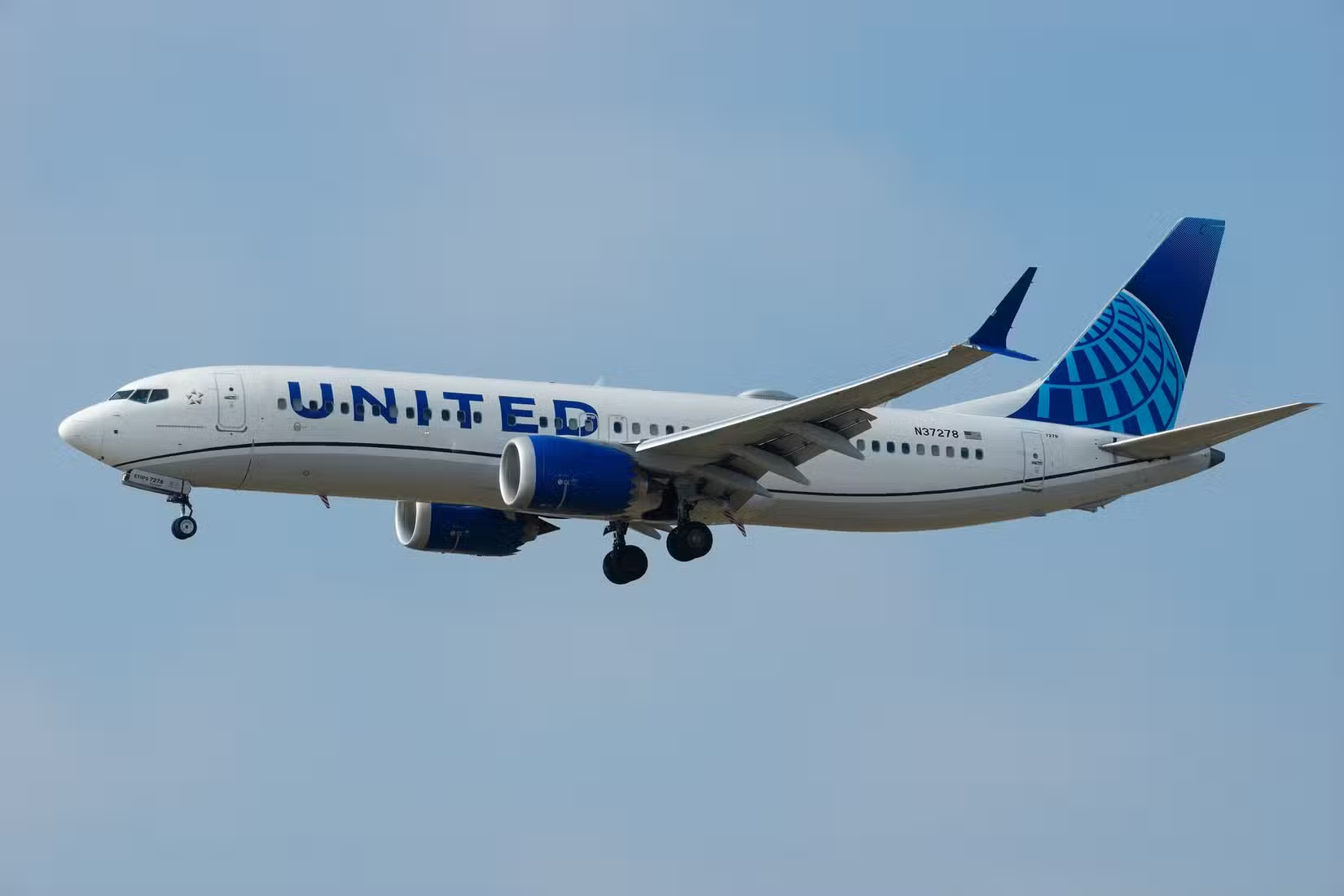
A routine domestic flight for United Airlines ended with a dramatic runway excursion after landing in Texas, when a Boeing 737-8 MAX skidded off the pavement and collapsed a landing gear while attempting to exit the runway.
On March 8th 2024, United flight UA-2477, operated by aircraft registration N27290, was flying from Memphis International Airport to George Bush Intercontinental Airport carrying 160 passengers and six crew members.
The flight approached Houston in instrument meteorological conditions before breaking out of the cloud layer between about 800 and 1,000 feet above the ground. While preparing for arrival, the crew reviewed runway information from the ATIS broadcast. The captain later recalled seeing runway condition codes indicating good braking on runway 27, although the actual broadcast condition codes indicated reduced braking capability due to a wet surface.
Initially advised by approach control to expect runway 26L, the captain requested runway 27 instead. The request was approved, and the crew was cleared for the ILS approach. While descending through about 12,000 feet, the captain also asked the first officer to request permission to roll to the end of the runway after landing, a request the tower granted while instructing the crew to “keep your speed up.”
During the approach the captain reduced the autobrake setting from 2 to 1, selecting a lower automatic deceleration rate.
The landing itself was uneventful. The aircraft touched down approximately 1,000 feet beyond the runway threshold at a groundspeed of about 158 knots. Speedbrakes deployed normally and the thrust reversers were activated, though only idle reverse thrust was used.
However, just seconds after touchdown the captain manually stowed the speedbrakes by moving the lever to the down and locked position, which also disabled the autobrake system. According to the captain, he did not initially slow the aircraft aggressively because the runway appeared dry and he wanted to minimize braking for passenger comfort while clearing the runway quickly.
With the autobrakes disabled, the aircraft continued rolling at relatively high speed. Flight data later showed manual braking did not begin until the aircraft was about 4,000 feet from the end of the runway.
As the aircraft approached the runway’s end, the crew heard a runway awareness alert warning that only 1,000 feet of pavement remained. At that point the captain increased braking pressure significantly while attempting to turn right onto taxiway SC.
During the attempted turn, the aircraft began shaking violently as heavy braking and steering inputs were applied simultaneously. The captain briefly released brake pressure, which stopped the shaking, but when braking was applied again the vibrations returned. The aircraft skidded straight ahead instead of completing the turn.
The jet slid off the paved surface at about 22 knots, entering soft ground beside the taxiway. The left main landing gear and nose wheels rolled onto the grass before the left gear struck a recessed concrete electrical junction box used for airport lighting systems.
The impact caused the left main landing gear to separate at its designed fuse pins near the wing’s rear spar. The aircraft came to rest tilted to the left, supported by the left engine nacelle, winglet, and aft fuselage.
Passengers evacuated via mobile stairs onto the runway and were transported to the terminal by buses. No injuries were reported.
The Federal Aviation Administration confirmed the aircraft had rolled onto the grass while exiting the runway shortly after 8 a.m. local time and announced an investigation. The National Transportation Safety Board subsequently dispatched investigators to Houston.
A preliminary report released on April 5th 2024 detailed the sequence of events and revealed key operational decisions made by the flight crew during the landing rollout. Data from the aircraft’s digital flight data recorder showed that the speedbrakes and autobrakes were active for only about five seconds after touchdown before being manually disabled.
The thrust reversers remained deployed for roughly 26 to 27 seconds but were used only at idle reverse thrust. Flight data also showed the aircraft was still traveling at about 72 knots with 1,000 feet of runway remaining and 57 knots with 500 feet remaining. The attempt to turn off the runway began at about 39 knots.
Investigators found no mechanical problems with the landing gear, braking system, thrust reversers, or speedbrakes that would have prevented normal operation.
On December 31st 2025 the NTSB opened its full investigation docket. The final report, released on March 5th 2026, concluded that the incident resulted from the captain’s failure to properly use the aircraft’s deceleration systems in accordance with company procedures.
Investigators determined that by retracting the speedbrakes shortly after touchdown, using only idle reverse thrust, and disabling the autobrake system early in the landing roll, the captain significantly reduced the aircraft’s ability to slow down efficiently. Because the speedbrakes were stowed, aerodynamic drag and weight on the wheels were reduced, making manual braking less effective once it was finally applied.
The investigation also found that the crew did not conduct a thorough arrival briefing after changing the autobrake setting to a lower deceleration mode, nor did they sufficiently discuss potential hazards such as the wet runway surface. The first officer accepted the deviation from standard procedures without challenge, representing a missed opportunity for stronger crew resource management.
Additionally, investigators noted that the runway safety area beyond runway 27 included a paved blast pad and obstacle-free surfaces where the aircraft could have safely rolled to a stop instead of attempting a high-speed turnoff.
The NTSB ultimately concluded that the captain’s decision not to maintain appropriate deceleration measures after landing left the aircraft traveling too fast near the runway end, leading to the loss of directional control during the attempted taxiway exit and the subsequent gear-separating impact with ground infrastructure.