
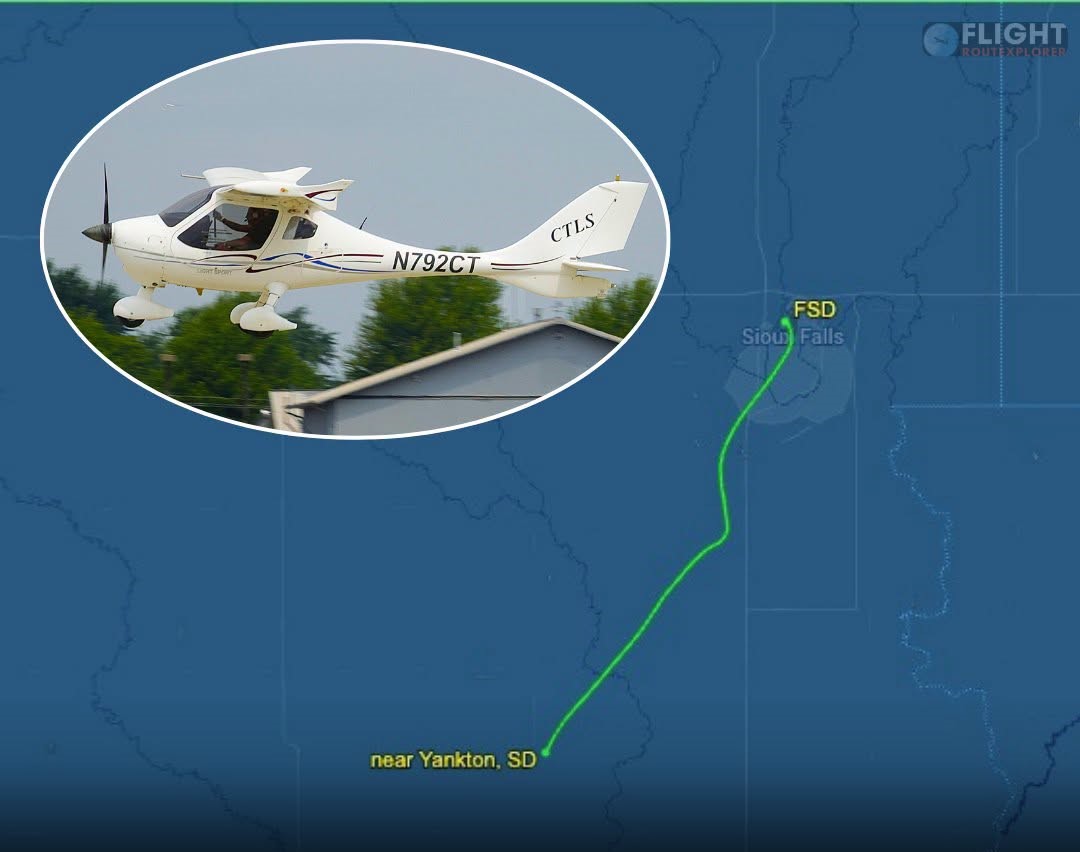
A fuel exhaustion incident turned a routine flight into a crash landing in a soybean field near Yankton, South Dakota, leaving one person injured and a Flight Design CTLS aircraft substantially damaged.
On October 9, 2026, the 2009 Flight Design CTLS, registered N792CT, departed Yankton with a pilot and one passenger for a local flight. Approximately 20 minutes into the flight, while the pilot was performing turns around a point, the engine suddenly lost all power.
With no engine power available, the pilot attempted an emergency landing in a soybean field approximately six miles west of the airport. During the landing roll, the aircraft’s nose landing gear collapsed, causing the airplane to overturn and come to rest upside down.
The pilot escaped without injuries, while the passenger sustained minor injuries. The aircraft suffered substantial damage to its vertical stabilizer and rudder. There was no fire or explosion.
Investigators found that both wing fuel tanks were completely empty after the accident, with no evidence of fuel leaking onto the ground. The pilot had recalled seeing approximately three gallons of fuel in each tank during the preflight inspection, but admitted that the fuel sight-gauge tubes were cloudy and difficult to read. Although he intended to clean them, the work had not been completed.
The investigation identified inadequate preflight fuel planning as the probable cause. The NTSB determined that fuel exhaustion caused the engine to lose power while the aircraft was maneuvering. Rough terrain in the soybean field also contributed to the outcome.
The incident is a reminder that unreliable or difficult-to-read fuel gauges must never be treated as an accurate indication of available fuel. Proper fuel verification and preflight planning are essential before every flight.