
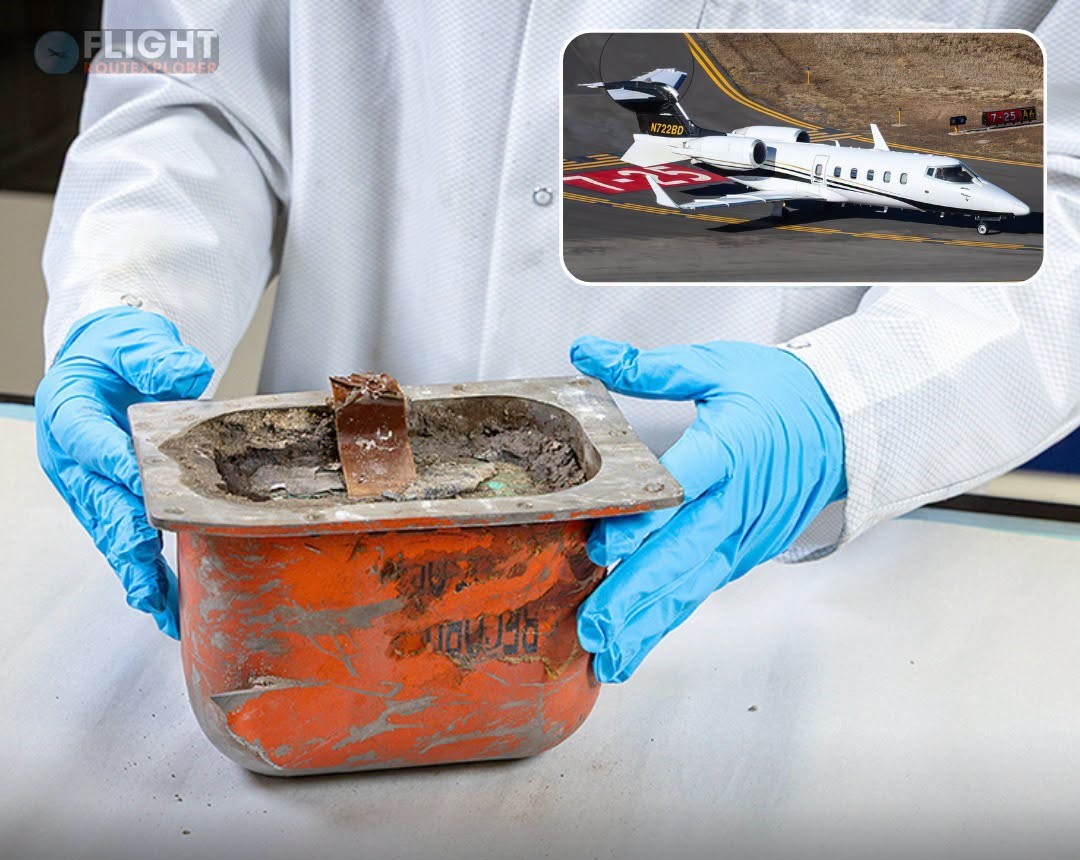
The investigation into the November 1 Learjet 60 crash near Greenacres, Florida, has reached a significant milestone. The National Transportation Safety Board (NTSB) has recovered the aircraft’s cockpit voice recorder (CVR) from the initial impact site.
The recorder has been transported to the NTSB’s Vehicle Recorders Laboratory in Washington, D.C., where investigators are evaluating it for potentially crucial evidence about the crew’s final moments and cockpit communications.
The recovery comes as investigators continue examining the wreckage. Excavation work at the impact site has now been completed, following the recovery of part of an engine. Earlier, sections of the left elevator, which controls the aircraft’s pitch, were also recovered, with one piece reportedly found nearly four miles from the crash site.
Weather conditions remain a major focus of the investigation. Before the crash, the pilots reported encountering deteriorating weather, icing and turbulence while flying at approximately 41,000 feet. They even asked air traffic control whether a “better ride” was available ahead.
The Learjet departed Austin, Texas, bound for North Eleuthera in the Bahamas, but crashed in Palm Beach County, killing all nine people aboard, including four members of one family.
The cockpit voice recorder could provide investigators with valuable insights into the pilots’ discussions, decisions, and responses to the worsening weather conditions.
However, the CVR alone may not establish the cause of the crash. Investigators will need to correlate its findings with flight data, recovered wreckage, weather information and other evidence.
The investigation continues.