
A significant clue has emerged in the investigation into the deadly Learjet 60 crash near West Palm Beach, Florida.
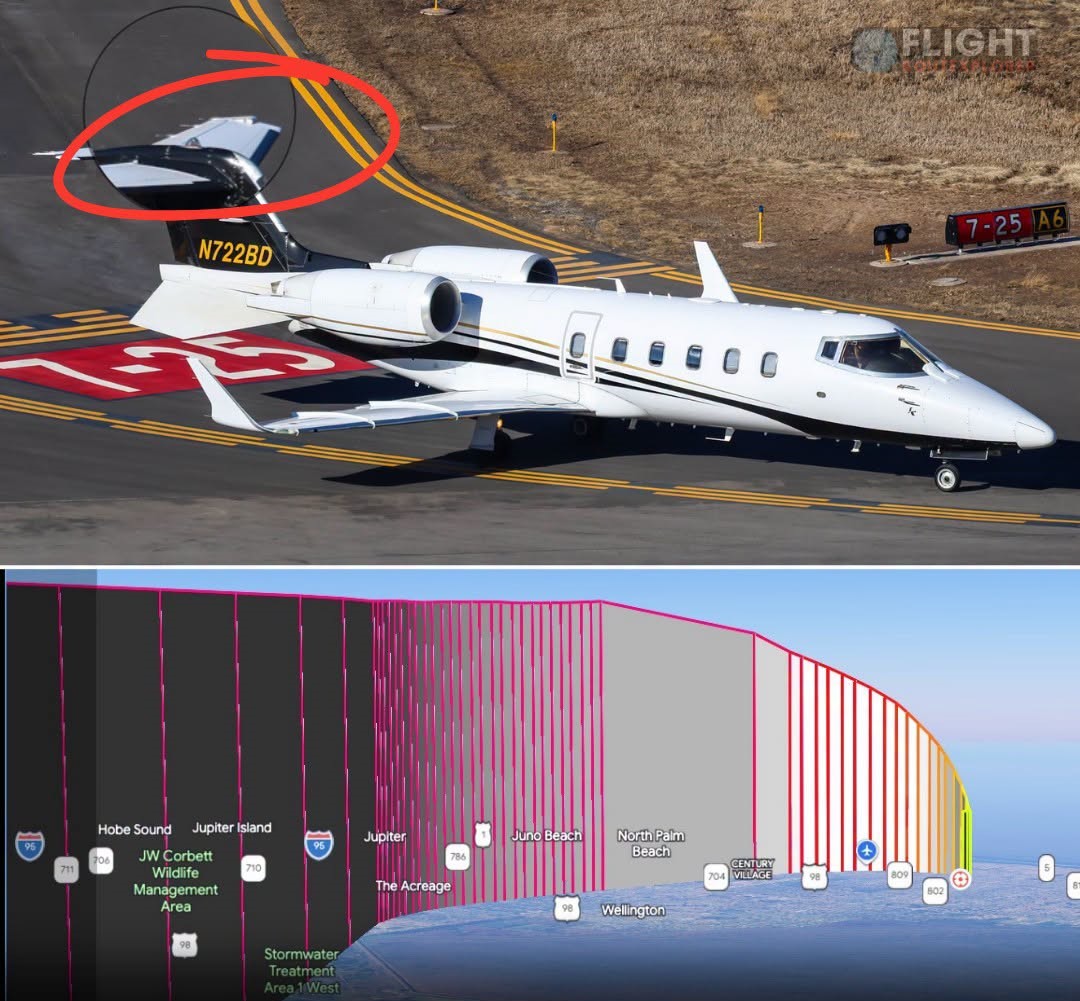
The NTSB has recovered the majority of the aircraft’s left elevator in three separate pieces, scattered approximately 1.3 to 3.8 miles (2.1–6.1 km) from the main accident site.
The elevator is a critical flight-control surface located at the rear of the horizontal stabilizer. It controls the aircraft’s pitch, allowing pilots to raise or lower the nose during flight.
The loss of an elevator can seriously compromise pitch control. If the left elevator separates while the right remains attached, the resulting aerodynamic imbalance could create abnormal forces on the aircraft’s tail. A partially detached elevator could also generate destructive flutter and additional structural damage.
Depending on the extent of the failure, the aircraft could become extremely difficult to control. However, losing one elevator does not automatically mean an aircraft will crash.
The biggest question now is whether the left elevator failed first, potentially triggering the loss of control, or whether it was torn away by extreme aerodynamic forces during an already uncontrolled descent.
Investigators will closely examine the recovered pieces, hinges, attachment points and fracture surfaces to establish when and how the separation occurred.
Finding the majority of the left elevator in three pieces, miles from the main wreckage, makes this an important line of investigation.