
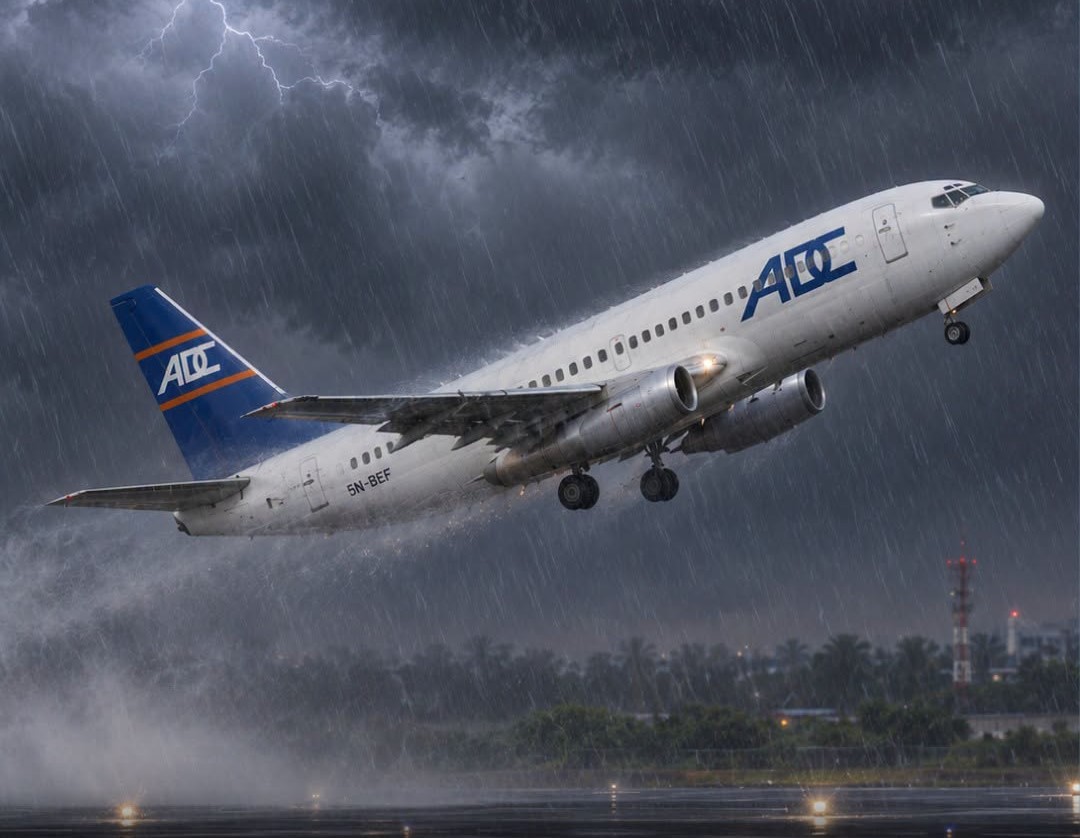
On October 29, 2006, ADC Airlines Flight 053 took off from Abuja, Nigeria, into dangerous weather that would turn a routine domestic journey into one of the country’s deadliest aviation disasters.
Within just 76 seconds, the Boeing 737-200 plunged into a field, killing 96 of the 105 people aboard.
The aircraft, registered 5N-BFK, was operating a scheduled flight from Abuja to Sokoto with 100 passengers and five crew members.
Earlier that morning, it had flown from Calabar through Lagos before arriving in Abuja. After refuelling and boarding passengers, the crew prepared for the final leg of the journey.
As the aircraft prepared to depart Runway 22, thunderstorms and heavy rain threatened the airport. Air traffic controllers repeatedly warned the pilots about gusty winds and changing conditions.
Wind reports fluctuated sharply, with readings reaching 35 knots. Another airline’s pilot, concerned about the weather, chose to wait for conditions to improve. However, Flight 053 continued with its departure.
At approximately 11:29 a.m. local time, the Boeing 737 lifted off. Almost immediately, it encountered severe windshear, a sudden change in wind speed and direction capable of robbing an aircraft of vital lift. The crew received a windshear warning during the initial climb.
Investigators later reconstructed how the aircraft lost control. The pilots made control inputs that increased the aircraft’s nose-up attitude to an extreme angle. This disrupted airflow over the wings and engines, contributing to engine compressor stalls and a severe loss of thrust.
The aircraft entered an aerodynamic stall, rolled sharply to the left and descended uncontrollably. The crew could not recover before impact.
The jet struck a field near Tungar Madaki, close to Abuja’s Nnamdi Azikiwe International Airport, and was destroyed by the impact and subsequent fire. Emergency responders reached the wreckage, where nine occupants survived, many in the relatively intact rear section of the aircraft. The remaining 96 people perished.
Among the victims were Sultan Muhammadu Maccido, the highly respected spiritual leader of Nigeria’s Muslims, his son Senator Badamasi Maccido, and Sokoto’s deputy governor, Garba Muhammad. Their deaths sent shockwaves across the country.
Nigeria’s Accident Investigation Bureau examined the flight recorders, weather information and wreckage. Its final findings identified the decision to take off in hazardous weather and the crew’s inappropriate response to windshear as key causes.
Investigators also highlighted inadequate windshear recovery training, weaknesses in company oversight and poor coordination between the pilots. The airport’s radar was not operating, complicating the initial search for the crash site.
The disaster intensified pressure for aviation safety reforms in Nigeria. ADC Airlines suspended operations following the crash, and the tragedy became another painful reminder that warnings about dangerous weather must never be ignored.