
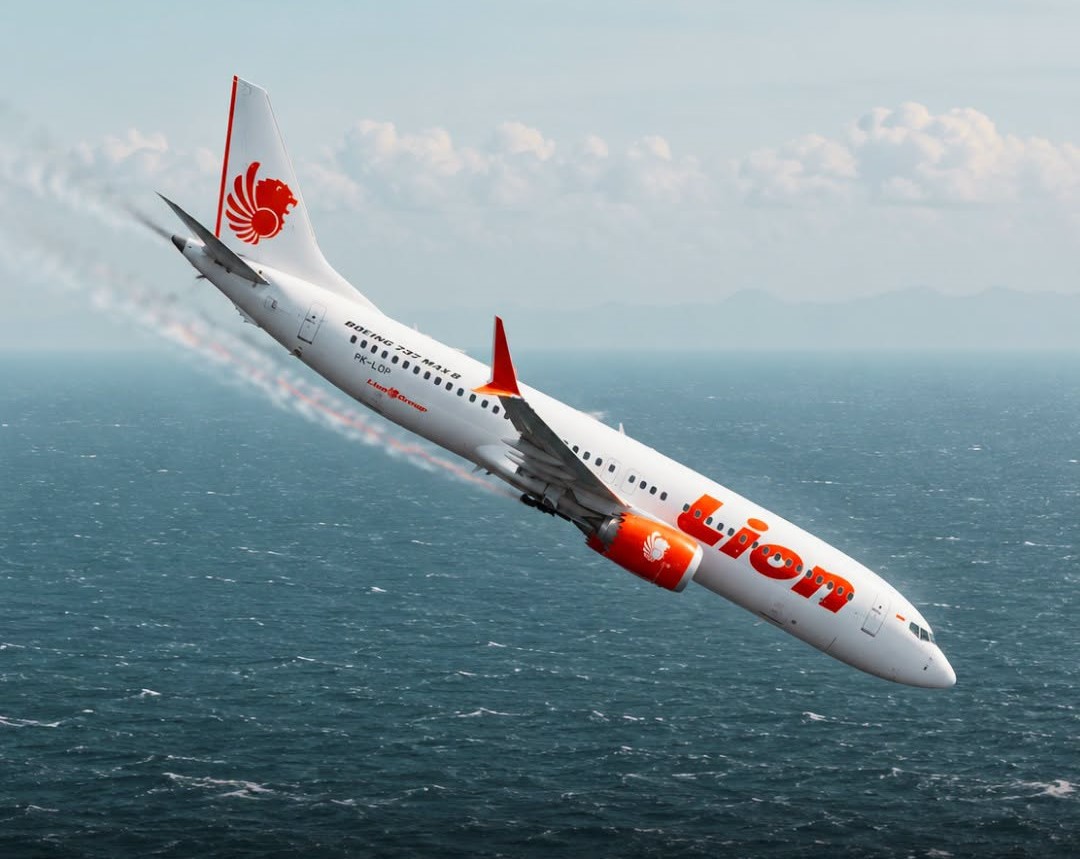
On October 29, 2018, Lion Air Flight 610 departed Soekarno-Hatta International Airport in Jakarta, Indonesia, bound for Pangkal Pinang.
The Boeing 737 MAX 8, registered PK-LQP, carried 189 people, including 181 passengers and eight crew members. Within minutes, a hidden problem in its flight-control system turned a routine domestic flight into a disaster.
The aircraft had already experienced airspeed and altitude problems on earlier flights. On October 28, its left angle-of-attack sensor had been replaced, but the replacement sensor was incorrectly calibrated. During the previous flight from Bali to Jakarta, the aircraft experienced warnings, a vibrating control column known as a stick shaker, and repeated automatic nose-down trim movements.
The crew managed to land safely, but the underlying problem was not adequately resolved or communicated to the next crew.
The following morning, Flight 610 took off at approximately 6:20 a.m. local time. Almost immediately, the captain’s instruments displayed conflicting information, and the stick shaker activated.
The pilots struggled with contradictory airspeed and altitude indications while trying to maintain control. Air traffic control received reports of flight-control and altitude difficulties as the aircraft repeatedly pitched nose-down.
The faulty sensor supplied incorrect angle-of-attack information, making the aircraft’s flight-control computer believe it was approaching a stall. This activated the Maneuvering Characteristics Augmentation System, or MCAS, which automatically moved the horizontal stabilizer to push the nose down. Each time the pilots corrected the aircraft’s attitude, the system could activate again, forcing further nose-down movements.
The crew fought to keep the aircraft level, but repeated trim commands, conflicting warnings, heavy workload and limited guidance on the unfamiliar system made recovery increasingly difficult. Approximately 13 minutes after takeoff, Flight 610 plunged into the Java Sea north of Jakarta. The aircraft was destroyed, and all 189 people aboard were killed. Search teams recovered wreckage, flight recorders and victims from the sea.
Indonesia’s National Transportation Safety Committee released its final investigation report in October 2019, identifying nine contributing factors. Investigators cited the faulty sensor, inadequate maintenance and documentation, shortcomings in MCAS design and certification, insufficient pilot guidance and training, and difficulties managing multiple alerts. MCAS relied on a single angle-of-attack sensor, allowing erroneous data to trigger repeated commands.
The tragedy prompted worldwide scrutiny of Boeing’s 737 MAX aircraft. Following a second fatal MAX crash involving Ethiopian Airlines Flight 302 in March 2019, regulators grounded the fleet. Boeing redesigned MCAS, introduced additional safeguards and revised pilot training requirements. The investigation exposed how a sensor fault, software design decisions and gaps in maintenance and crew information combined to overwhelm a flight crew, changing aviation safety oversight worldwide.