
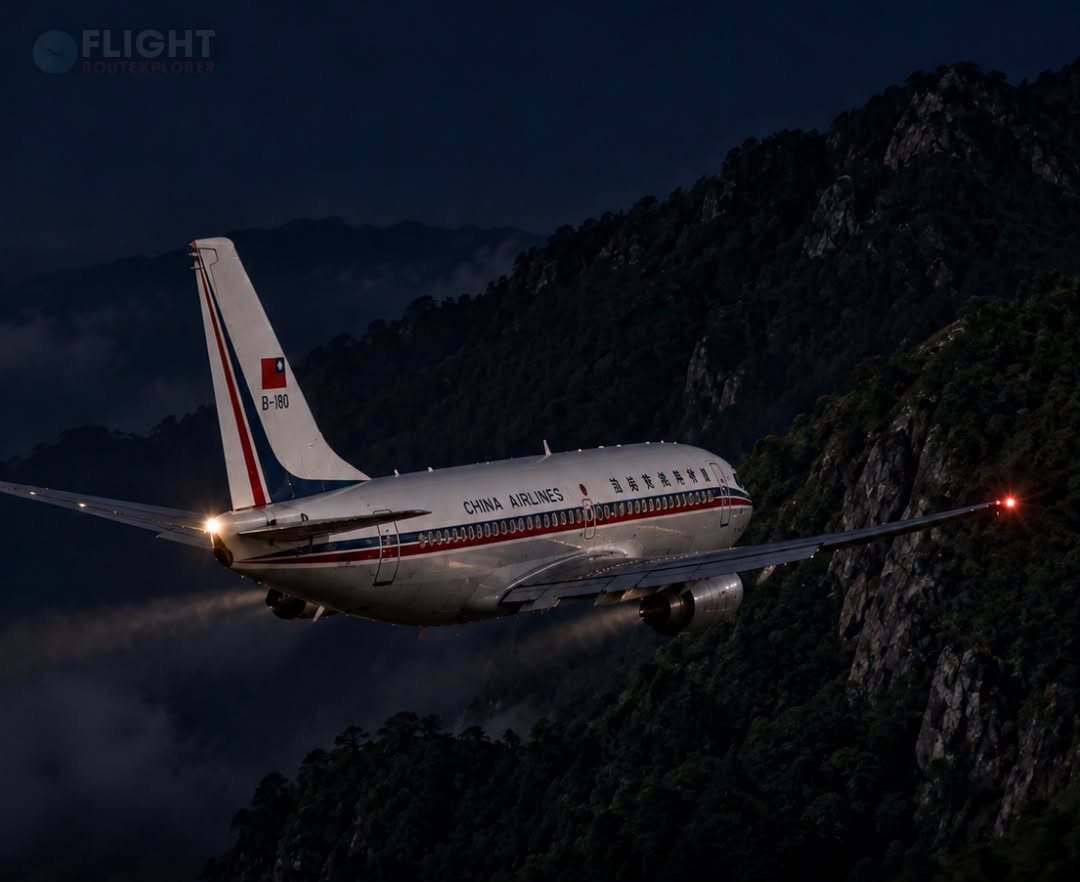
On October 26, 1989, China Airlines Flight 204, a Boeing 737-200 registered B-180, met a devastating end shortly after departing Hualien Airport in eastern Taiwan.
The scheduled domestic service was bound for Taipei Songshan Airport, carrying 47 passengers and seven crew members. None of the 54 people aboard survived.
The flight departed at night, and the aircraft began climbing away from Hualien. The captain was an experienced China Airlines pilot with approximately 15 years of service, while the first officer was comparatively inexperienced.
Shortly after takeoff, the aircraft followed an incorrect departure path that would prove fatal.
The Boeing 737 had taken off from Runway 03, for which the published departure procedure required a right turn toward the sea to avoid rising terrain. Instead, the crew initiated a left turn, following a procedure associated with a departure from the opposite runway, Runway 21.
This crucial navigational error directed the aircraft toward the Chiashan mountain range rather than away from the mountainous terrain.
About ten minutes after takeoff, the aircraft struck the mountainside at approximately 7,000 feet (2,100 metres). The impact destroyed the aircraft, killing everyone on board.
The crash site was approximately 5.5 kilometres north of Hualien Airport, leaving rescuers with a devastating recovery operation in difficult mountainous terrain.
Investigators determined that the disaster was a controlled flight into terrain, meaning the aircraft remained under the crew’s control but was flown into an obstacle without the crew successfully avoiding it.
The central failure was the incorrect departure procedure, compounded by inadequate flight preparation and coordination between the pilots. Ground-control personnel also failed to identify the runway departure error before the aircraft took off.
The investigation highlighted how a seemingly small procedural mistake can become catastrophic when aircraft departure routes are designed around nearby terrain.
At Hualien, the distinction between turning toward the sea and turning toward the mountains was critical. Nighttime conditions further reduced the opportunity to recognise the danger and correct the flight path.
The crash destroyed the Boeing 737 and claimed 54 lives, leaving no survivors. Its findings underscored the importance of confirming runway alignment, following the correct published departure procedure, completing pre-takeoff checks and maintaining effective communication between flight crew and air traffic control.
China Airlines Flight 204 remains a tragic example of how multiple human and procedural failures can combine within minutes of takeoff, turning an otherwise routine domestic flight into a fatal accident.