




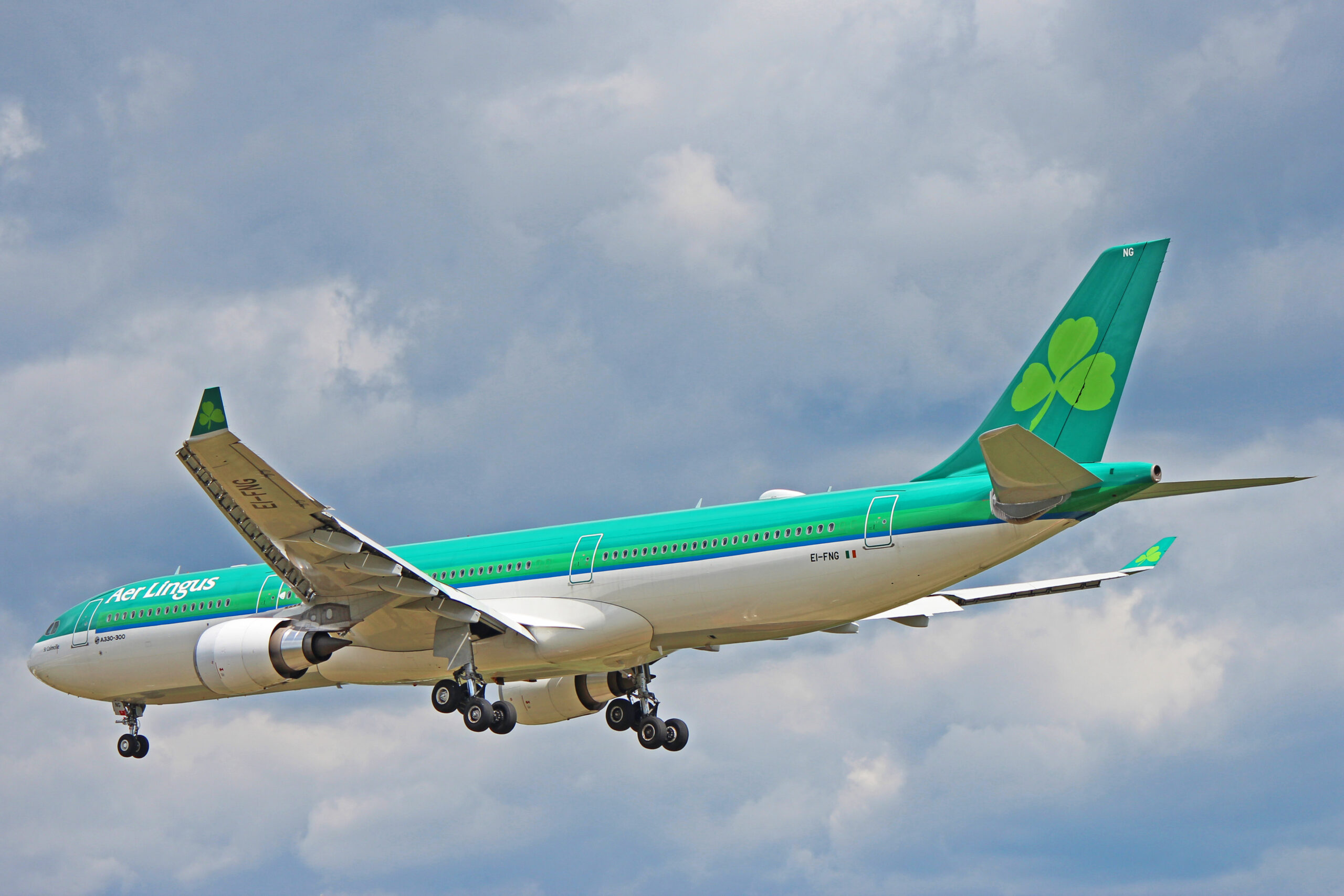
A transatlantic flight on Christmas Day was forced to turn around over the North Atlantic after electrical issues made the aircraft unsuitable for long-range oceanic operations.
On December 25th 2025, an Aer Lingus Airbus A330-300, registration EI-EIK, operating flight EG-44 from John F. Kennedy International Airport to Manchester with 315 people on board, was cruising at FL380 about 590 nautical miles east-northeast of Goose Bay when the flight crew encountered technical problems.
The crew decided to discontinue the transatlantic crossing and return to New York after determining the aircraft could no longer meet requirements for extended-range operations over water. The aircraft safely landed back at JFK’s runway 31R approximately six and a half hours after departure.
Details released later by the Transportation Safety Board of Canada on March 6th 2026 shed light on the sequence of events that led to the diversion.
While the aircraft was cruising, the first officer noticed that the temperature of the number one integrated drive generator (IDG), which produces electrical power from the engine, was higher than that of the second generator. Shortly afterward, the crew received an advisory message related to IDG1.
Following standard procedures, the pilots reduced electrical load and shut down generator number one in an attempt to cool the system. However, when the generator was later reconnected, the advisory message quickly returned.
Complicating the situation was the aircraft’s auxiliary power unit, which was already inoperative prior to departure. Without the APU available as an additional electrical power source, the crew determined the aircraft no longer met the requirements for ETOPS flights over the ocean and elected to return to the departure airport.
As the aircraft approached New York during the return flight, the crew also received additional warnings involving the left engine’s bleed air system on the General Electric CF6 engines. The indications pointed to a bleed air fault and an abnormal bleed configuration.
The pilots worked through the associated checklists and continued the approach without further complications, landing safely back in New York.
Following the incident, maintenance teams repaired the previously deferred auxiliary power unit, replacing a faulty low-pressure fuel shut-off valve actuator. Engineers also replaced the number one integrated drive generator and the number one engine’s bleed pressure regulating valve before returning the aircraft to service.