
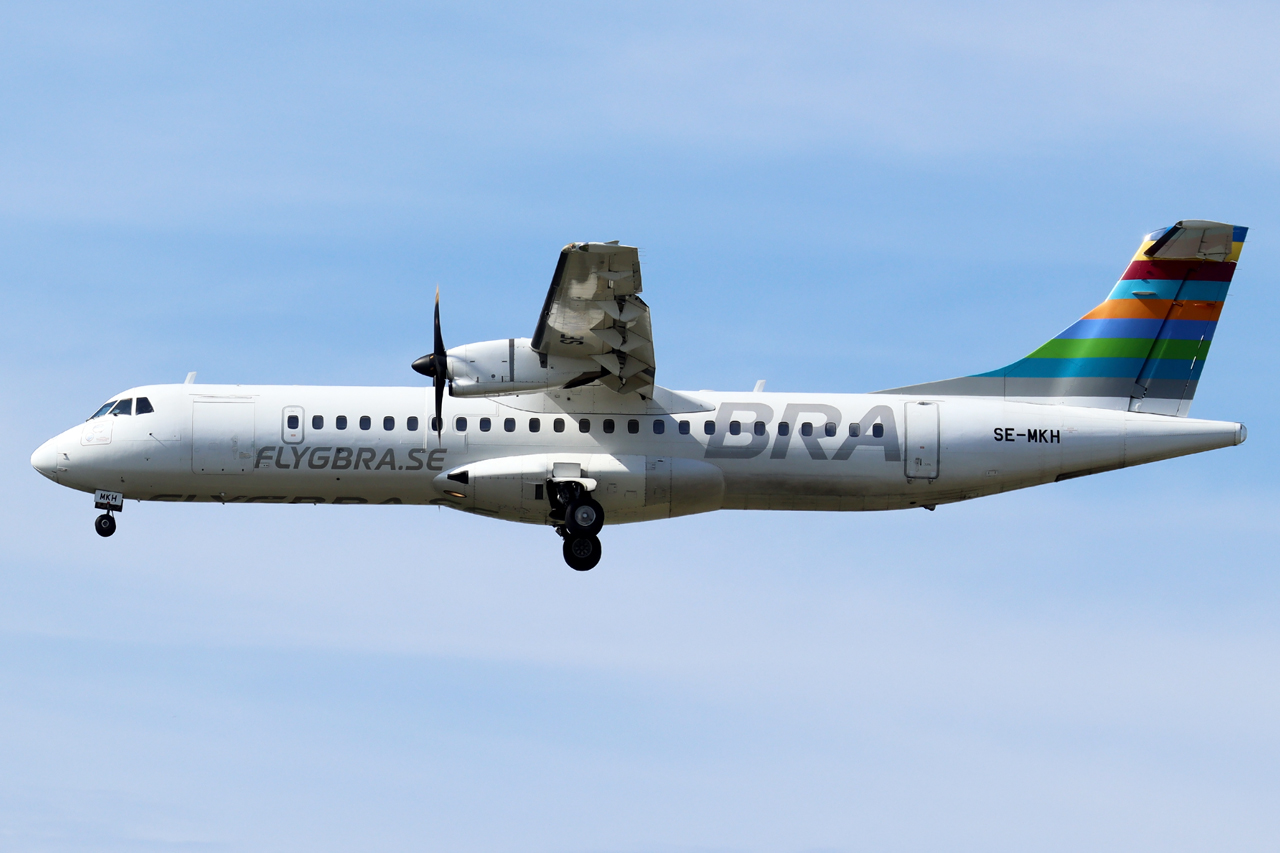
A regional flight in the South Pacific ended with aircraft damage and a minor injury after a tail strike during a nighttime landing, with investigators later determining that a combination of visual limitations and pilot technique contributed to the incident.
On December 19th 2024, an Air Caledonie ATR 72-212A operating flight TY-317 from Noumea to Ouvea suffered a tail strike while landing at Ouvea Airport.
The aircraft struck its tail during touchdown on runway 31 but continued the landing and taxied to the stand. Investigators later reported that the aircraft sustained damage and that at least one person onboard suffered a minor injury.
The investigation was carried out by France’s accident investigation authority, the Bureau d’Enquêtes et d’Analyses pour la Sécurité de l’Aviation Civile (BEA). Initially, the agency identified aircraft registration F-OZKN as being involved, but flight tracking data later suggested that aircraft had not operated flights to Ouvea that day. According to ADS-B records, the flights to and from Ouvea on December 19th were instead performed by another ATR-72, registration F-OZNO.
Tracking data indicated that F-OZNO completed the return service from Ouvea to Noumea the same day as scheduled. After arriving back in Noumea, the aircraft remained on the ground for about 22.5 hours, later performing a short positioning flight before staying grounded for roughly three days prior to returning to service.
On March 5th 2026, the BEA released its final report into the occurrence, concluding that the tail strike resulted from an early and excessive flare during a night landing with limited visual references.
According to investigators, the crew had identified the short runway and night conditions at Ouvea as operational threats during their arrival briefing. To mitigate these risks, they agreed to keep the autopilot engaged until reaching approach minima. During descent, both pilots acknowledged that they had limited experience conducting night landings at Ouvea’s runway 31, although this was not formally assessed as an operational risk.
After disconnecting the autopilot at minima, the pilot flying intercepted the visual glide path provided by the PAPI lights, which is steeper than the published RNAV LNAV approach slope for the runway. The approach remained stable as the aircraft continued toward the threshold.
However, with limited external visual references in the dark environment, the pilot flying initiated the flare at about 60 feet above the runway—approximately 40 feet higher than recommended by the aircraft manufacturer. The power reduction and strong nose-up input caused the aircraft to momentarily rise while increasing the pitch attitude to 6.4 degrees, resulting in the tail contacting the runway surface.
The BEA concluded that several factors likely contributed to the event, including the crew’s limited recent experience with night landings in dimly lit environments like Ouvea, where flights are normally scheduled during daylight hours. Investigators also noted that the briefing did not include discussion of specific landing techniques appropriate for the steep approach angle and reduced visual cues associated with runway 31.