


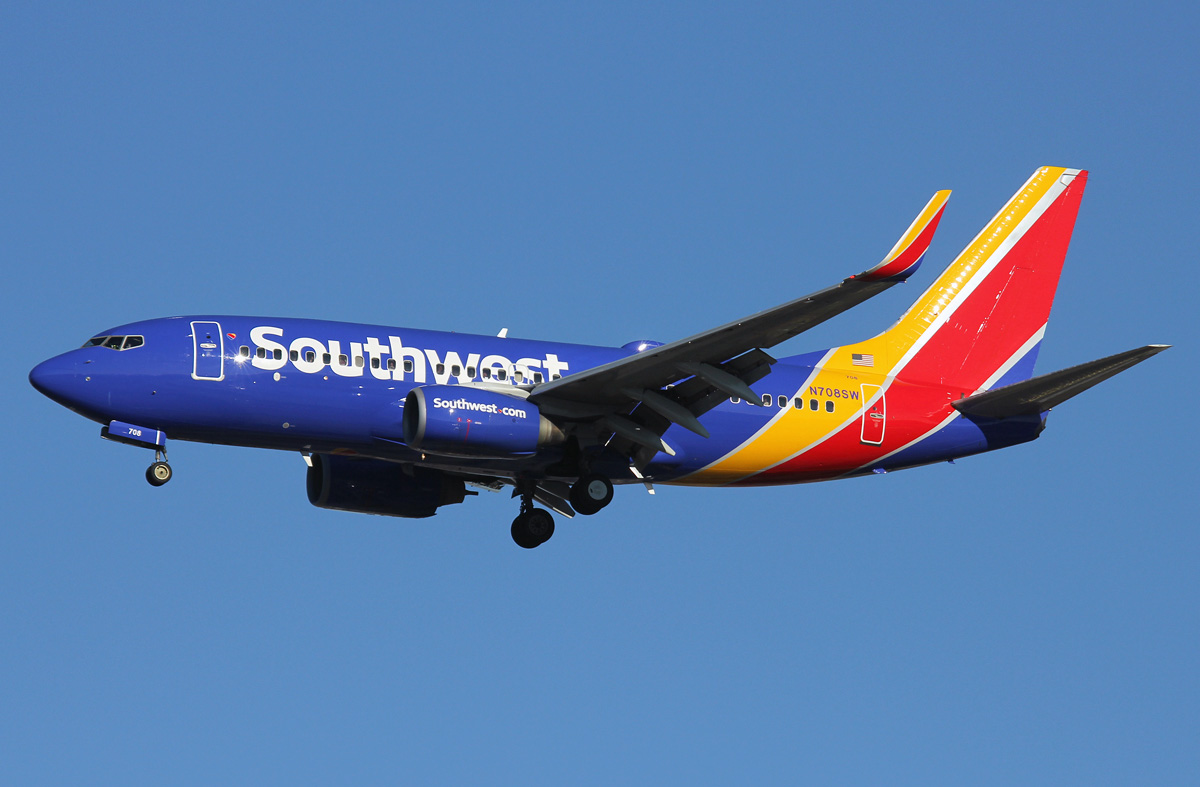
A Southwest Airlines Boeing 737-700 sustained substantial damage after flying through hail during descent into Tennessee on May 2nd 2025, an encounter that federal investigators later determined was caused by an unexpected penetration of severe weather despite advance planning and onboard radar checks.
The Southwest Airlines Boeing 737-700, registered N247WN, was operating flight WN-2231 from Austin, Texas to Nashville, Tennessee with 144 passengers and five crew members on board. The aircraft was in its initial descent toward Nashville International Airport when it encountered turbulence and hail.
The crew had been aware that thunderstorm activity was forecast near Nashville. Using onboard weather radar and a weather application on their electronic flight bag, they planned a deviation to the north to avoid developing cells. Air traffic control also advised of a weather cell at their 12:30 to 1:00 position. However, both the aircraft’s radar and the app showed no significant returns directly ahead of their flight path.
As the jet descended from Flight Level 360, it entered cloud at about FL320. Initially the ride was smooth with occasional light chop. At FL280 and approximately 290 knots, the aircraft suddenly encountered intense precipitation and turbulence. The captain later recalled the rain was extremely heavy and the noise level suggested hail. He reduced thrust and deployed speed brakes to slow to turbulent air penetration speed. The severe conditions lasted about a minute before subsiding.
The aircraft levelled at FL240 and continued to Nashville, reporting moderate turbulence to air traffic control. It landed safely on runway 20R without further incident. No injuries were reported.
Post-flight inspection revealed substantial damage to the leading edges of the wings and horizontal stabilizer caused by hail impact. The aircraft remained on the ground in Nashville until May 5th 2025, then repositioned to Kansas City, where it remained out of service until June 14th 2025 before returning to operations.
Weather analysis later showed that the National Weather Service’s Aviation Weather Center had issued Convective SIGMET 99C minutes before the encounter, warning of severe embedded thunderstorms with tops above FL450, hail up to one inch in diameter, and wind gusts to 50 knots. A severe thunderstorm watch had also been issued earlier that morning for a line of storms moving across Tennessee.
On February 27th 2026, the National Transportation Safety Board released its final report, concluding that the probable cause of the accident was the aircraft’s encounter with hail during descent.
The investigation highlighted the challenges flight crews face when convective weather develops rapidly or becomes embedded within cloud layers, sometimes producing limited or misleading radar returns. Despite the substantial structural damage, adherence to turbulence procedures and a controlled continuation to destination ensured the flight concluded safely—though the aircraft bore the scars of a brief but punishing passage through the storm.