

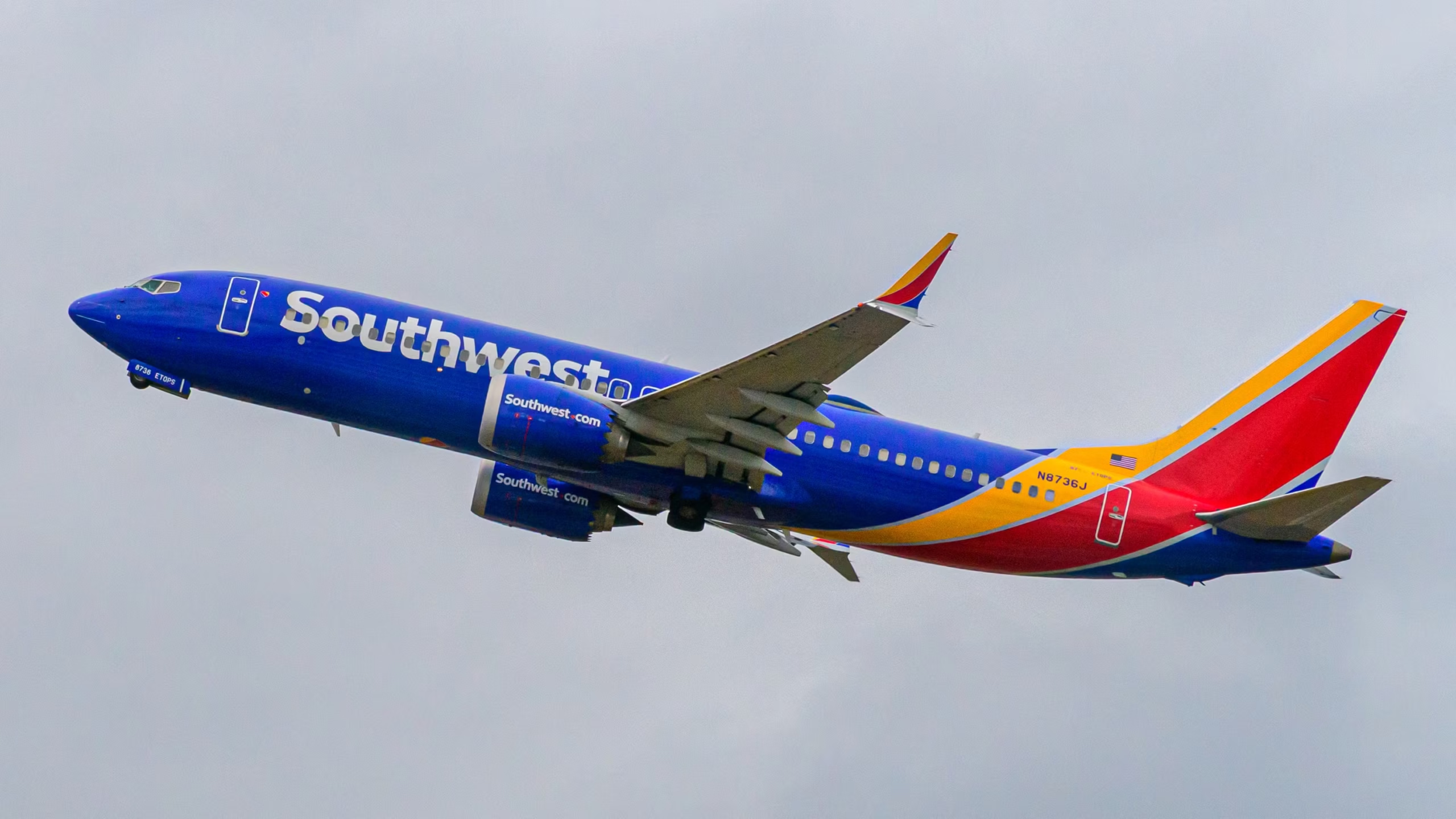
A routine departure from Louisiana escalated into a smoke-filled cockpit emergency on December 20th 2023, when a Southwest Airlines Boeing 737-8 MAX struck a bird shortly after takeoff, triggering engine damage, violent vibrations, and a cascade of safety actions that would later prompt urgent recommendations from federal investigators.
The Southwest Airlines Boeing 737-8 MAX, registered N8830Q, was operating flight WN-554 from New Orleans, Louisiana to Tampa, Florida with 164 people on board. The aircraft had departed runway 11 at Louis Armstrong New Orleans International Airport and was climbing through about 1,000 feet when a bird was ingested into the left CFM LEAP-1B engine.
The captain called out “bird,” followed by a loud thump. The aircraft began to shake violently, and the crew reported a distinct loss of thrust from the No. 1 engine. The captain called for the Engine Fire or Engine Severe Damage or Separation checklist. As the first officer began running the procedure, acrid white smoke filled the cockpit, reducing visibility to the point that the captain could barely see beyond his colleague.
The first officer called “masks,” and both pilots donned oxygen masks before continuing the checklist. An emergency was declared, and airport rescue and firefighting services were requested. The captain later stated he considered flying solely by reference to the head-up guidance system due to difficulty seeing his instrument panel. After the engine fire switch was pulled, the smoke rapidly dissipated.
The aircraft returned to New Orleans, landing safely about 12 minutes after departure. Firefighters inspected the jet and found no evidence of an active fire. The passengers deplaned normally without injury. The airport briefly closed runways to clear debris from the bird strike. The aircraft remained on the ground for approximately 20 hours. A replacement Boeing 737-800, registered N8501V, later transported passengers to Tampa with a delay of about five hours.
The Federal Aviation Administration confirmed the aircraft struck a bird on takeoff. On November 23rd 2024, the National Transportation Safety Board opened a formal investigation into what it termed a “left engine bird strike and subsequent smoke in cockpit event.”
In June 2025, while the investigation was ongoing, the NTSB issued urgent safety recommendations concerning the load reduction device (LRD) installed in CFM LEAP-1B engines. Investigators determined that the bird ingestion caused a partial loss of engine power and activated the LRD, a system designed to reduce vibration by disconnecting the fan blades from the turbomachinery during severe imbalance.
The February 26th 2026 final report concluded that the probable cause was the partial loss of engine power due to bird ingestion, which led to LRD activation. The activation allowed engine oil to enter the compressor and bleed air system, generating smoke and fumes that were routed into the cockpit. About 15 seconds after the strike, engine core speed dropped sufficiently to close the pressure regulating shutoff valve, cutting off the smoke source and allowing the cockpit to clear.
Although no injuries were reported and investigators found no clear evidence of significant toxic exposure, the NTSB emphasized that such smoke events could pose potential health and flight safety risks. The board issued recommendations to the FAA, the European Union Aviation Safety Agency, the Civil Aviation Administration of China, CFM International, and Boeing to address design considerations and improve pilot awareness of procedures during similar events.
Boeing subsequently updated flight crew manuals and checklists to clarify actions in cases involving engine failure accompanied by smoke or fumes in the cockpit.
What began as a single bird strike during climbout ultimately revealed a complex chain of mechanical design features and procedural challenges. The safe return of flight WN-554 underscored effective crew response under pressure, while the investigation reshaped guidance for one of the world’s most widely used modern jet engines.