

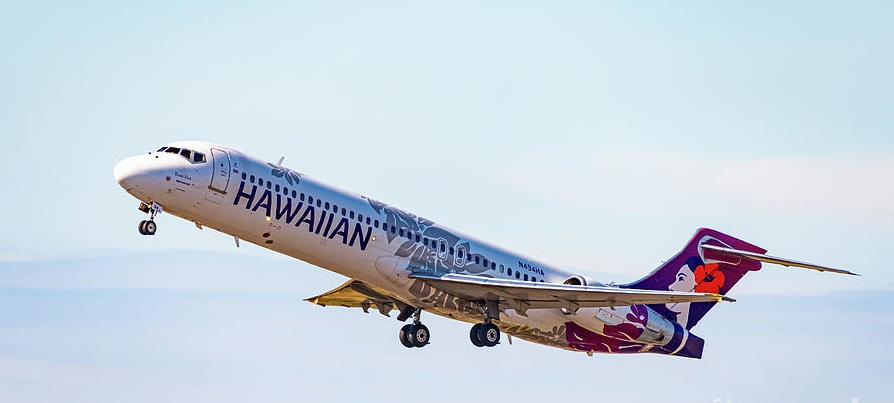
A nighttime pushback at Kahului turned into a serious ground accident on November 30th 2023, when a Hawaiian Airlines Boeing 717 began taxiing before ramp personnel and equipment were clear, striking a tow tractor and injuring a ground worker.
The Hawaiian Airlines Boeing 717-200, registered N494HA, was preparing to operate flight HA-105 from Kahului, Hawaii to Honolulu, Hawaii with 114 passengers and five crew members on board. The aircraft had been pushed back from gate 17 at Kahului Airport when it began to taxi forward before the tow tractor and ground crew had fully cleared the area.
The aircraft’s left main landing gear struck the tow bar and the left wing impacted the tug cab. One ramp worker sustained serious injuries. The 119 people on board were uninjured. The flight was cancelled, and the aircraft remained on the ground in Kahului for about 24 hours following the accident.
The Federal Aviation Administration classified the occurrence as an accident, stating: “During pushback operations, aircraft began to taxi before ramp personnel were clear. Aircraft impacted tug causing injury to ramp worker.”
On February 25th 2026, the National Transportation Safety Board released its final report concluding that the probable cause was the captain’s failure to verify that the tow tractor had exited the area in front of the airplane before initiating taxi.
Investigators determined that several contributing factors compounded the error. It was dark and raining at the time, and the tow tractor lacked an illuminated hazard beacon, reducing its visibility. The tow tractor operator had positioned the tractor close to the aircraft. The captain was simultaneously performing a manual engine start due to an inoperative auto starter and reviewing load closeout information, increasing cognitive workload.
After engine start, the ground crew disconnected the tow bar, removed the nosewheel steering bypass pin, and displayed the pin and ribbon overhead—an established signal that the aircraft was ready to taxi once acknowledged. The captain later stated he believed he had returned the required salute, but other evidence suggested he likely had not. The first officer, focused on flight management system entries, did not observe the exchange.
The ground escort, seeing no return salute, remained in position. The tow tractor operator attempted to attract the captain’s attention by honking the horn and waving but received no response. When the cockpit dome light was switched off—typically indicating imminent taxi—the ground crew attempted to move clear, but the aircraft began rolling forward moments later.
The NTSB found that procedural safeguards, including the “departure salute” checklist item and the captain’s required “clear left” visual confirmation before taxi, were likely performed in a rote manner without full attention. The absence of a clear, standardized final communication procedure between cockpit and ground crew, conflicting guidance in company manuals, and the lack of a method to re-establish communication after headset disconnection further contributed to the breakdown.
The board also cited the crew’s performance of competing operational tasks and increased cognitive loading as significant factors. Although reviewing load closeout information before taxi was permitted, investigators noted that delaying that task until after pushback might have reduced workload and improved situational awareness.
The accident highlights how a chain of small deviations—reduced visibility, procedural ambiguity, divided attention, and assumptions—can align on the ramp as easily as in the air. In this case, the consequences were felt not in the cockpit, but on the ground.