


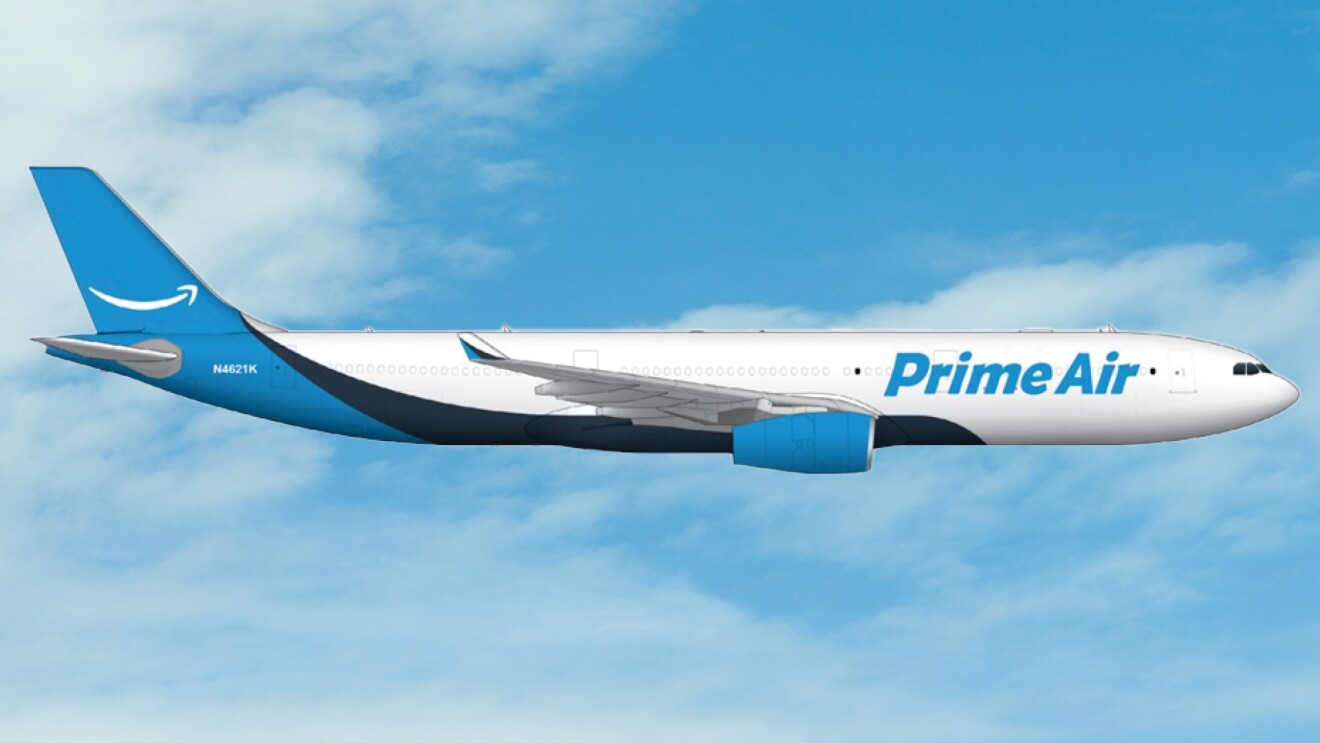
A cargo departure from Kentucky turned into a dramatic emergency on January 28th 2026, when an Amazon Prime Air Airbus A330-300 struck a flock of geese moments after takeoff, leading to an engine failure, cockpit smoke, and an engine fire indication before a safe return to the airport.
The Amazon Prime Air Airbus A330-300, registered N5827K, was operating flight AS-2616 from Cincinnati/Northern Kentucky International Airport to Houston with two crew members on board. Shortly after departing runway 27 at Cincinnati/Northern Kentucky International Airport, and climbing through approximately 900 to 1,000 feet, the captain observed a flock of geese crossing from right to left.
The crew called out “birds” just before multiple impacts were felt on both sides of the aircraft. Almost immediately, the electronic centralized aircraft monitor (ECAM) displayed an ENG 1 FAULT message followed by ENG 1 FAIL, indicating a failure of the left-hand Rolls-Royce Trent 772 engine. The crew halted the climb at 3,000 feet, declared an emergency, and requested vectors back to Cincinnati.
As they turned back toward the airport, smoke began entering the cockpit, followed by a main deck smoke ECAM message. The pilots donned oxygen masks and began the appropriate quick reference handbook procedures. After configuring the aircraft for landing, the crew reported that the smoke dissipated and removed their masks prior to touchdown.
Air traffic control vectored the aircraft for runway 36R. The jet landed safely about 10 minutes after departure and came to a stop on the runway, where airport rescue and firefighting teams inspected the aircraft. The crew completed the left engine failure checklist and discharged fire extinguishing agent. They later requested a ladder to door 1R so that responders could verify the status of the left engine, reporting an engine fire indication.
The Federal Aviation Administration stated, “Aircraft struck a bird on takeoff resulting in a left engine fire and returned to airport, Covington, KY.”
On February 6th 2026, the National Transportation Safety Board classified the event as an accident and opened an investigation, noting the aircraft sustained substantial damage following multiple bird strikes and subsequent engine failure.
Airport personnel later recovered the remains of eight Canada geese from the runway environment. A postaccident examination revealed bird remnants on the left main landing gear door and strut, the left wing’s inboard flap, the right engine pylon, and the right wing’s leading-edge slat and slat track. Both engines showed evidence of bird ingestion.
The left engine suffered significant damage, with bird remains found inside and outside the inlet and on the fan blades. The fan exhibited restricted rotation and visible misalignment. The right engine showed damage to the inlet cowl acoustic liner, with bird remnants on the spinner and exhaust nozzle, though its fan rotated freely.
The aircraft remained on the ground in Cincinnati for at least 23 hours following the incident as inspections and damage assessments were carried out.
The event underscores the persistent hazard posed by bird activity, particularly during low-altitude phases of flight. In this case, decisive crew action, adherence to emergency procedures, and rapid coordination with air traffic control and airport rescue services ensured that a potentially catastrophic encounter ended without injury.