

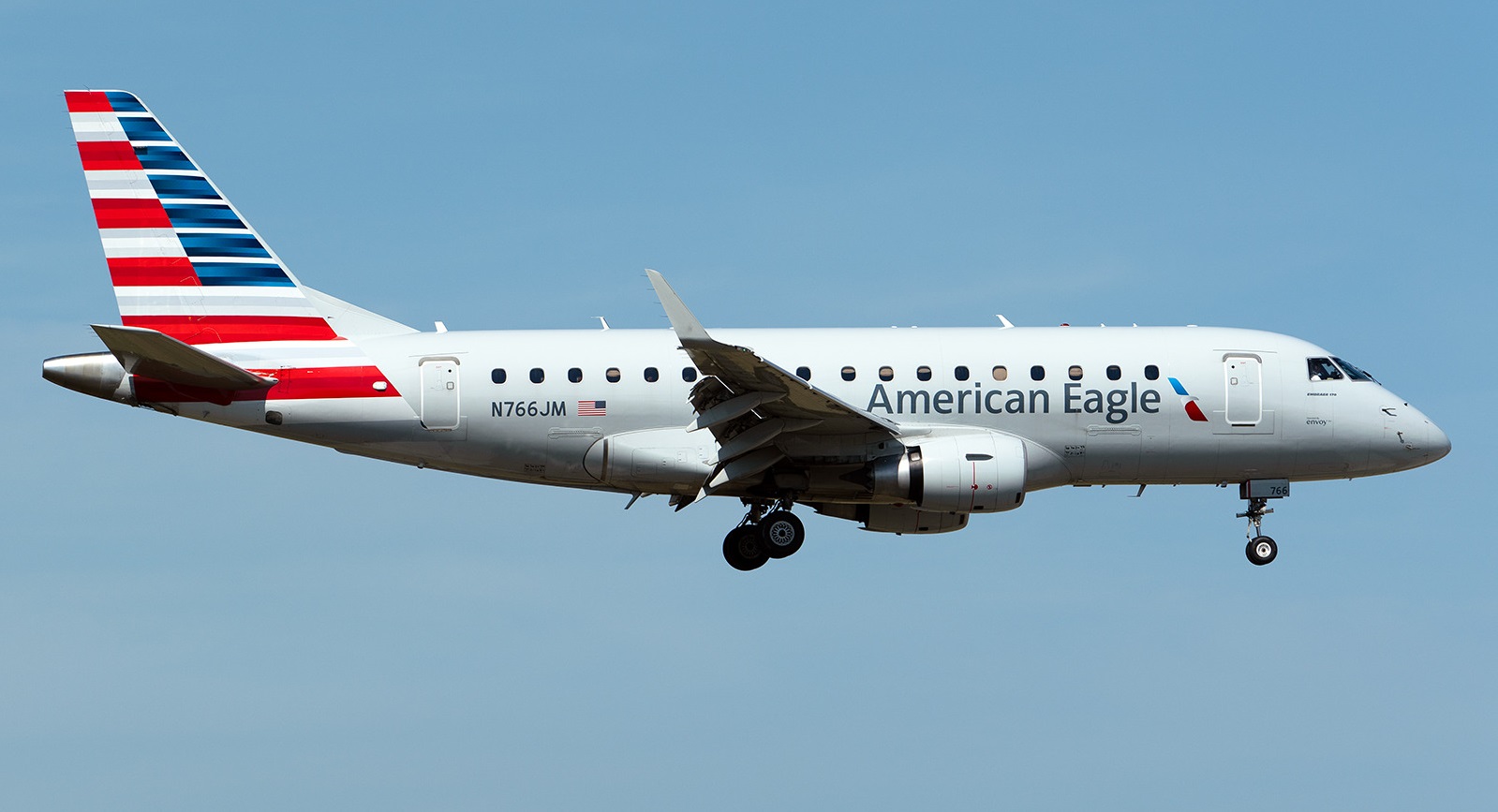
A routine arrival into Chicago turned into a textbook case of human factors on September 25th 2024, when an Envoy Air regional jet inadvertently landed on the wrong runway at O’Hare—an error later attributed to “planned continuation bias” and missed intervention by air traffic control.
The Envoy Air Embraer ERJ-170, registered N772MR, was operating flight AA-3936 on behalf of American Airlines from Norfolk, Virginia to O’Hare International Airport with 64 passengers and four crew members on board.
While descending toward Chicago, the crew was instructed to expect runway 10C and was subsequently cleared for the instrument landing system (ILS) approach to that runway. The clearance was correctly acknowledged and read back. The captain, serving as pilot monitoring, briefed the approach and programmed the flight management computer with the ILS for runway 10C to back up a planned visual approach.
However, the crew was unable to receive the ILS identifier. Attempts to troubleshoot included reloading the approach in the flight management computer and manually tuning the localizer frequency. When the issue could not be resolved, the crew elected to continue visually.
The crew informed the control tower they were on a visual approach to runway 10C and were cleared to land on 10C. Instead, the aircraft aligned with and touched down on parallel runway 10L.
In its final report, the National Transportation Safety Board concluded that the probable cause of the incident was “the flight crew’s misidentification of the intended landing runway, which resulted in an approach to and landing on the wrong runway due to their planned continuation bias.”
The investigation found that the crew’s decision to continue the approach without the correct ILS frequency entered into the flight management system contributed to the error. Recorded flight data showed that while intercepting the ILS for runway 10C, the correct localizer frequency of 108.95 MHz was briefly tuned in the Nav 1 radio for four seconds. It was then changed to 108.4 MHz, while Nav 2 was set to 113.0 MHz—neither of which would have provided the proper localizer guidance for runway 10C. As a result, the crew lacked electronic confirmation of runway alignment.
The NTSB determined that task saturation and cognitive bias played a significant role. Planned continuation bias, described in the report as an unconscious tendency to stick with an original plan despite changing conditions, can impair a crew’s ability to recognize cues that warrant reassessment—particularly under increasing workload.
Air traffic control actions also came under scrutiny. According to a Federal Aviation Administration mandatory occurrence report, the tower controller recognized the misalignment but coordinated with the runway 10L controller to allow the aircraft to land there, noting no traffic conflicts. The NTSB found this response deficient and contrary to FAA directives, stating that the controller failed to notify the crew of the alignment error or issue corrective instructions. Investigators concluded that timely intervention by the controller likely would have prevented the wrong-runway landing.
Despite the serious procedural breakdowns, the flight landed without incident or injury. The event now stands as a cautionary example of how cockpit workload, system misconfiguration, cognitive bias, and missed safeguards can combine to produce a potentially hazardous outcome—even in clear visual conditions at one of the world’s busiest airports.